Henry Goes to the Holy Land – Day 3

2 Comments

January 15, 2015

I woke early today to the sound of a steady but light rain outside the door of my Pilgrim House room. A heavy mist hung off shore, over the Sea of Galilee, and the temperature was cooler than we’ve had so far. Because of the weather, I decided to wear my sweater today, and you’ll notice that in the pictures from this day.

After breakfast at the Pilgrim House (which, being run by Germans is more familiarly known as Pilgerhaus), we piled on our bus and headed to our first stop only minutes away.
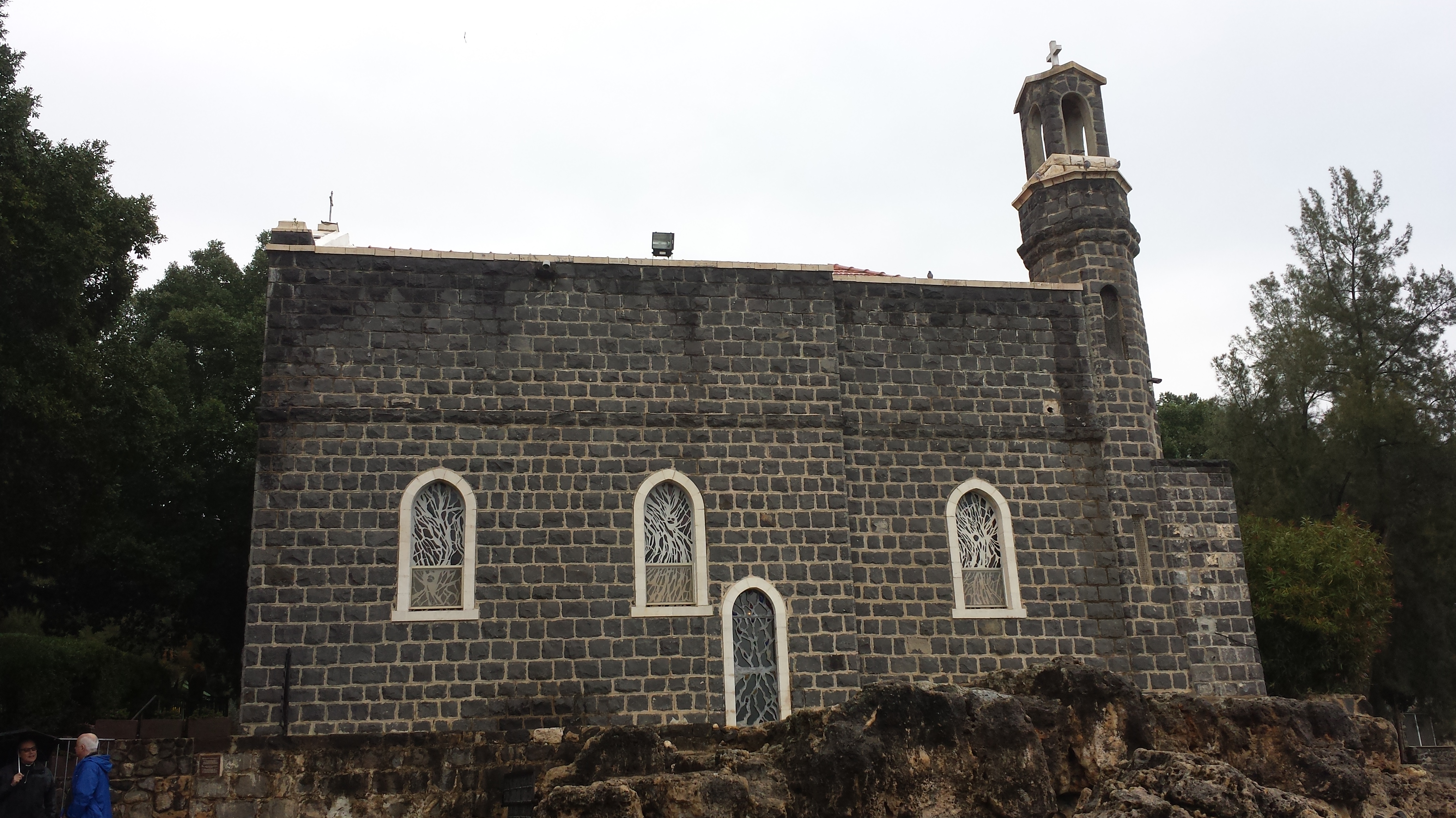
The Primacy of Peter

The Primacy of Peter

The Church of Peter’s Primacy is a small parish church which tradition says marks the spot on the shore of Galilee when Jesus cooked a breakfast of fish for Peter and the other apostles. We can tend to forget that part of the Gospel story, though, since it comes at the end of a larger story. You may better remember how Peter was discouraged with how bad the fishing had been and how Jesus told him to go out into the Sea of Gailee in his boat and cast his nets. Peter protested, but did as Jesus asked. When no fish were caught initially, Jesus told him to put the nets on the other side of the boat…which is when things went nuts. When Peter pulled up the fish net, he had to ask for help from a partner’s boat crew because his net was so full of fish. After the fish had been harvested, Peter felt badly that he had doubted, but Jesus said all was well between them. To prove it, Jesus cooks some of the fish for them on a rock near the shore, and they all eat breakfast. Eventually, Jesus tells Peter that he is the rock upon which he will build his church – this idea is known as the Primacy of Peter as the apostle (The Rock), representing a particular strain of Christian tradition and thought.
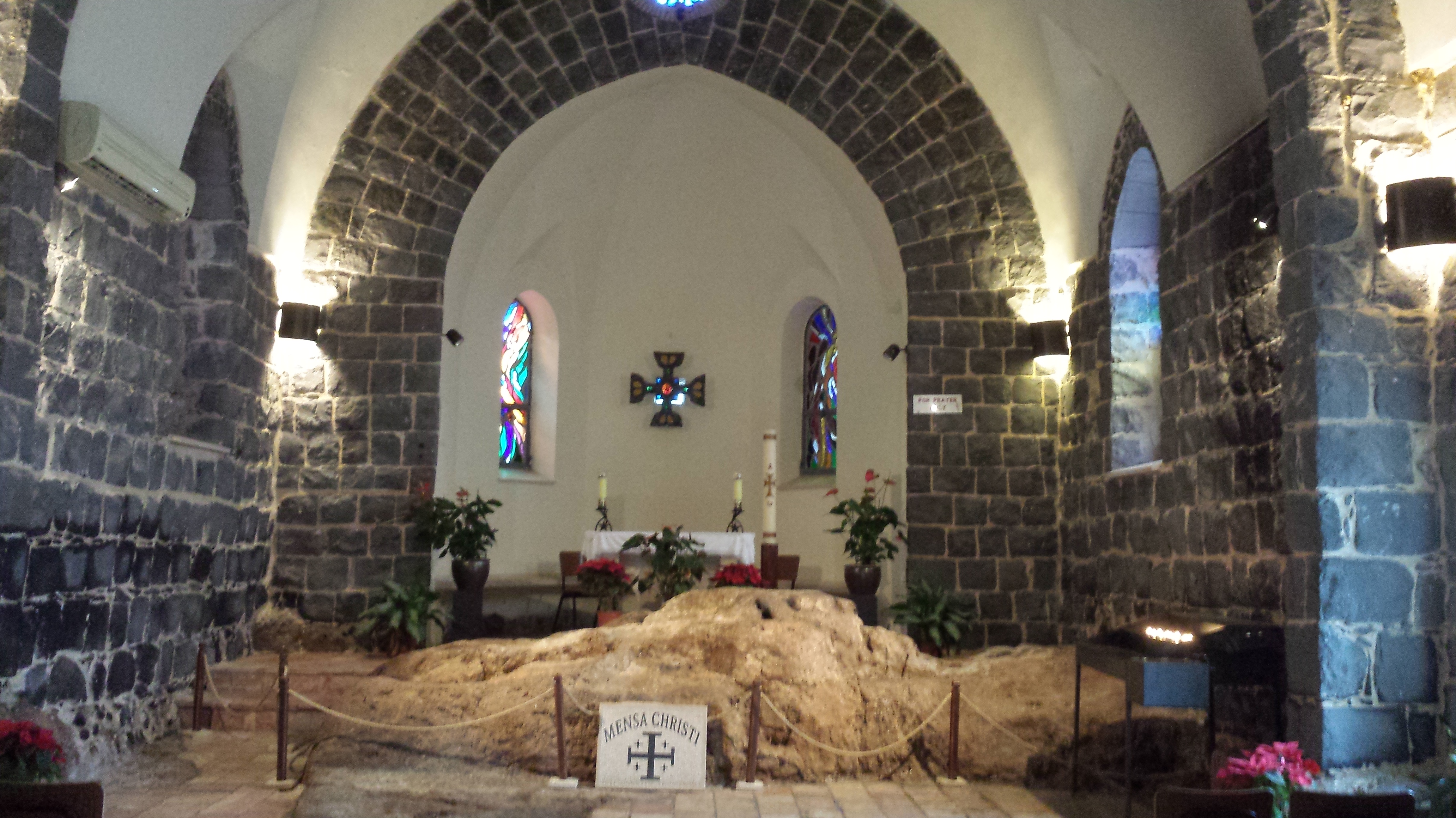
Interior of the church, with the large rocky outcrop dominant in the space

Interior of the church, with the large rocky outcrop dominant in the space

The Church of Peter’s Primacy contains within it (in front of the altar) a large area of exposed rock, the rocky area on which Jesus is said to have cooked the fish, the apostles gathering around for breakfast after a successful pre-dawn fishing expedition.

Touching the rock is okay, and some of it is very smooth from where many b pilgrims have touched the surface over the centuries

Touching the rock is okay, and some of it is very smooth from where many b pilgrims have touched the surface over the centuries

After arriving at the small stone church, our group had a brief prayer service in an outside chapel on the grounds before going in to explore the church. I lit a candle and prayed near the rock before heading outside to explore the shore just a few yards away. The shore of the Sea of Galilee is very rocky with the black basalt of the area, but the Primacy of Peter is one of the few places around the sea where it’s possible to gain easy access to the fresh water of the inland sea, fed by the river Jordan.
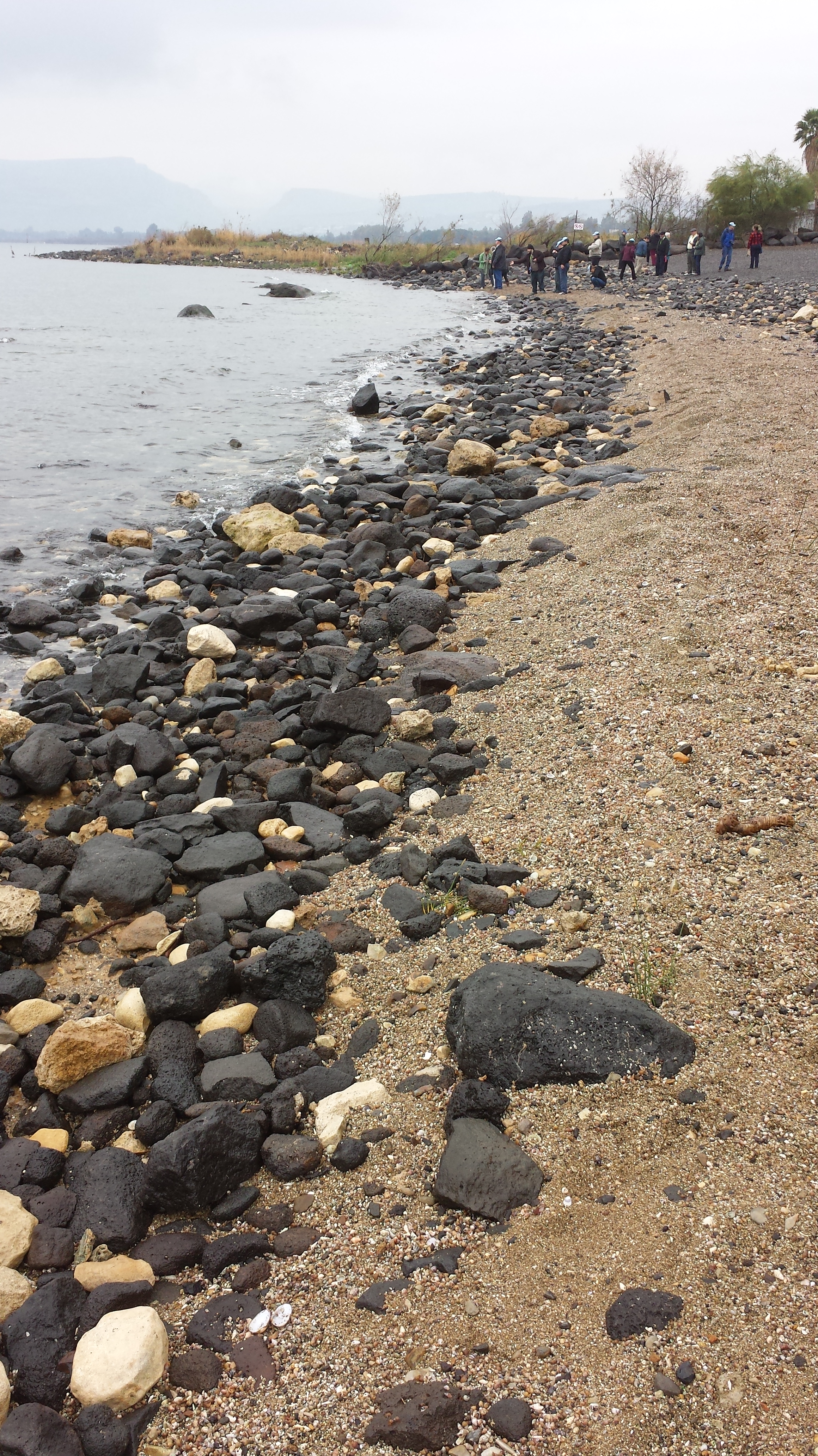
The shore of the Sea of Galilee beside Peter’s Primacy

The shore of the Sea of Galilee beside Peter’s Primacy

The brown texture of the beach here is not sand or pebbles,  but millions of small shells

The brown texture of the beach here is not sand or pebbles, but millions of small shells

Rather than a sandy shore, though, the beach near the church is actually made up of millions of very tiny sea shells left behind by the life that flourishes in the waters. Some of the shells are hardly larger than grains of sand, so you have look closely at what you’re walking on to realize how amazing it is. I’m pretty close to the ground, as little dogs are, so I thought this experience was especially cool!

Notice the black basalt I'm standing on that is typical of this area - it was the preferred building material during the first century

Notice the black basalt I’m standing on that is typical of this area – it was the preferred building material during the first century

Large heart shaped rock near the church

Large heart shaped rock near the church

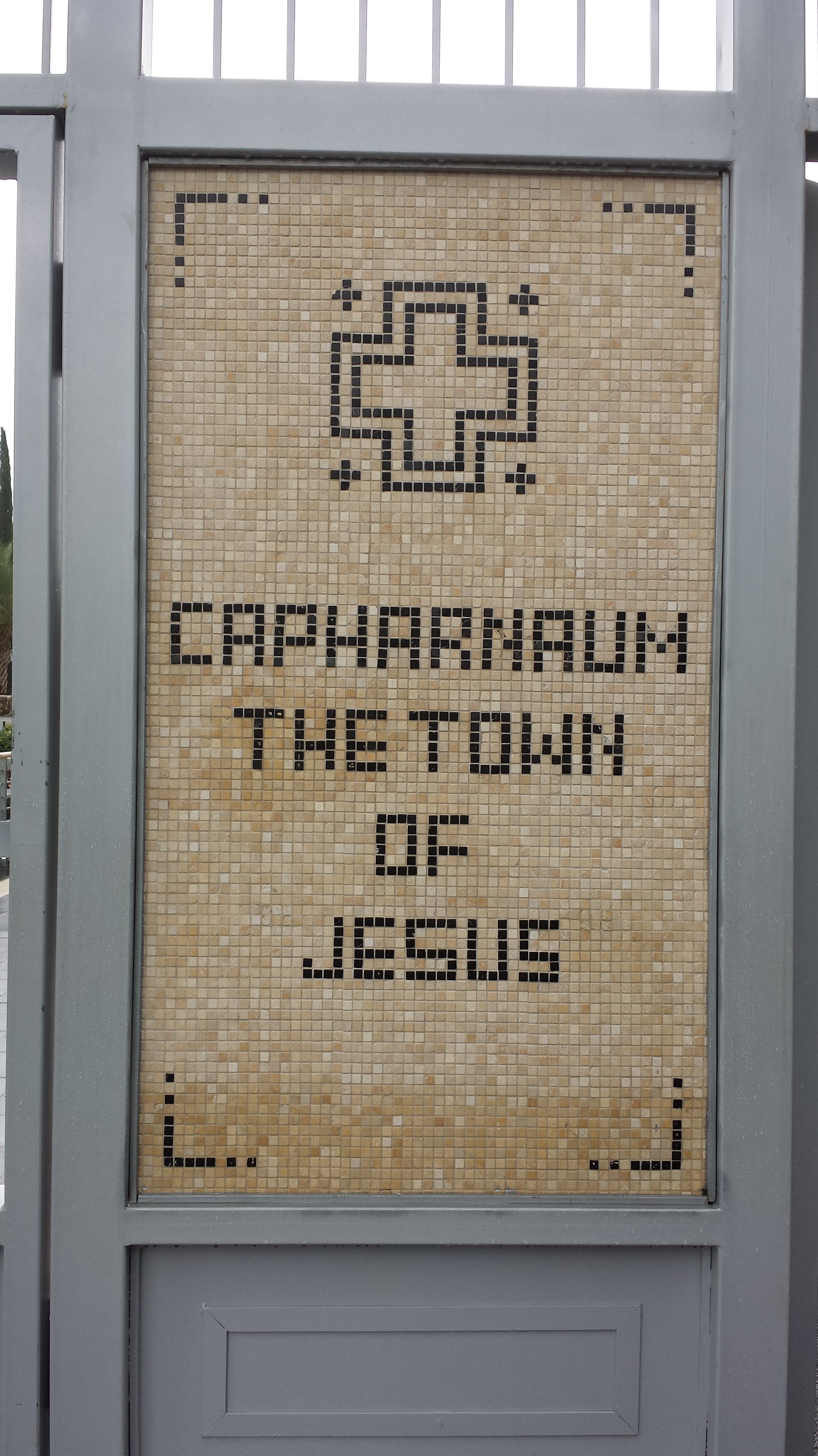
Our next stop along the Galilean shores was Capernaum; the town where Peter lived and worked in his family’s fishing business before he left home to be a part of Jesus’ ministry. In the first century, Capernaum was strategically located along an important trade route of the time known as the Via Maris (“The Way of the Sea”), because it ran along the eastern shore of the Sea of Galilee.
20150115_094515

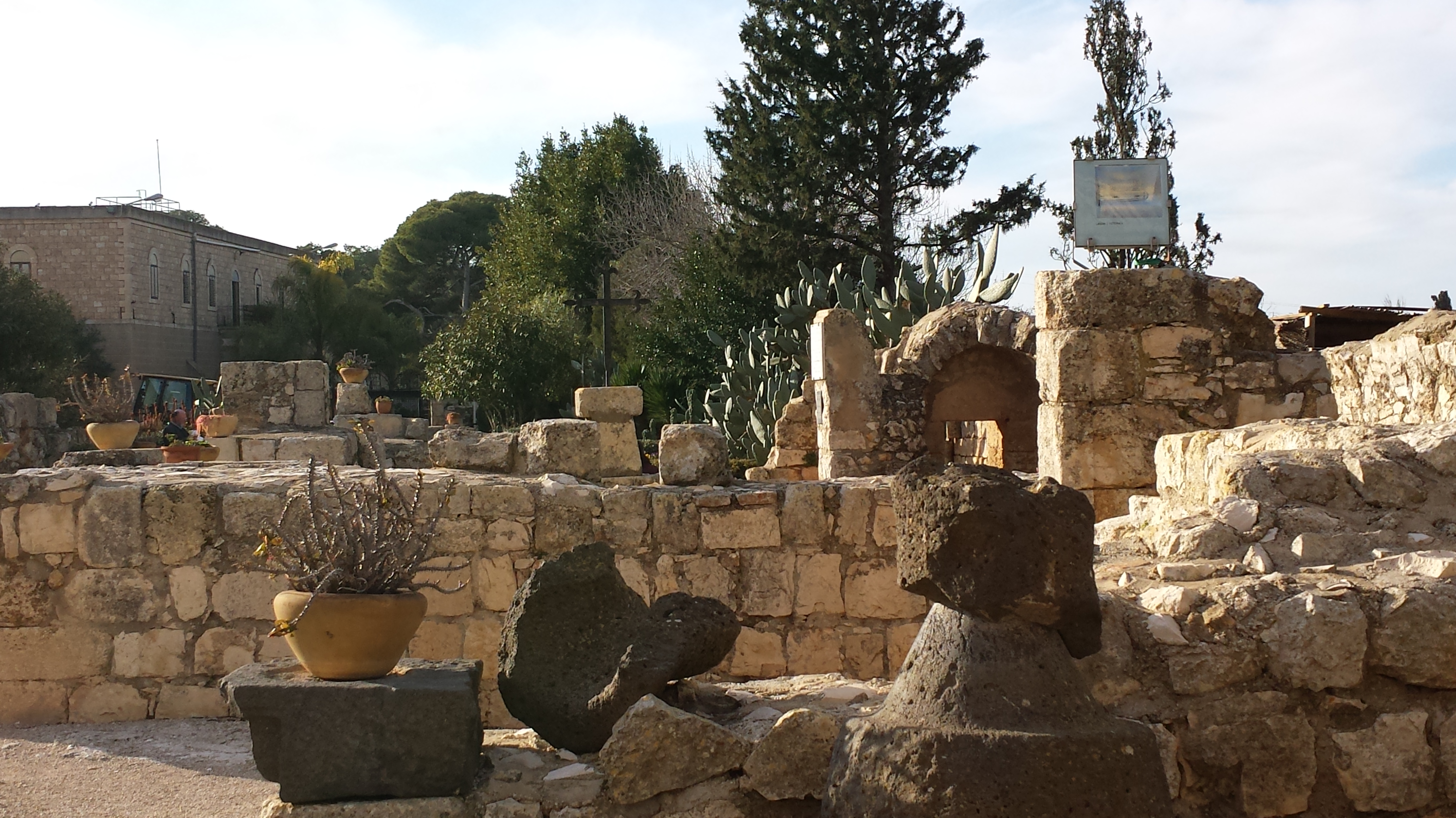
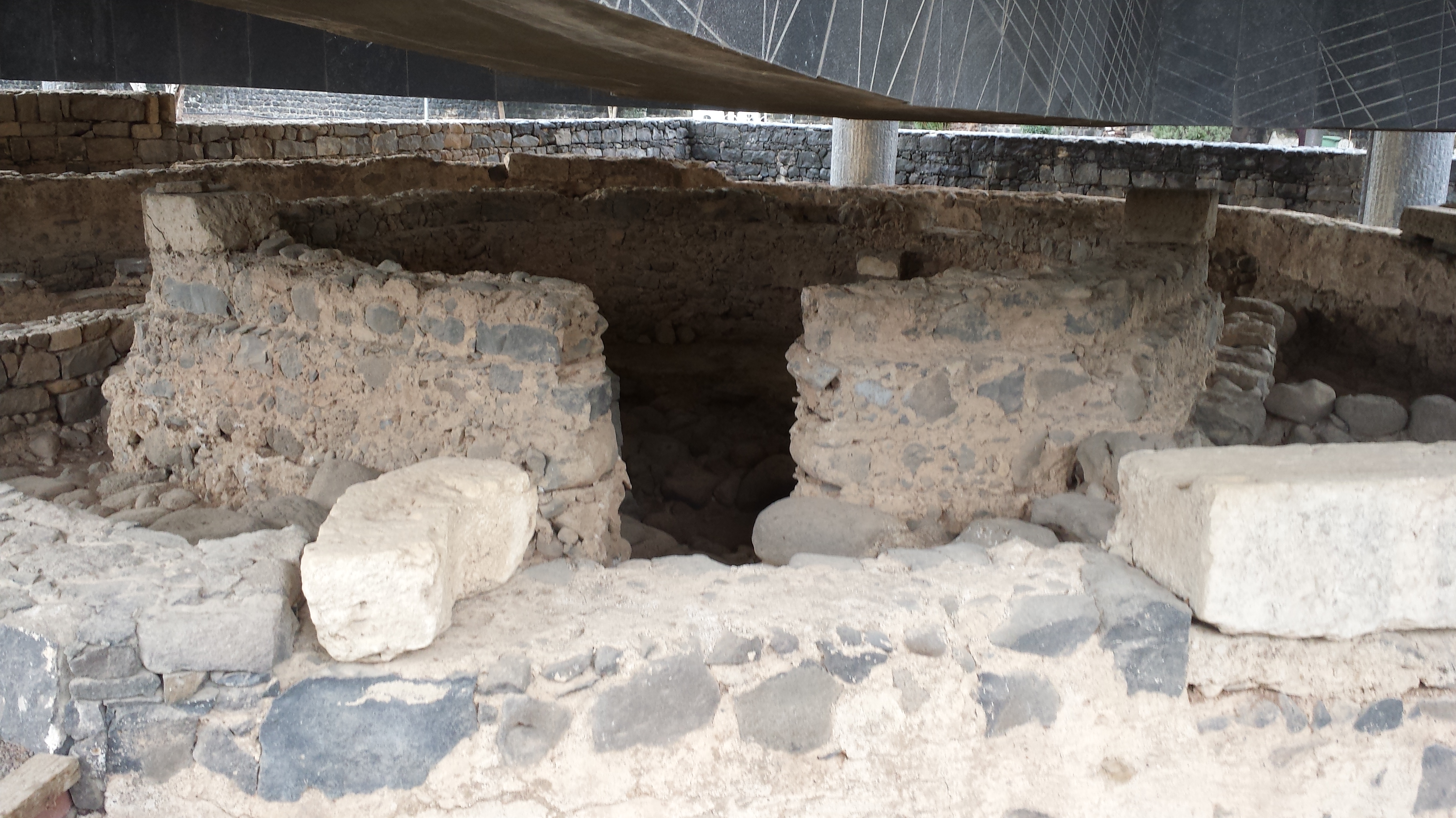
Not so long ago, archaeologists excavated the remains of a series of early Christian churches (Byzantine and Crusader eras) built around the foundation of a first century home. Evidence at the site strongly suggests that first century Christians believed this to be the home of Peter – a place that the Gospels tell us that Jesus visited frequently and where he healed Peter’s mother-in-law when she was sick.

The alien structure built for viewing Peter’s home

The alien structure built for viewing Peter’s home

The Franciscan community that owns the property now built a large building over the site of Peter’s house that looks as though a giant spaceship has landed, complete with extended landing legs like the Apollo lunar module. Though the architectural affect is pretty hideous, you can walk up into the spaceship for a good view of the ruins of Peter’s house, looking down through the paneled glass floor. I suppose it’s a reminder of how a family once got a sick man through the crowd around Peter’s house for Jesus to heal by cutting a hole through his mud and thatch roof and lowering the sick man down into the house.

A glass floors provides viewing down into the ruins

A glass floors provides viewing down into the ruins

Me and Laura Smith, wife to the bishop of Arizona, The Rt. Rev. Kirk Smith. Behind her you can see the altar in the viewing center
Me and Laura Smith, wife to the bishop of Arizona, The Rt. Rev. Kirk Smith. Behind her you can see the altar in the viewing center

Looking into the ruins of the first century chapel that surrounded Peter home
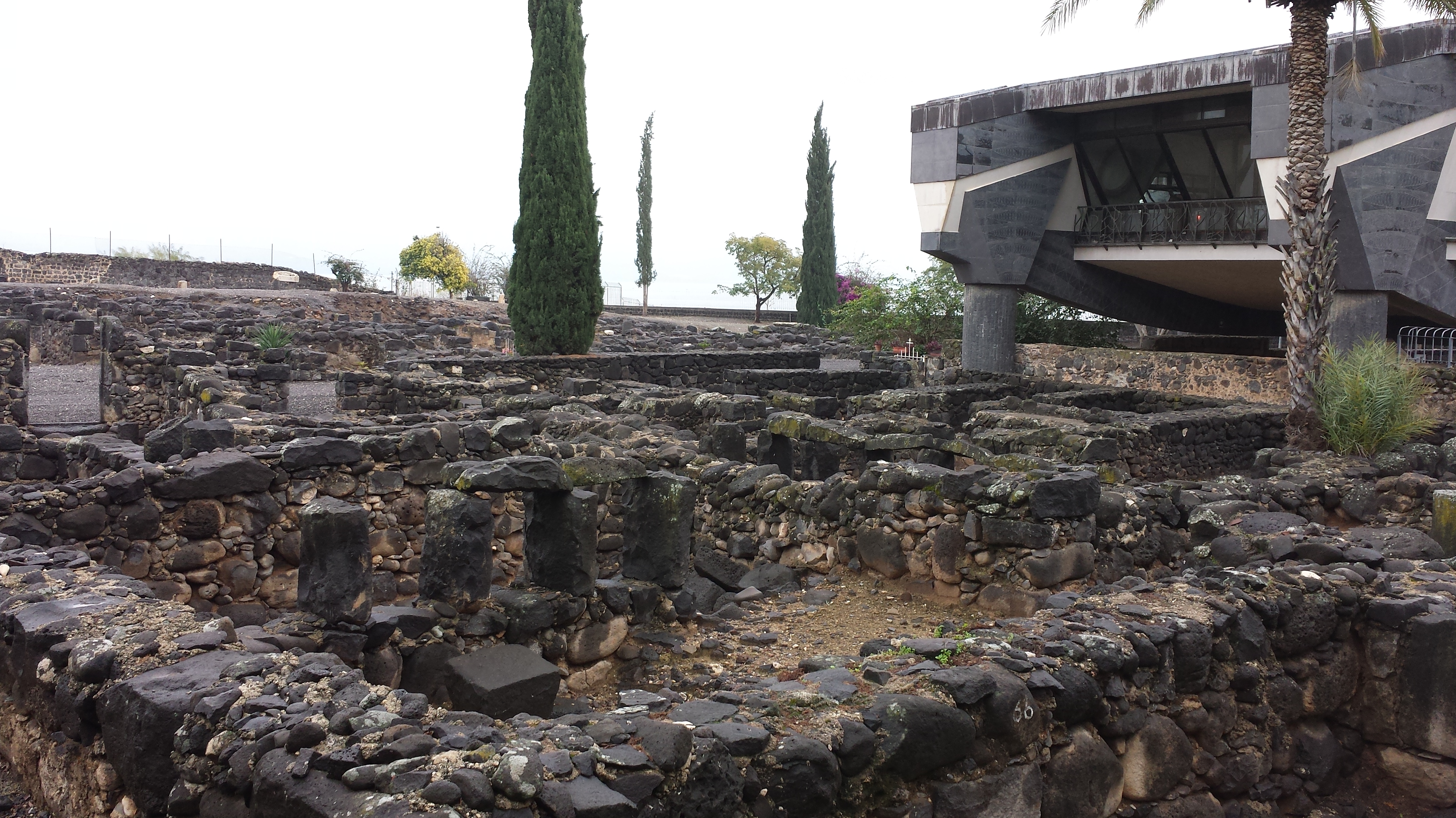
Looking into the ruins of the first century chapel that surrounded Peter home

Looking over the basalt foundation remains of Peter’s first century neighborhood - his home is under the center, which is visible in the background

Looking over the basalt foundation remains of Peter’s first century neighborhood – his home is under the center, which is visible in the background

The first century ruins of Capernaum also contain a Byzantine era synagogue, but underneath the foundation of it are the remains of a first century synagogue – one that Peter and Jesus would have visited. For a long time, religious scholars didn’t think that Hebrew communities really had local synagogues, that the only place they would gather for worship was the Temple in Jerusalem. But as the years go by, more and more sites are being discovered that show us that many towns around the Galilee did have small synagogues in the first century, all facing the south – the direction of Jerusalem.
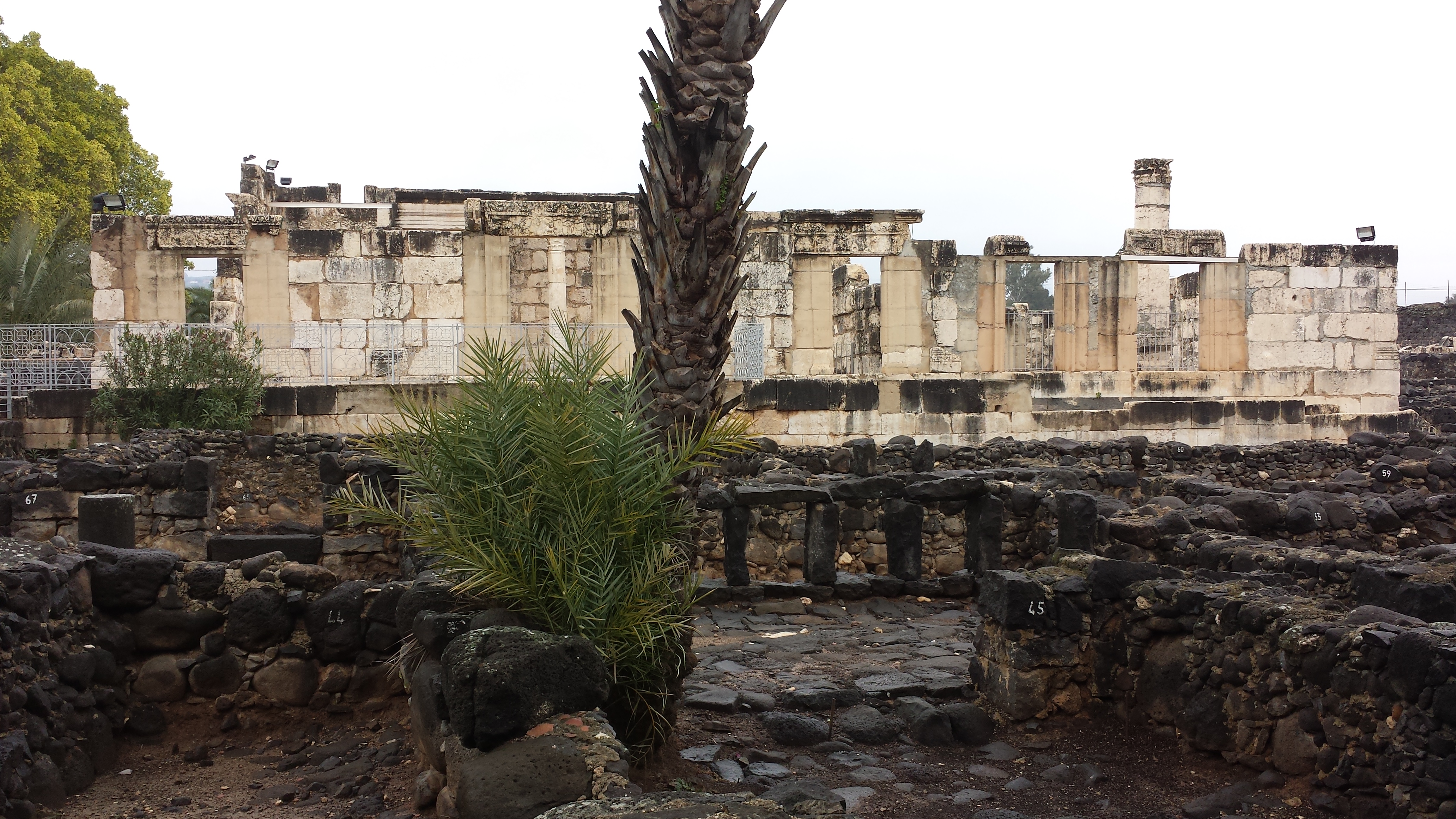
Underneath this Byzantine synagogue are the remains of a first century synagogue

Underneath this Byzantine synagogue (the light stone ruins) are the remains of a first century synagogue

All the evidence indicates that Capernaum was a relatively large, predominantly Hebrew town, based around a bustling fishing industry which the Romans economically exploited during their occupation in the lifetime of Jesus and the apostles. In some ways, for Peter and the others to leave their livelihoods behind was also to freely (and dangerously) walk away from the unjust system of oppression experienced under the Roman Empire.

A first century olive press

A first century olive press

Detail of one of the stone capitals from the synagogue,  depicting the Ark of the Covenant

Detail of one of the stone capitals from the synagogue, depicting the Ark of the Covenant

Ghussan reminded us that we had to hurry back onto the bus in order to get to our pre-arranged boat trip out onto the Sea of Galilee.

Operated by a Jewish community known as a kibbutz, our group walked along a dock from the learning center to board a large version of the types of wooden fishing boats used in the first century. Only, the boats of the first century were not motorized (as this one was) but driven by wind and sail. As we boarded, the pilot and crew quickly ran up an American flag to fly alongside the flag of Israel. We would pass boats with Japanese and British flags during our time on the water. People from all over the world come on pilgrimage to this place.

20150115_104644

Bishop Greg the pirate!

Bishop Greg the pirate!

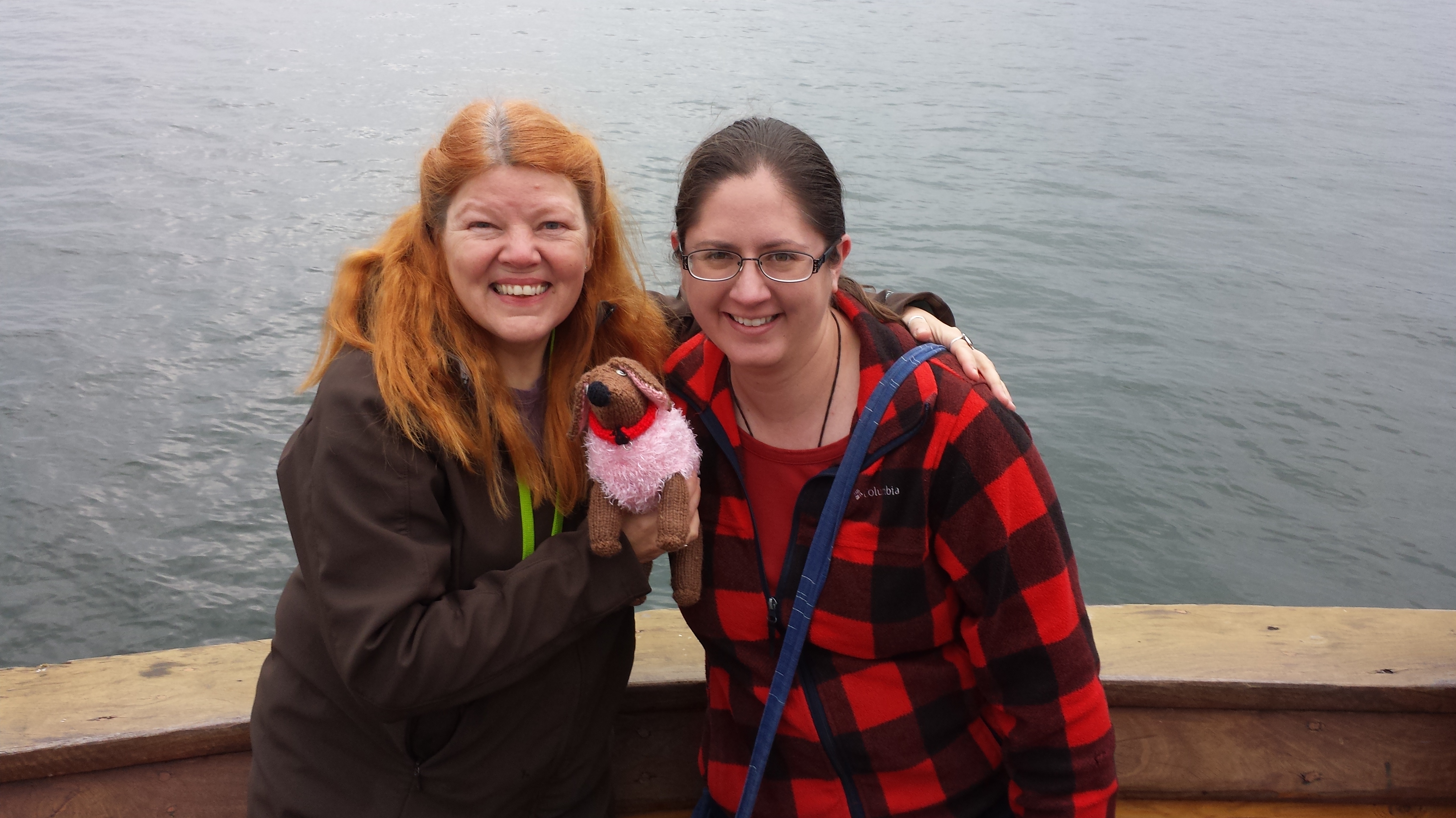
Me, Rachel and Sarah Monroe of the Diocese of Olympia

Me, Rachel and Sarah Monroe of the Diocese of Olympia

Once out into the middle of the sea, the pilot shut off the gas engine. During our prayer service, the silence was only broken by the sound of Israeli jet fighter planes buzzing our particular boat, tipping their wings towards us – perhaps because of the American flag. Altogether, six Israeli military aircraft buzzed our boat while we were out on the water. I’m fairly certain we were supposed to feel glad and honored by it, though in truth, we all seemed to feel a bit awkward. We are, after all, a fairly reflective group, what with trying to pray and all.

One of several Israeli military aircraft that said hello to us

One of several Israeli military aircraft that said hello to us

Each passenger on the boat received a certificate, even me!

Each passenger on the boat received a certificate, even me!

Once back on shore, we made our way into the Kibbutz center where an important archaeological find is on display. Inside are the carefully preserved remains of a first century fishing boat, and example of the type of boat used on the Sea of Galilee during the first century. It’s made of all kinds of different woods from the local area, as though they used whatever they could find to do the job or make a repair. The locals call this display, “the Jesus boat.”

The Jesus boat - notice the image projected on the wall behind it from an old mosaic of exactly this type of boat

The Jesus boat – notice the image projected on the wall behind it from an old mosaic of exactly this type of boat

Our next stop was completely unexpected, since it was not on our itinerary at all. Because the weather was so cool and overcast, the bishops had made the decision to move our daily Eucharist from the outside venue they had intended in Tagbha to a special visitors center located on the site of the first century town location of old Magdala.

The fountain well and pillar with no name in the Magdala Center

The fountain well and pillar with no name in the Magdala Center

The newly erected center is dedicated specifically to the women who followed Jesus during the time of the apostles. Inside the entry level of the center is a high arched round hall with a large burbling well fountain in the center. Five pillars support a painted dome above, with each pillar representing a woman noted in Scripture as those who accompanied Jesus and the apostles.

The pillar that moved Rachel most was the pillar that did not have a name inscribed on it. Our center guide, Alessandra, told us the nameless pillar was intended to represent all the women throughout Christian history who were not named but who were faithful, continuing to pass along the Christian tradition to their daughters and sons.  In many cases those nameless women of the centuries were leaders, healers, mystics, scholars and teachers of the church.

20150115_130149

The boat sculpture in the main level chapel to the apostles

Beyond the large entry hall is a glass wall, with an airy chapel dedicated to the twelve apostles. There is a model of a fishing boat from the time, with another glass wall that looks out over the Galilee. There are twelve mosaics, one of each apostle.

The chapel beneath the center

The chapel beneath the center

Descending down a spiral marble staircase to the floor beneath the center, our group celebrated Eucharist on the exposed stone sub-floor of the occupation level of a Byzantine church over which the center is built. Bishop Barry led the service, with Dominic assisting. Bishop Greg had Rachel take up an offertory collection, which we gave to the Magdala Center.
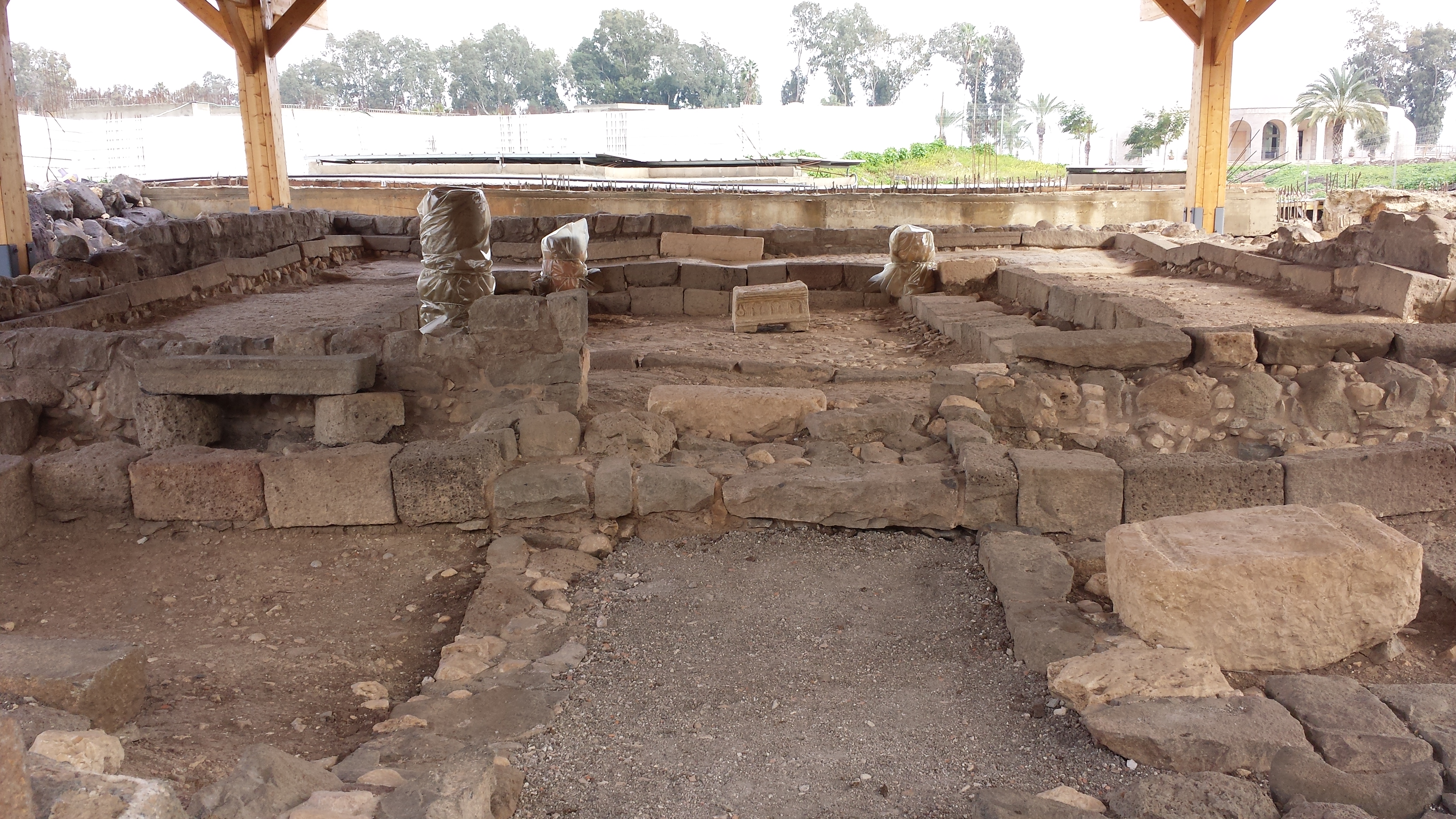
The first century synagogue of ancient Magdala

The first century synagogue of ancient Magdala

In 2009, the people who purchased the land to build the center made an amazing discovery as they were breaking ground for pilgrim hotel. They found the town ruins of first century Magdala, which include a synagogue.
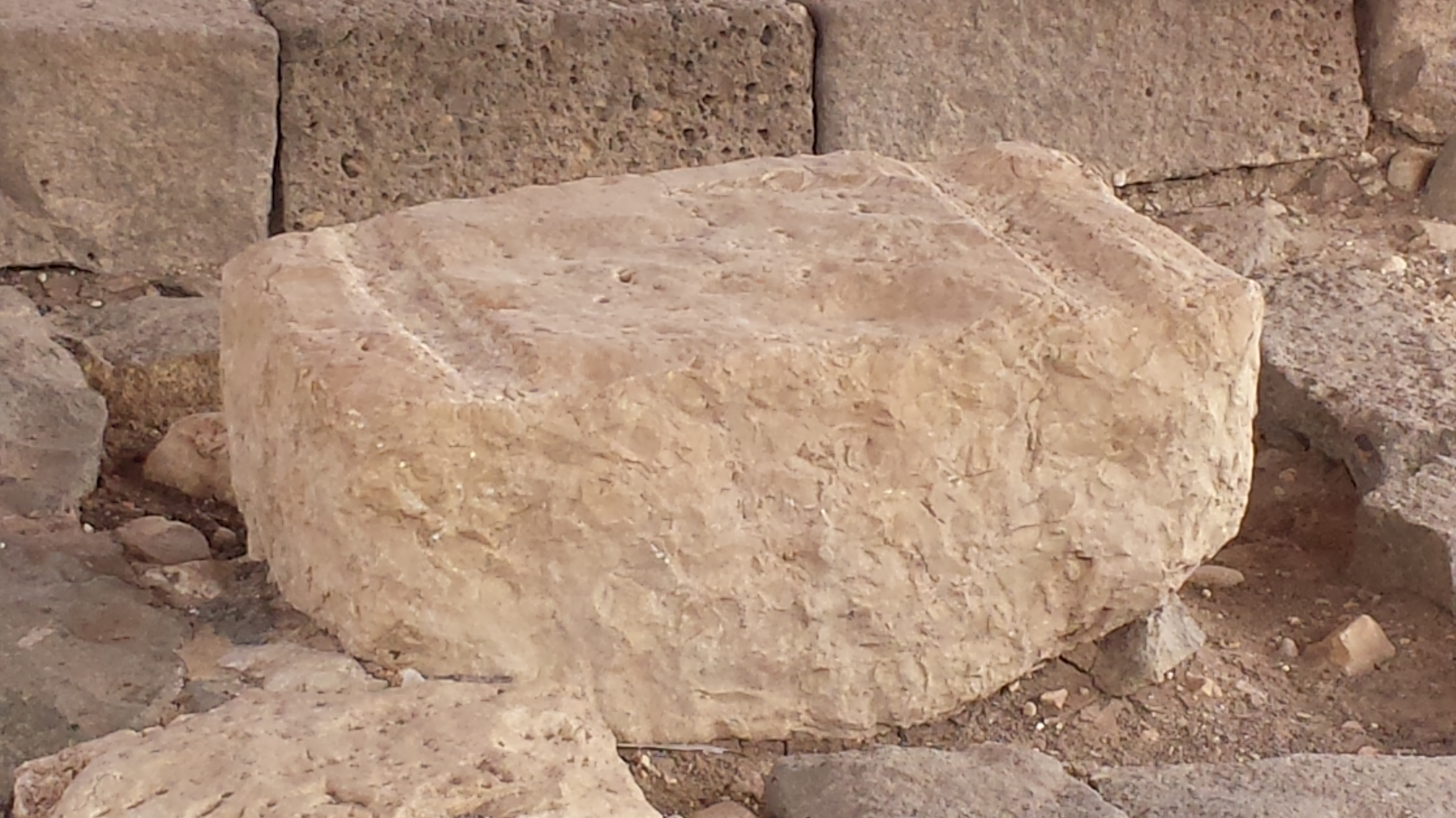
The grooves on either side of this stone indicate that it was used like a lectern. The grooves each held the end rod of an open scroll. There is a very high probability that Jesus used this plinth during his preaching around the Galilee. 

The grooves on either side of this stone indicate that it was used like a lectern. The grooves each held the end rod of an open scroll. There is a very high probability that Jesus used this plinth during his preaching when he visited the synagogue at Magdala.

Jennifer, an archaeologist from Chicago who works at the center, gave us a tour of the synagogue ruins. They continue to excavate more of the town, known for its fish salting industry during the time of Mary Magdalene. It’s amazing to understand that she would have walked the streets there, gone to the synagogue and sat in the women’s gallery there. It was a town that Jesus would have known well, to which he could have sailed or walked easily during his time in Galilee. He would have needed to pass through it every time he accessed the walking road through the mountain pass near there – the road to Jerusalem from the Galilee.

Peter’s Fish from the Sea of Galilee

Peter’s Fish from the Sea of Galilee

The next stop was lunch! Some of us ordered “Peter’s Fish,” the type of fish that live in the Sea of Galilee and are harvested even today.
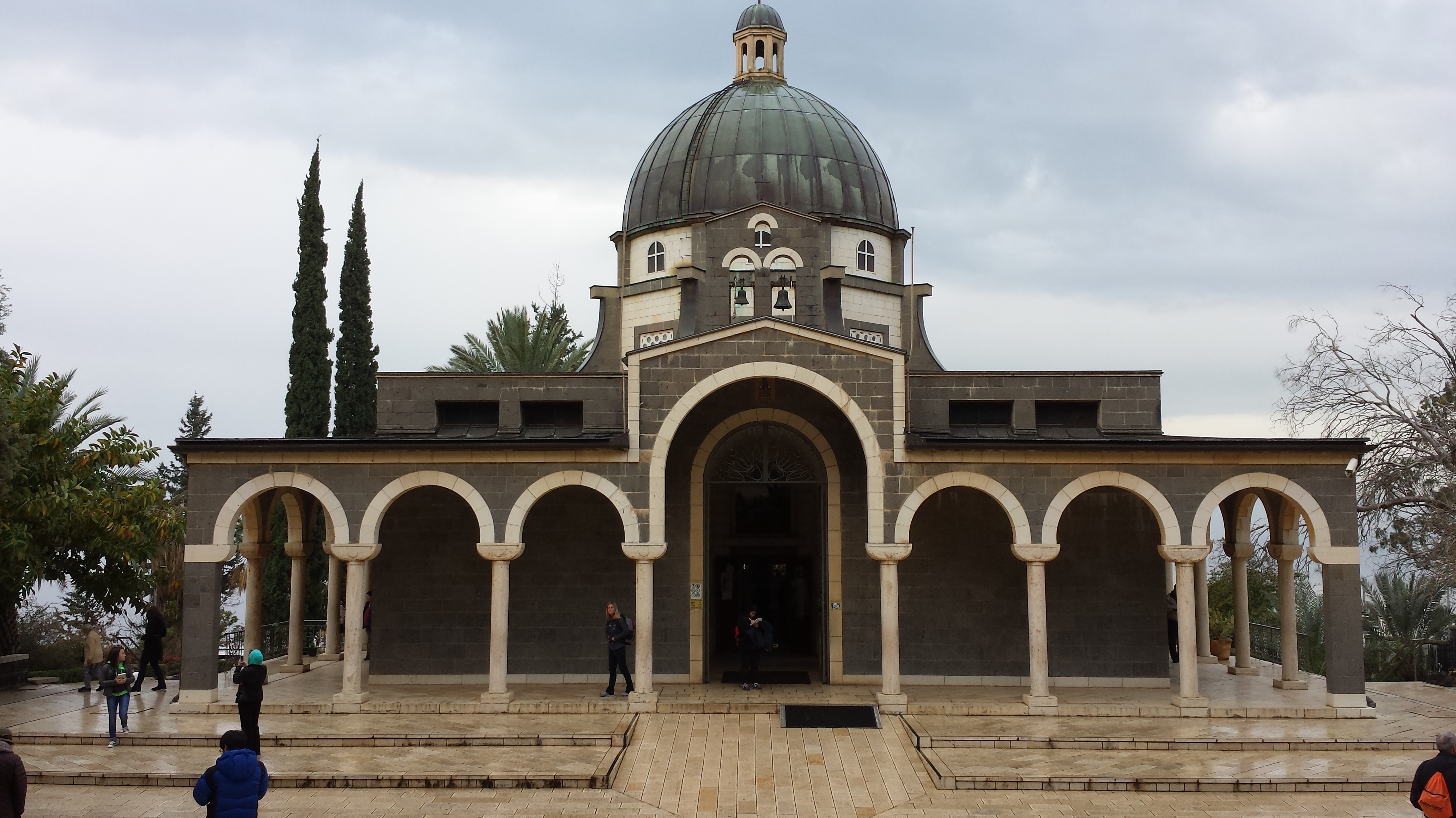
The Church of the Beatitudes

The Mount of the Beatitudes

After lunch we visited a Catholic church called The Mount of Beatitudes. No one really knows where exactly Jesus gave his sermon on the Beatitudes, but the tall banks of the shores in this particular area would have acted as a natural amphitheater for someone to talk and be heard by many people gathered on its slope.

In this church, the altar is in the center

In this church, the altar is in the center

There were some weird things about this site that were confusing to me. Can a thirsty dog have a drink or not?
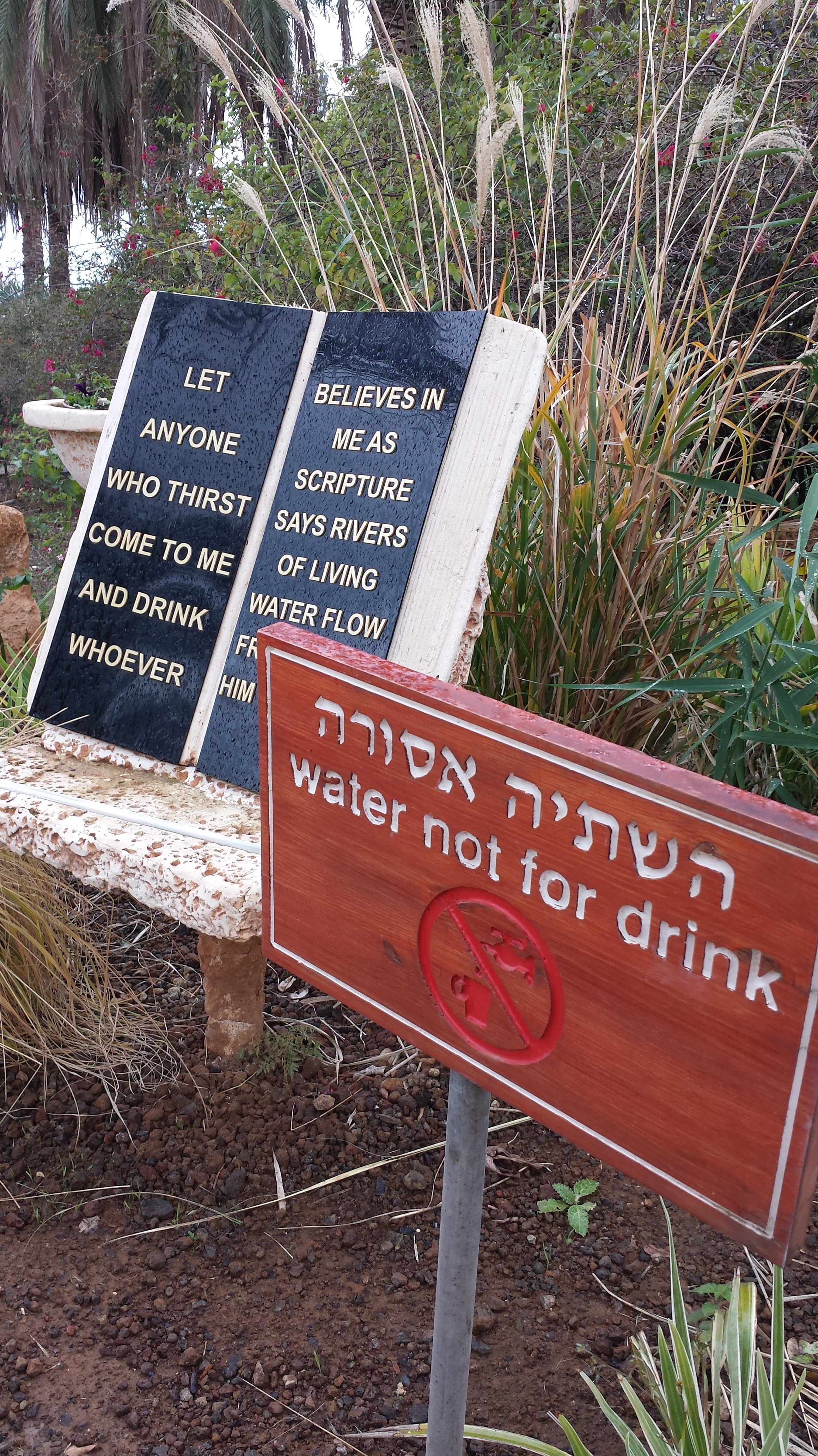
The juxtaposition of these signs seems ironic!

The juxtaposition of these signs is weird!

But we did have a brief prayer service in the church and had a look around its gardens.

Our final stop of the day was back at Tagbha, on another part of the property where we are staying.

The Church of the Multiplication

The Church of the Multiplication

The Church of the Multiplication has long been associated with the story of the multiplication of the loaves and fishes. The exposed mosaic floors of a Byzantine church (which goes back to the 300’s) were likely created when the shrine was expanded in 480. The central focus of the shrine is a particular rocky outcrop. You can see a part of the rock just beneath the present day altar. In front of the rock is a 5th century mosaic of two fish and a basket with five loaves of bread.
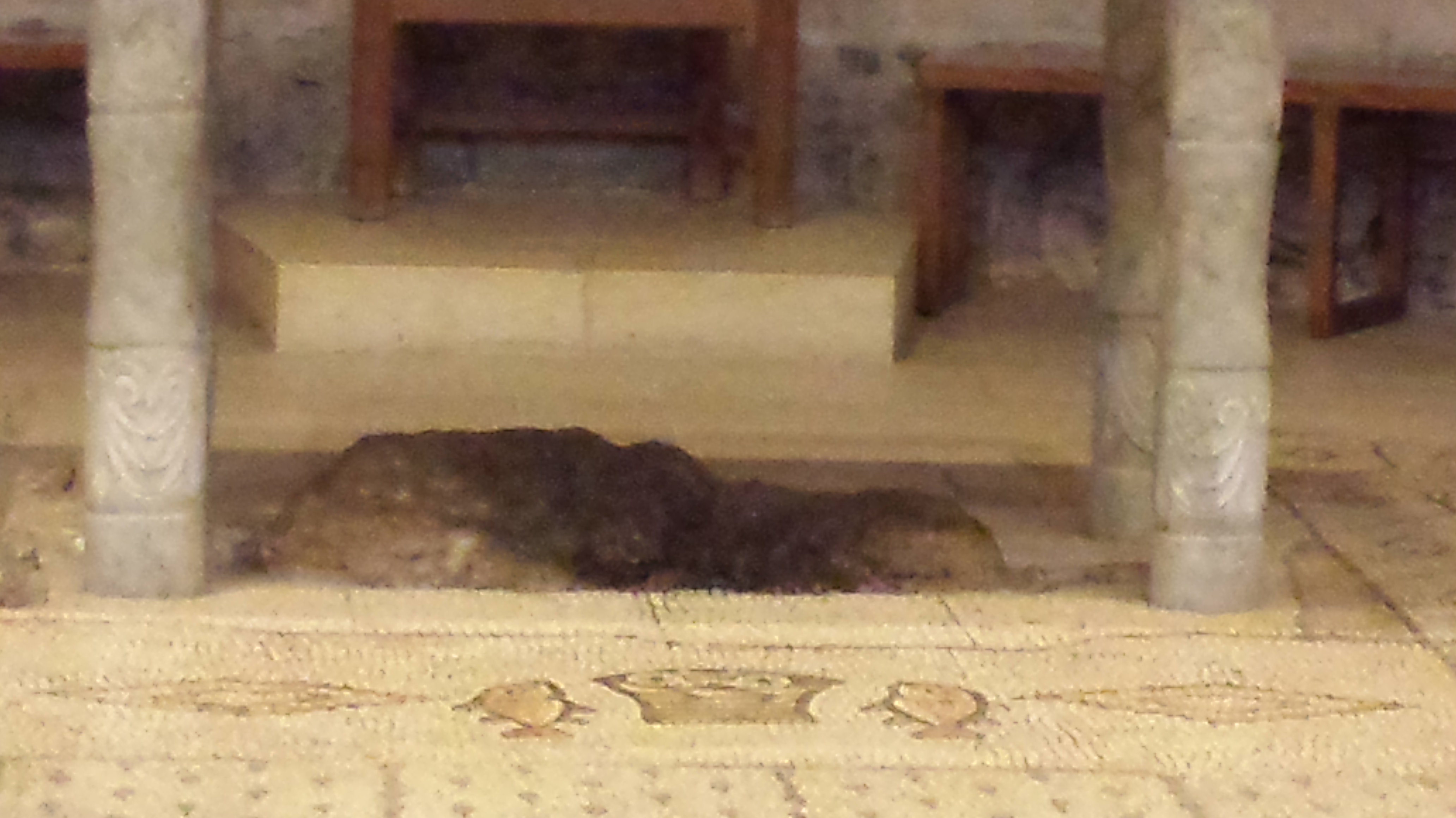
Mosaic of Loaves and Fishes

Mosaic of Loaves and Fishes

I lit candles at the icon of Mary in the church, and Rachel and I said prayers for a parishioner (Julie Amdal) at Trinity who is having surgery soon. We have also been saying prayers for the repose of the soul of Wick Congdon and comfort for the Congdon family (and other parishioner’s, too) in the prayer services we have had.
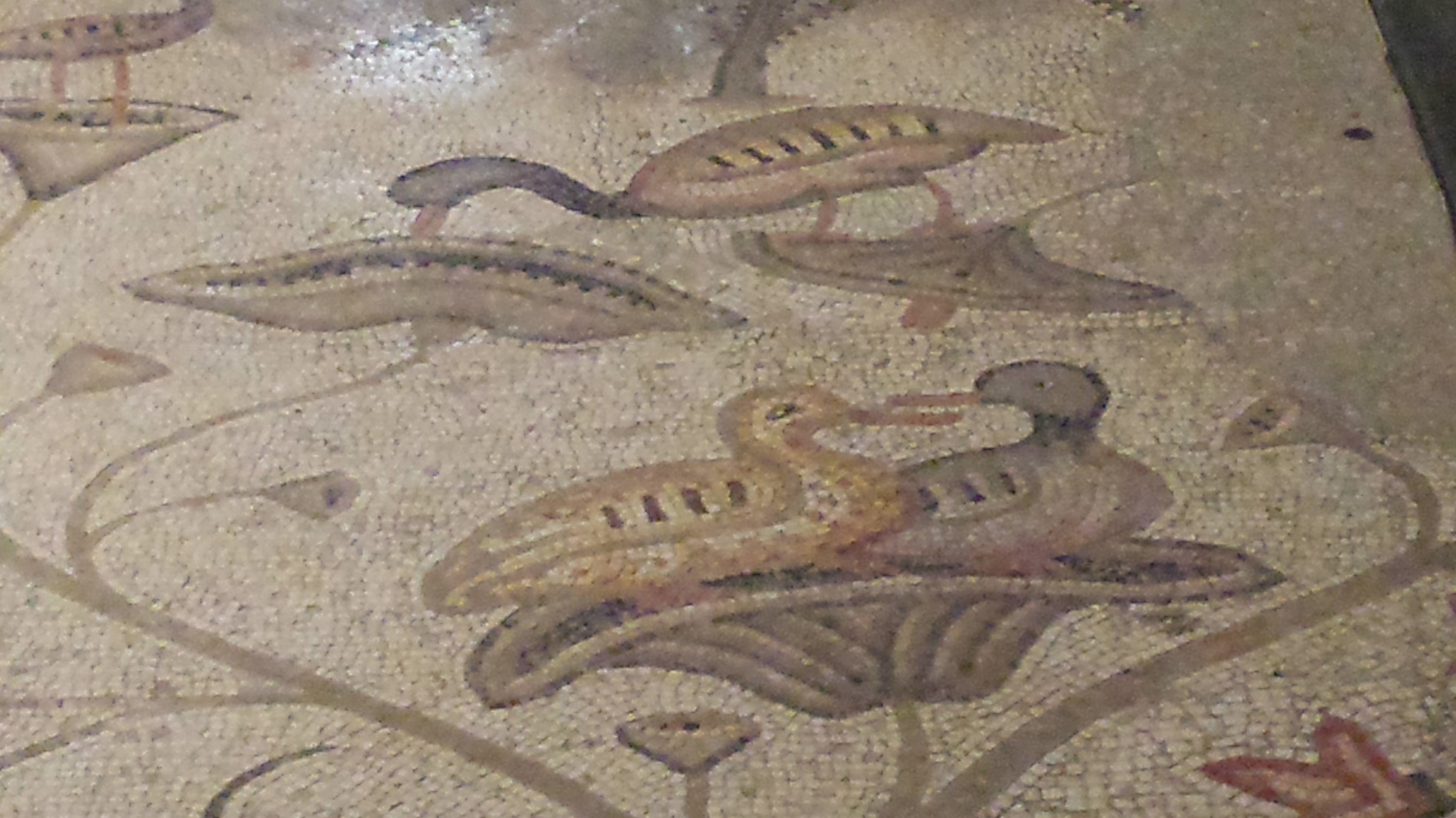
Fifth century mosaics

Fifth century mosaics

The atmosphere in the Church of the Multiplication is very quiet and restful. Even a puppy gets the sense of the long history of quiet prayers in this place. Today, a small German order of Benedictines regularly says prayer offices and leads Sunday services in the church.
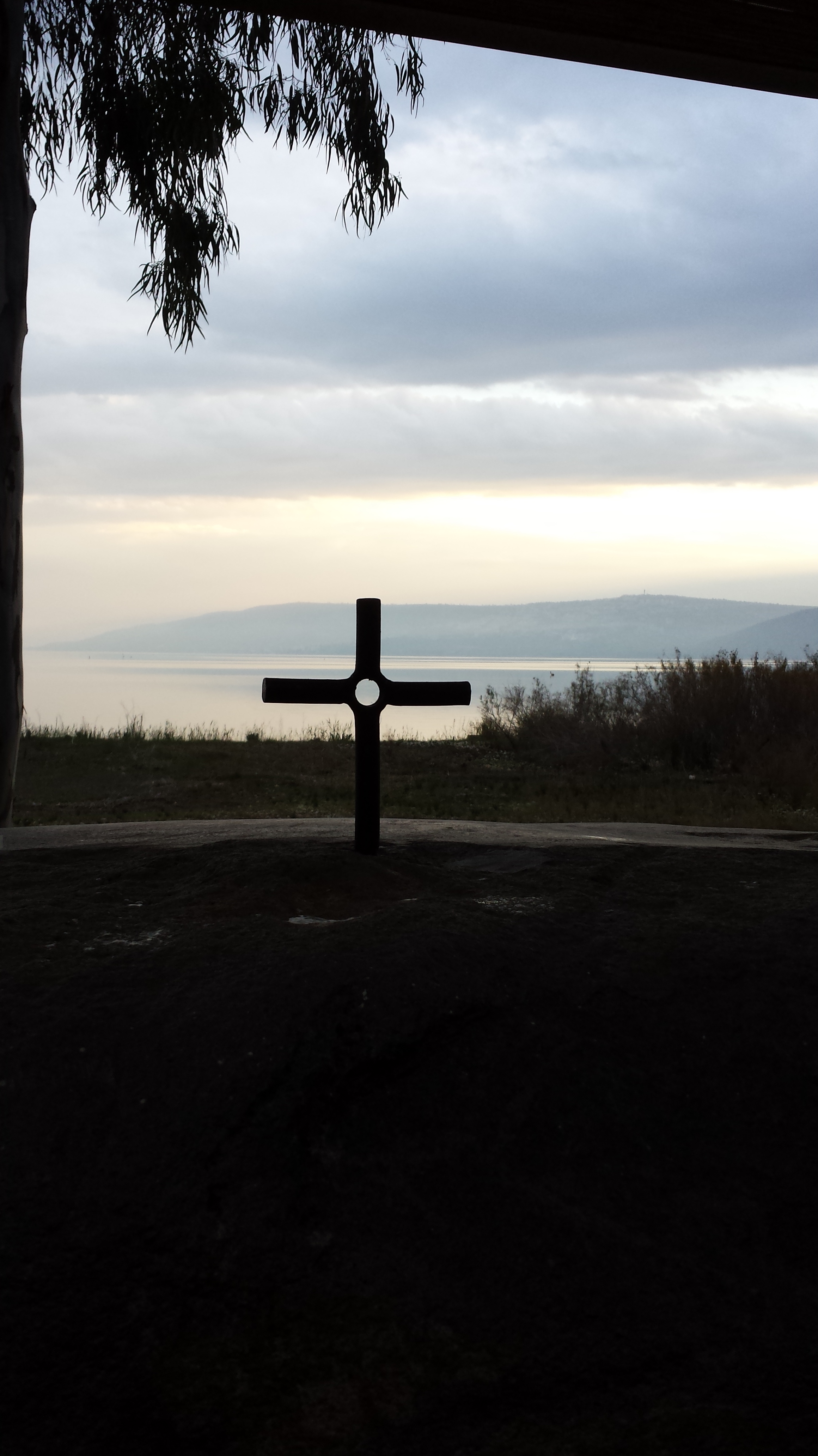
First outdoor chapel

First outdoor chapel

After visiting this last church of the day, Bishop Greg, Rachel and me (along with several others) decided to walk back to the Pilgrim House. First, though, we visited the two outdoor chapels outside the church and near the shores of the sea. We sat quietly for some time at each of the chapels, and at the first one, we were met by a local hyrax – little furry rock dwellers (about the size of a groundhog) that have pointy noses just like mine!
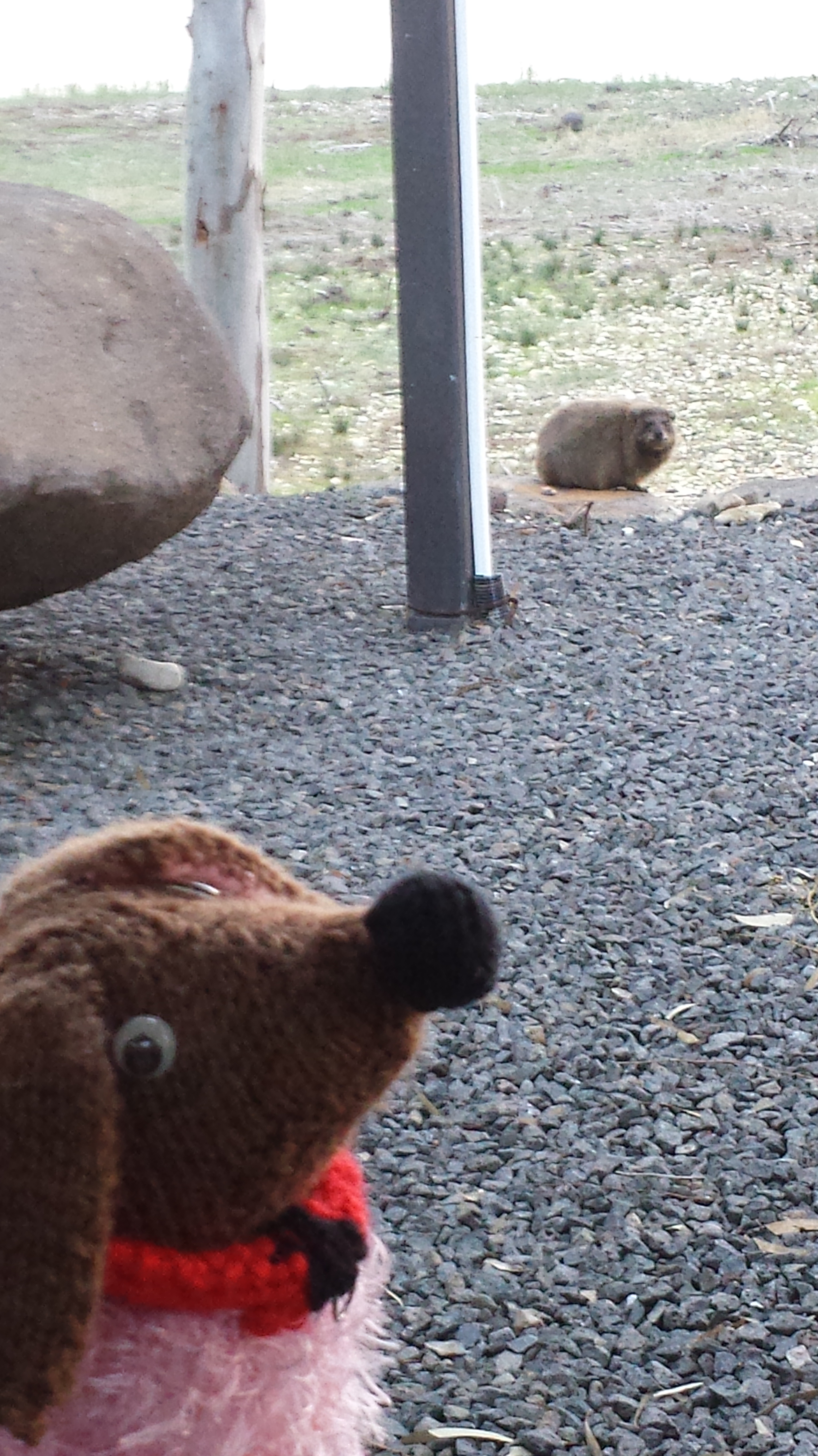
Me and my new friend, Hyrax

Me and my new friend, Hyrax

At the second chapel, Rachel and I walked down to the shoreline, which is more typical with rocks and grasses (and more difficult to negotiate) than the unique beach at the Primacy of Peter.

Second chapel

Second chapel

More typical of the Galilean shore

More typical of the Galilean shore

After a short shower of rain (from which we were protected under the shelter of the chapel), our group walked back to the Pilgrim House for quiet time, dinner and Compline. Like yesterday, I was so tired that I went straight to bed to dream of the fish, hyrax, cats, seagulls and dogs that I met along the journey this day – all companions on my earthly pilgrimage. I feel very grateful to be here in this place with them all.

Here’s to barking at squirrels!
Henry
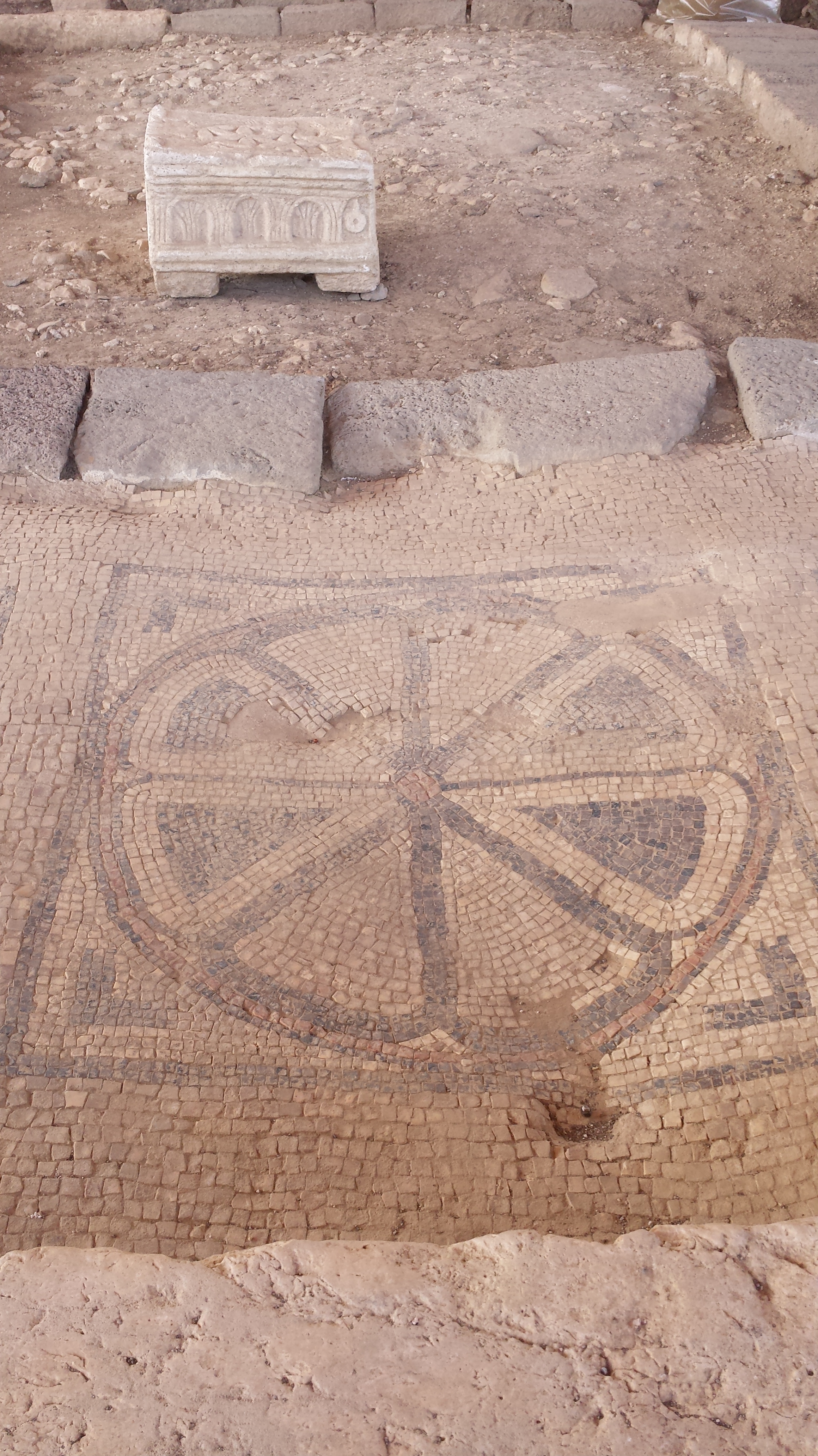
Original mosaic in situ, Synagogue in Magdala

Original mosaic in situ, Synagogue in Magdala

New replica of the mosaic as it would have looked

New replica of the mosaic as it would have looked in the first century

Henry Goes to the Holy Land – Day 2

Leave a comment

January 14, 2015

Like yesterday, today was a beautiful, cool sunny day for exploring.  Once aboard our bus, our driver (Nihal) took us along the winding hillside roads to Nazareth. We passed the town of Magdala along the way, the place where Mary Magdalene is believed to have lived.

The town of Magdala today

The town of Magdala today

We also drove along the base of a tall cliff, which our guide, Ghassan Makhalfeh, told us about.  Apparently, toward the end of the time of Jewish revolt against the Romans, some Hebrews tried to avoid capture by living in caves, high up on the side of the face of the cliff. They were eventually defeated when Roman soldiers were lowered over the side of the cliff in baskets, so they could enter the caves from above – rather than having rocks and other weapons hurled at them to prevent them from climbing up from the bottom of the cliff.

20150114_085749

The cliff

Many of the towns look very similar to one another, since the architecture is basically the same everywhere, as are the building materials of local quarried stone and concrete. Homes look like three-story cubes with balconies and flat roofs.  On top of most roof tops are large black plastic tanks filled with water – the hot sun heats the water in the tanks, so that homes have cost-effective, solar-heated water.

Olive Groves near Nazareth

Olive Groves near Nazareth

Because its nearly springtime here, the valleys and hillsides are very green with dessert grasses, small flowers and cultivated crops like banana trees, citrus, pear and olive trees. By contrast, in the summer time, most of the hillsides will be brown, with very little plant life.  In some ways, the land here reminds me of southern California – palm trees, dessert shrubs and cactus, then tracts of orchards, vineyards and farms.  On some hills, we see cows and goats.  We haven’t yet seen sheep, but I can smell them on certain breezes – so, I know they’re out there!

After a short drive, we arrived in the town of Nazareth, the place where Jesus was raised and likely lived for much of his life before his ministry began on the shores of the Sea of Galilee.

20150114_095110

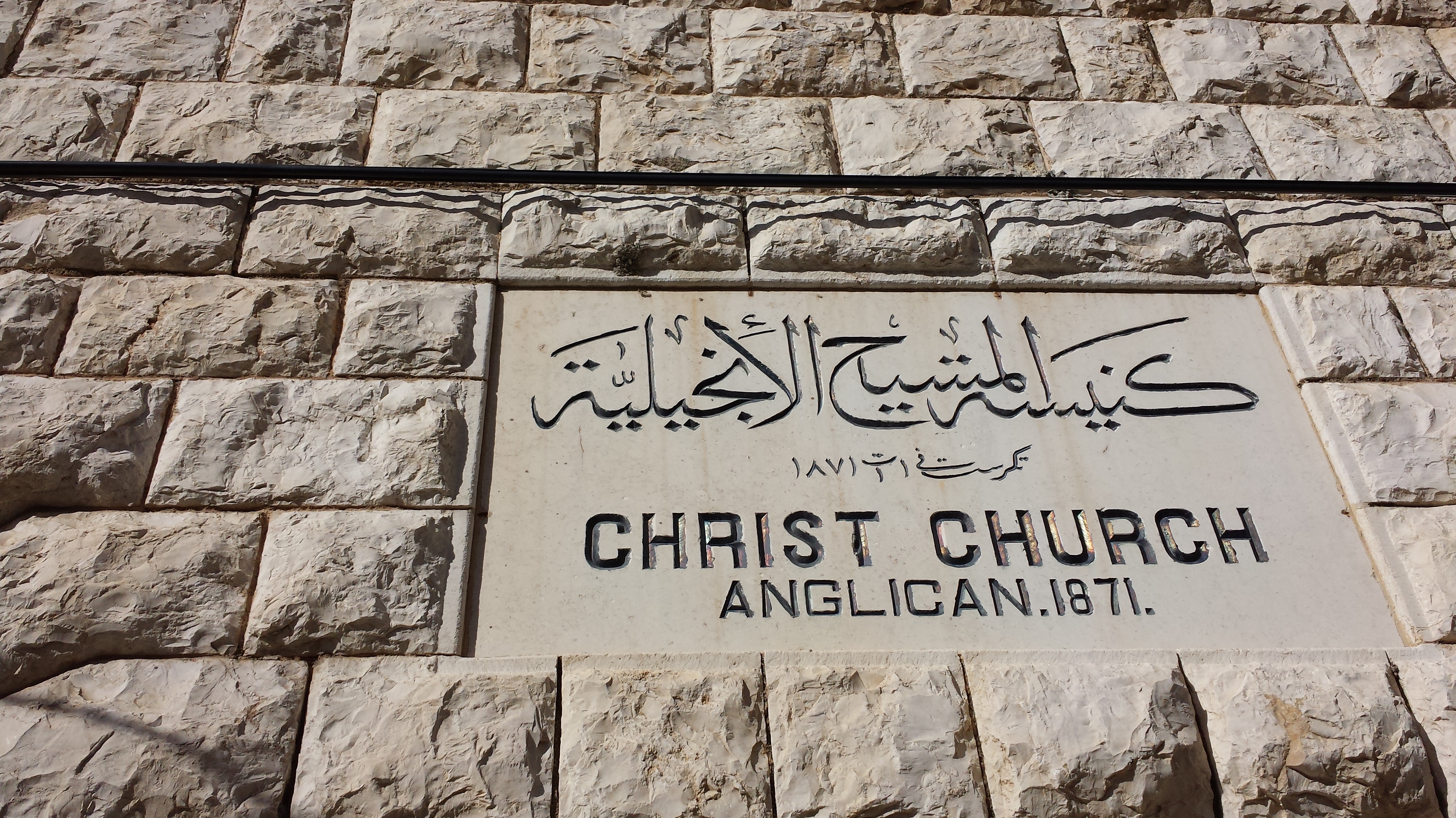
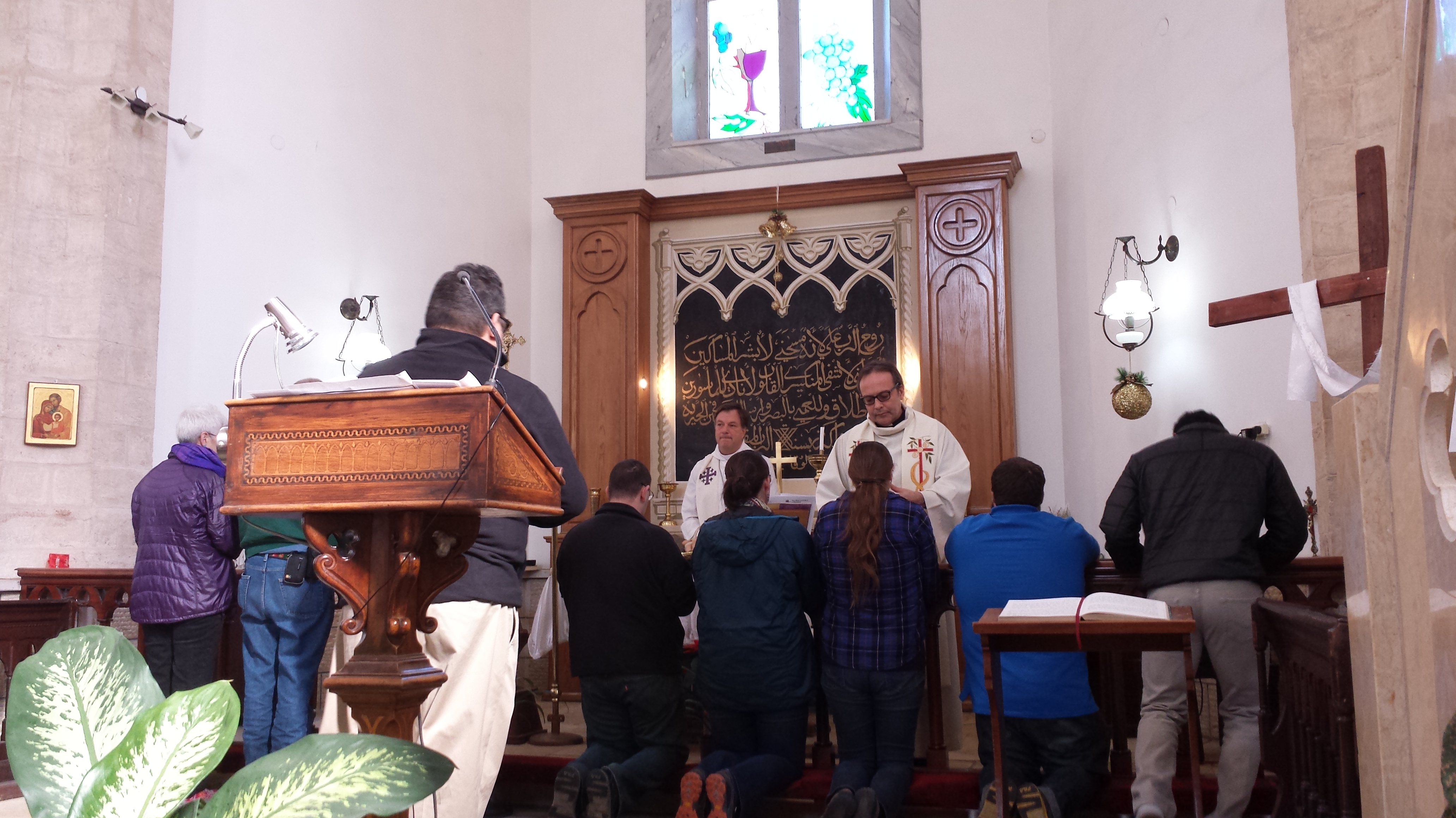
Our first stop was Christ Church in Nazareth, a small local church, where the services are led in Arabic, since the local Christians are Arab Israelis. But on this morning, we were allowed to hold a Eucharist ourselves, led by Bishop Greg, with a nice priest name Fr. Paul Kennington (from Montreal, Canada) as the preacher. Rachel was asked to do the first reading and lead the prayers.

Communion at Christ Church

Communion at Christ Church

A banner made by the children of Christ Church parish

A banner made by the children of Christ Church parish

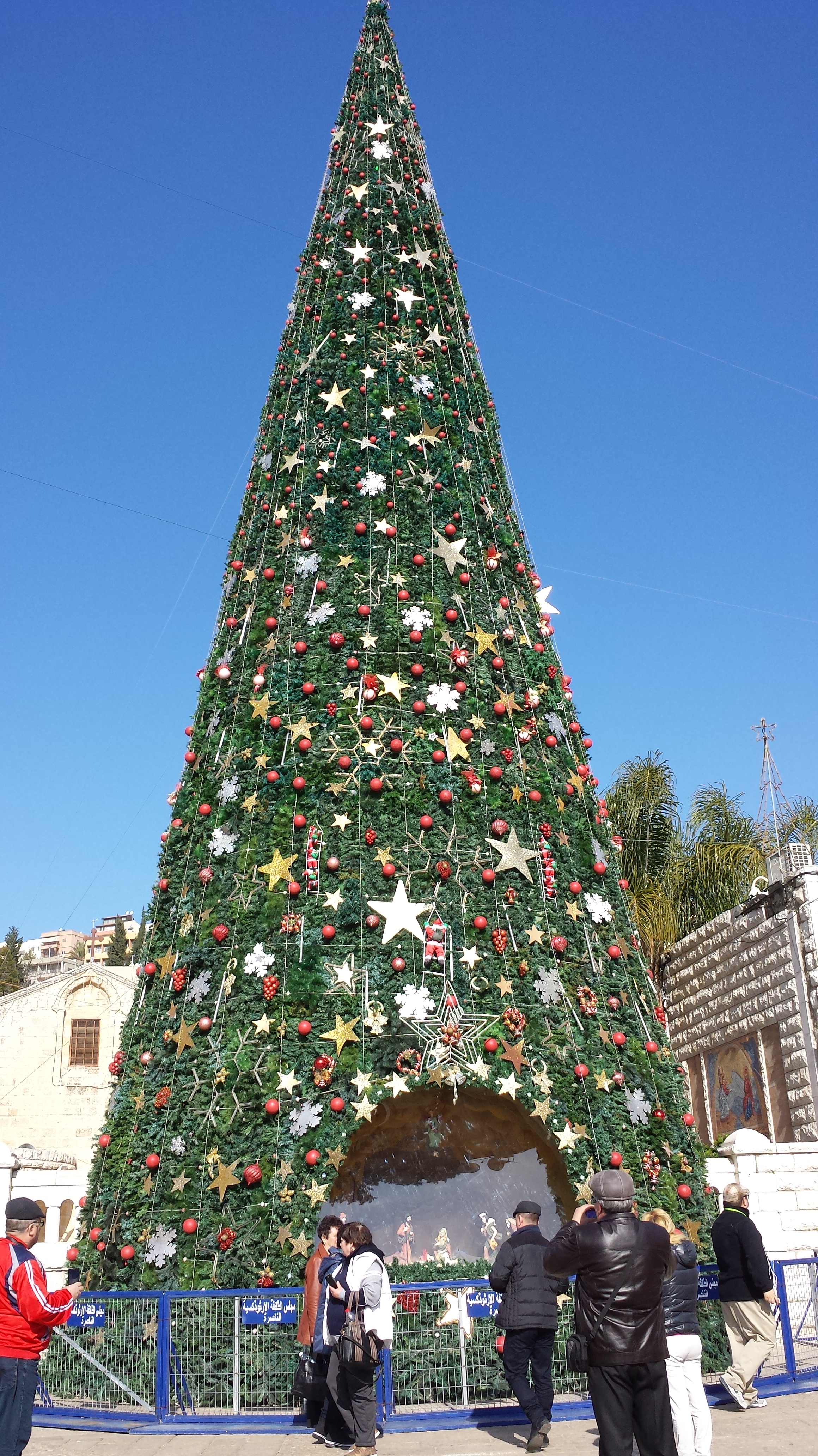
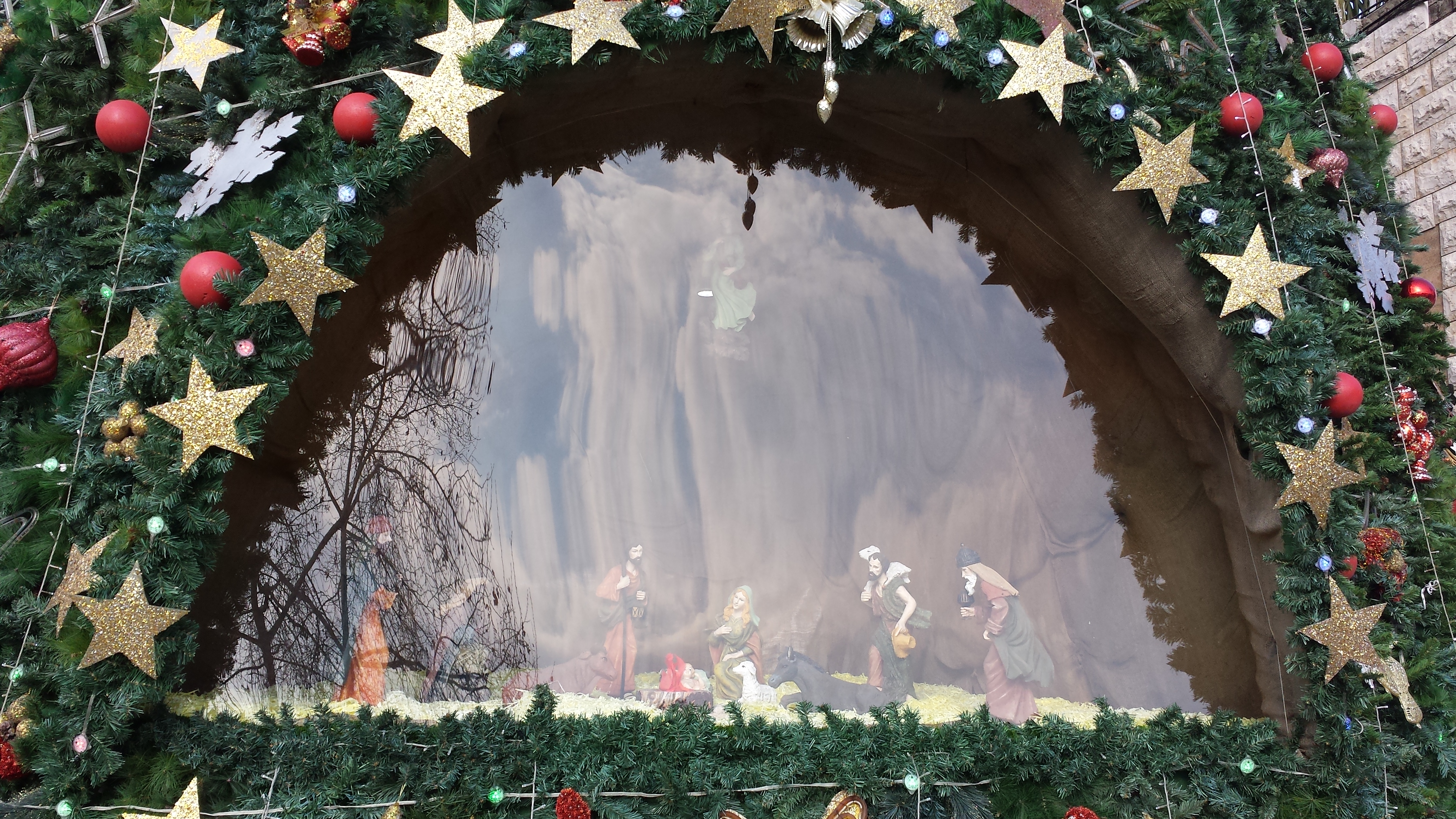
The Christians churches and towns here all still have up their Christmas decorations, and Nazareth is no exception.  In fact, when I asked the locals, I was told the decorations will stay up until February 2, when the Feast of the Presentation is celebrated (when Jesus, as a child, is presented at the Temple in Jerusalem). A HUGE, tall Christmas tree is set up in the town center.  It’s really unique, too – one side of it has a large inset with a glass front.  Behind the glass is a Nativity scene – in the Christmas tree!

Christmas tree in Nazareth town center

Christmas tree in Nazareth town center

Nativity inset into the Christmas tree

Nativity inset into the Christmas tree

Very near Christ Church, just across the close-knit streets of the town, is the convent of the Sisters of Nazareth – an order originating in France that came many years ago to care for the poor living in Nazareth. When the sisters wanted to buy the land in Nazareth to build their convent in 1857, the man selling the property set a very high price, telling them that it was “very sacred ground” associated with “The Just.” Well, the sisters thought that was just a trick to justify the high price of the land, so they looked elsewhere.  Only, they couldn’t find another property that would meet their needs.

Sr. Margaret Bern at the convent of the Sisters of Nazareth

Sr. Margaret Byrne at the convent of the Sisters of Nazareth

Ultimately, the sisters came back and bought the expensive property.  They built their convent and lived there for thirteen years. Then, they began a small renovation project to improve the plumbing, digging beneath the the foundation of the convent. During the digging, a section of ground suddenly gave way, revealing what they would soon discover to be a very important archaeological discovery. They found the ruins of a crusader era church, built around the ruins of an earlier Byzantine era church, which in turn was built around a first century house.  Evidence in the site and writings from early Christian pilgrims to the area helped confirm the belief that the early church recognized the site as the home of Joseph (husband of Mary, father to Jesus), who is also referred to in Scripture as “The Just.”

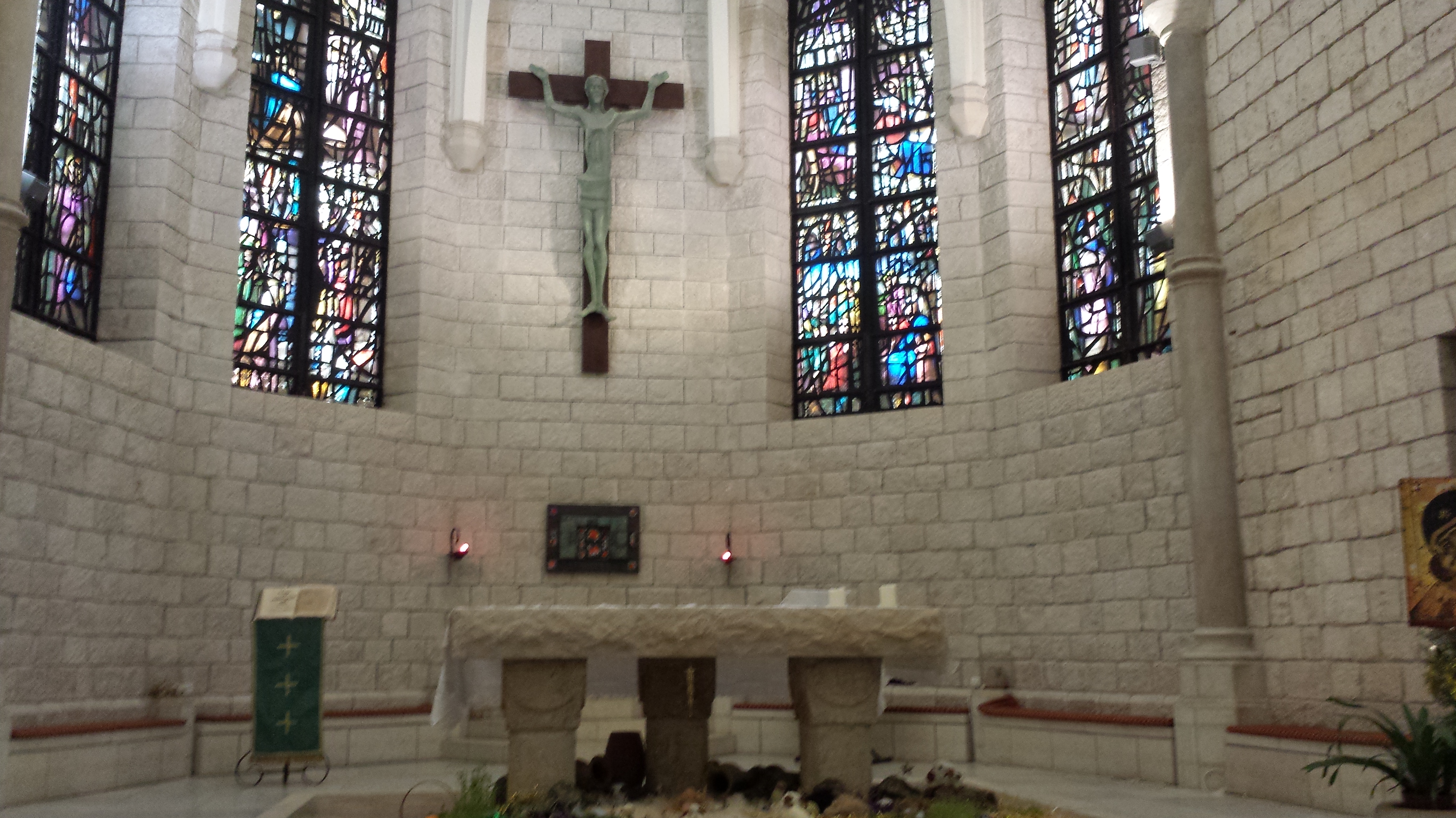
Sanctuary in the convent church

Sanctuary in the convent church

Our group was led by Sister Margaret Byrne, a member of the Sisters of Nazareth, on a tour of the ruins beneath the convent. Sister Bern was very nice, funny and warm, and originally from Ireland before she moved to the Nazareth convent 23 years ago.  Bishop Barry said she was so much like what one might expect a Catholic nun to be that it was like she’d been sent over by Central Casting!

The Byzantine section meets the Crusader section of the site

The Byzantine section meets the Crusader section of the site

First, we descended down stone and marble steps to the “occupation level” of the crusader church, where Sister Byrne showed us the location of the burial site of a bishop from that time.  When they discovered the skeleton, they knew it was a bishop because it had been buried in a seated position (indicating the man’s status) and was wearing a big ring on one of its boney fingers (I’m not sure if all bishops have boney fingers, but they all do have very big rings even today).

Also associated with this era of the site, is a large cistern which Christian pilgrims from that time drew water from a first century well linked to the cistern. They believed that this was the well where Mary was sitting to draw water when the Angel Gabriel visited her with the invitation to bear God’s child. Therefore, the water was considered to be holy, and visiting pilgrims would drink it and take it back to their homes of origin in small clay vessels as a kind of sacred relic.

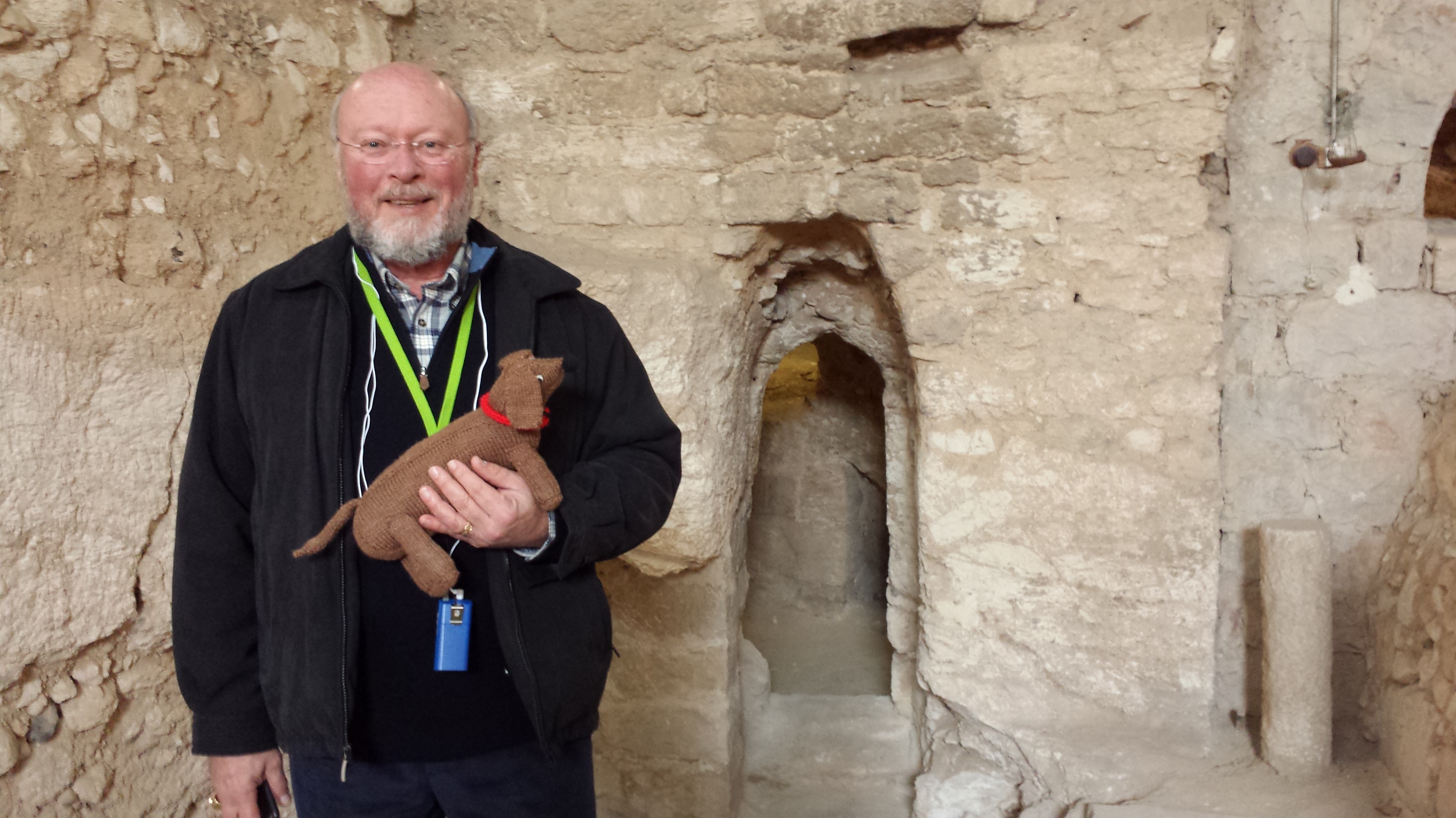
Me and Bishop Barry at the entrance of the first century childhood home of Jesus - the home of Joseph the Just
Me and Bishop Barry at the entrance of the first century childhood home of Jesus – the home of Joseph the Just
After walking through the crusader era portion, we walked through to the first century part of the dig.  There we saw the occupation level that existed at the time of Jesus.  The remains of a Roman road lead right beside the doorway of a first century Hebrew home – the one believed to have been where Joseph, Mary, Jesus and his brothers (by a former marriage of Joseph) lived. As Bishop Kirk of Arizona said, even if it wasn’t really Joseph’s home, it is a place Jesus would have visited as a boy.  In the first century, less than 400 people lived in Nazareth – everyone knew everybody else, and children ran from home to home like the unified life of a small village.
About three foot high, the first century tomb has a slightly larger rolling stone door typical of a Hebrew tomb at that time

About three foot high, the first century tomb has a slightly larger rolling stone door typical of a Hebrew tomb at that time

As though all this were not amazing enough, the most important find was still before us.  Just beneath the first century home, carved into the local soft limestone, is a first-century Hebrew family tomb.  The location of this mini cemetery would have been considered okay to the family living above it, since limestone is considered “kosher” or able of neutralizing any ritual contamination that might otherwise be associated with the dead.

The two receptacles for bodies and area for preparing the bodies for burial

The two receptacles for bodies and area for preparing the bodies for burial

The three-foot tall narrow entrance way to the tomb is guarded by a round carved stone door, only used in Hebrew tombs during the first century, that rolled along a narrow channel in front of the entryway. Inside the tomb are two niches or holes carved side by side, which would have been the resting places of householders – Joseph and Mary (if the early Christians were right in their belief, and this is the home of Jesus’ family).

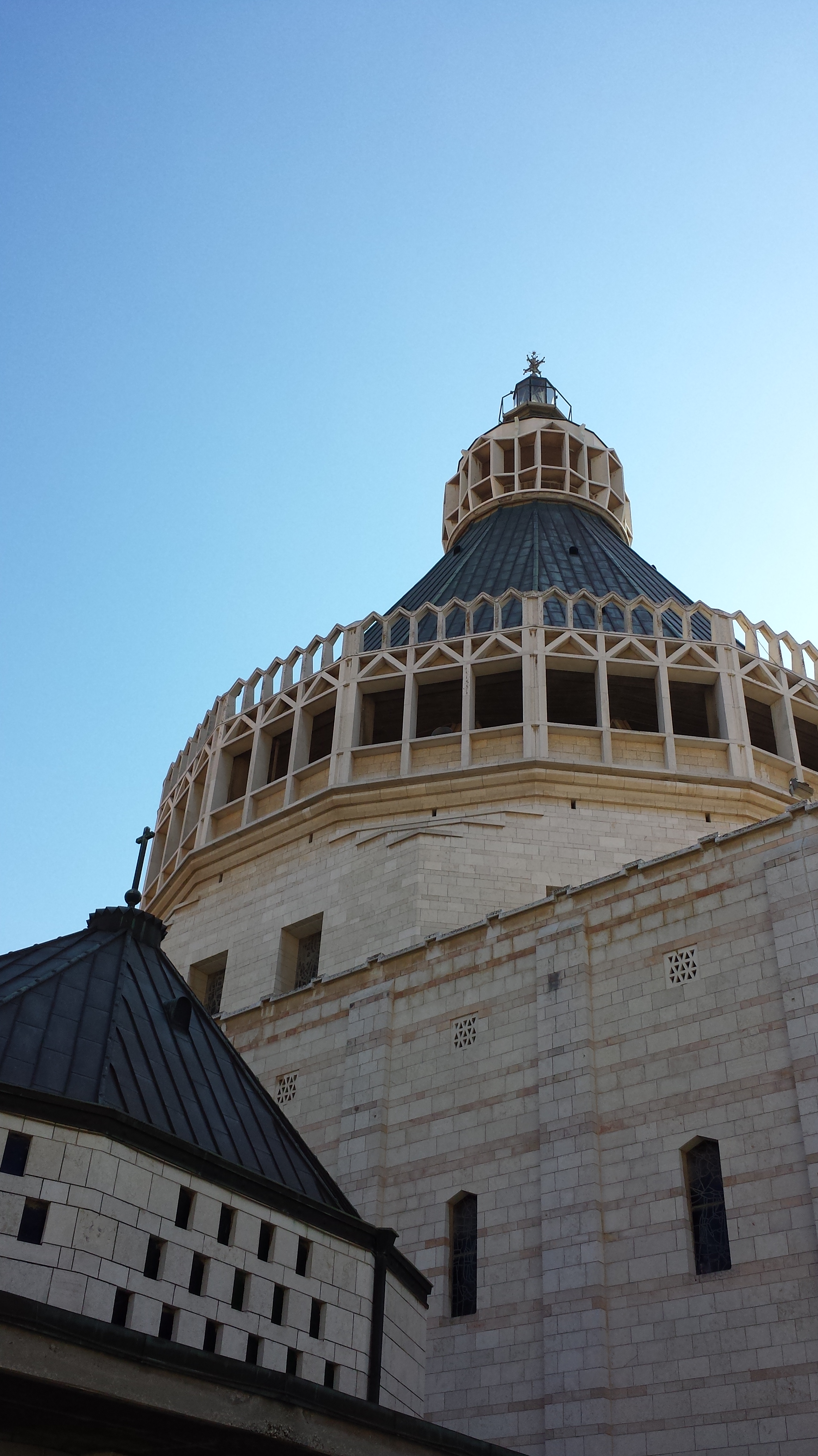
Church of the Annunciation

Church of the Annunciation

The upper level sanctuary

The upper level sanctuary

Painting above the altar in the Church of the Annunciation.

Painting above the altar on the uppet floor level in the Church of the Annunciation.

Looking up into the dome of the Church of the Annunciation  It is meant to look like a flower, because the name,

Looking up into the dome of the Church of the Annunciation
It is meant to look like a flower, because the name, “Nazareth,” means “Upside Down Flower” – with its roots in heaven and blooming on earth.

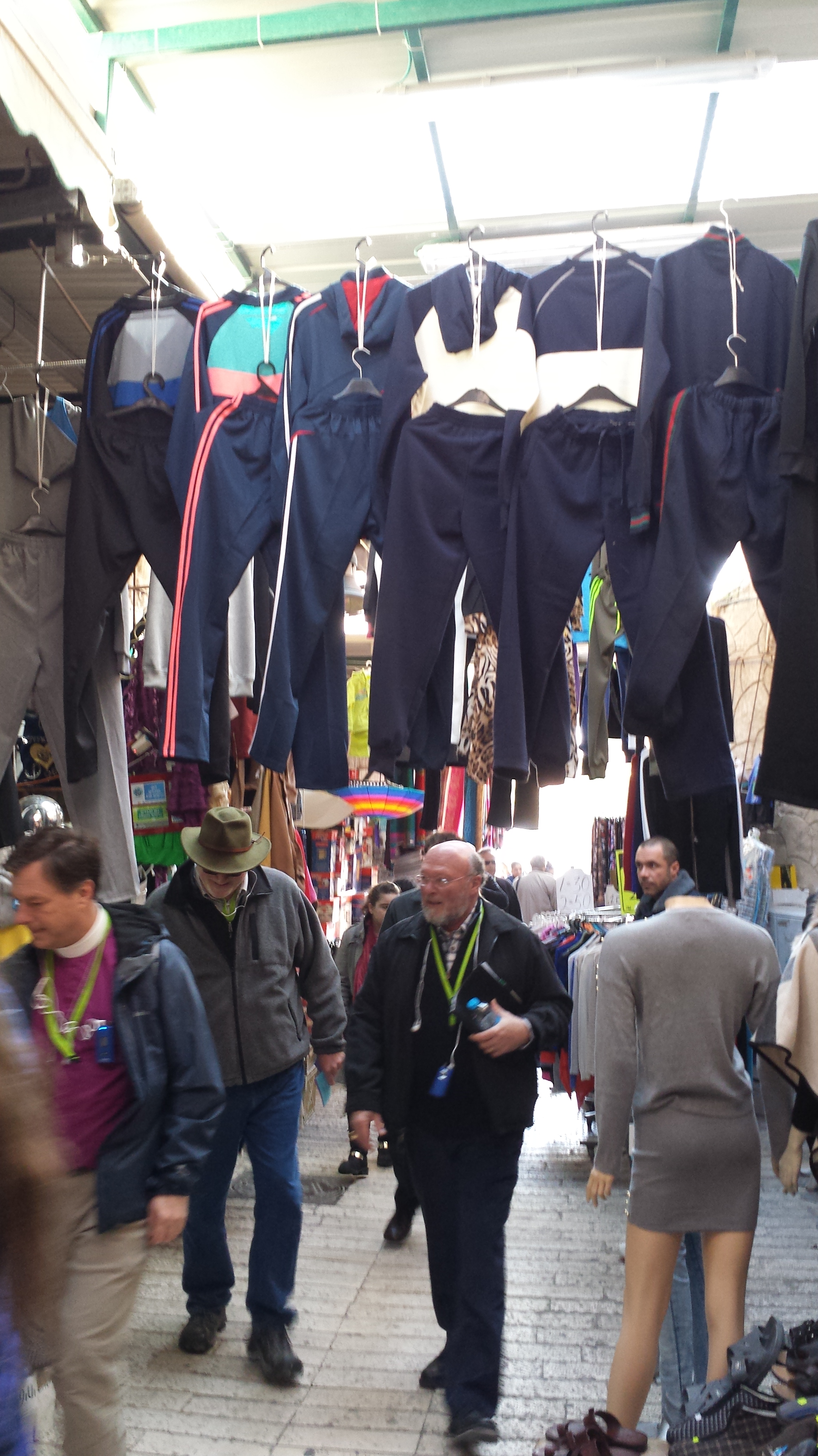
The suk in Nazareth

The suk in Nazareth

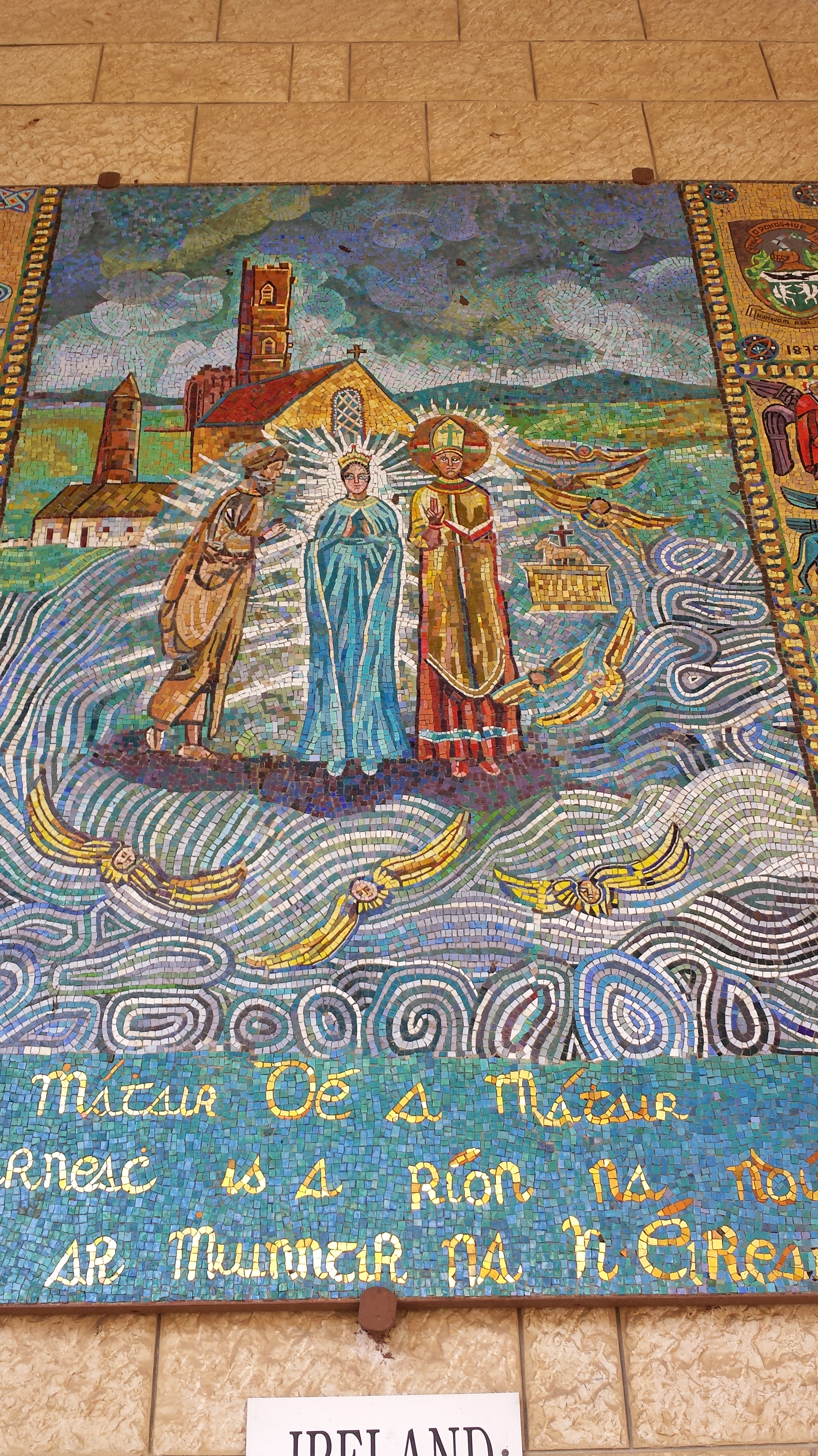
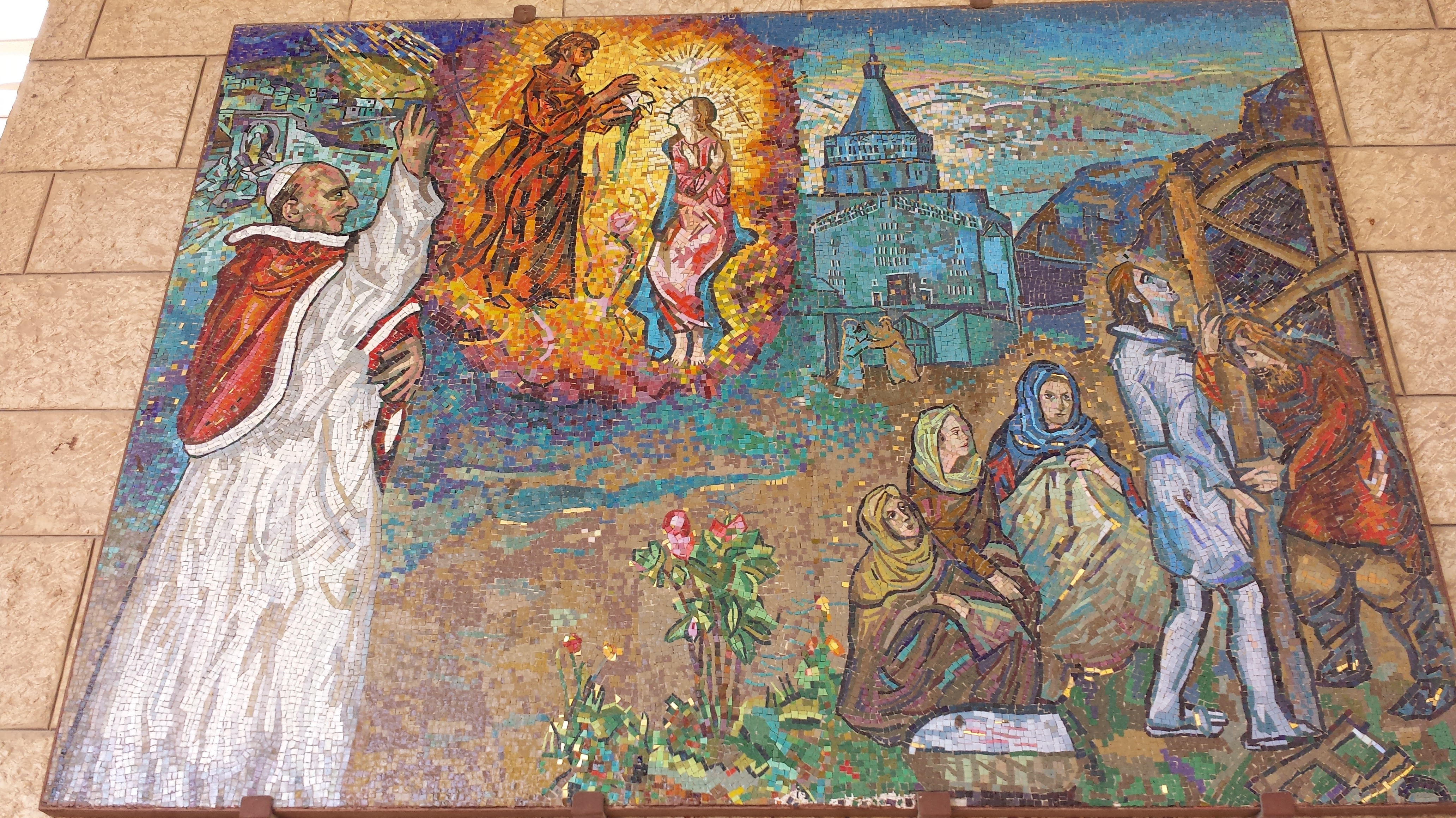
After the amazing visit to the convent of the Sisters of Nazareth, Ghassan guided our group through the market place of Nazareth (called a “suk” pronounced like the name Sue with a “k” on the end) until we got to the Basilica of the Annunciation.  This is a Roman Catholic church built over the remains of early Byzantine and Crusader churches, which in turn were built around a house which the early Christians believed to be the childhood home of Mary, where she lived with her parents before she married Joseph.  Outside the church is a large courtyard featuring many mosaic pictures depicting Mary as she is imagined or understood in cultures around the world.  So, each mosaic is unique, showing characteristics of the country that sponsored it’s mosaic.

20150114_114802

20150114_114751

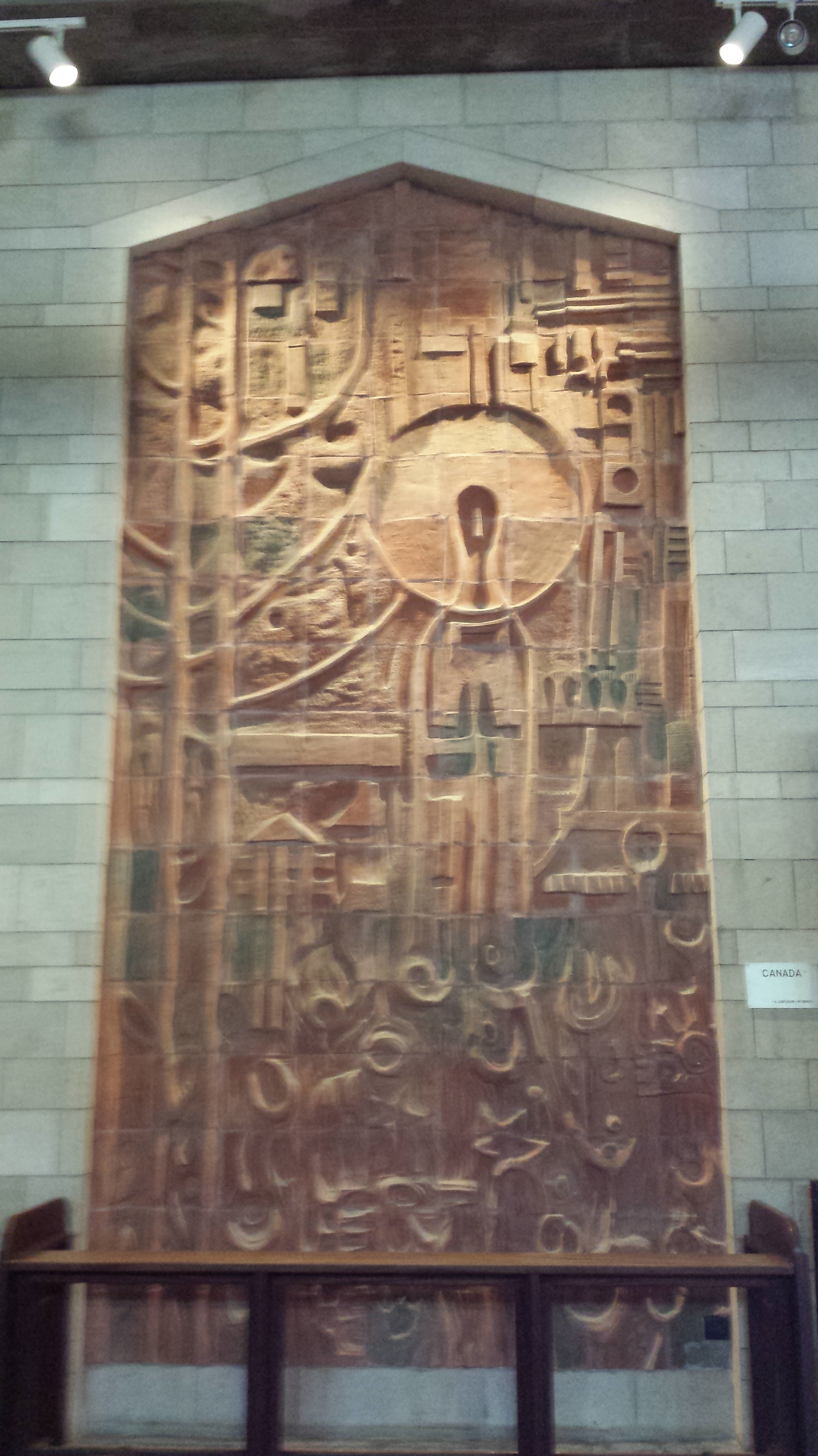
My Favorite depiction of Mary at this church is inside and was commissioned by Canada

My Favorite depiction of Mary at this church is inside on the upper level and was commissioned by Canada

When we entered the church, we arrived just before the noon service called The Angelus.  It was amazing to hear that old rite!  After is was over, we had special permission to go down the steps to the chapel in front of the entrance to the first century house.  There, we held a brief service before coming again and going to our next destination – the Synagogue Church.
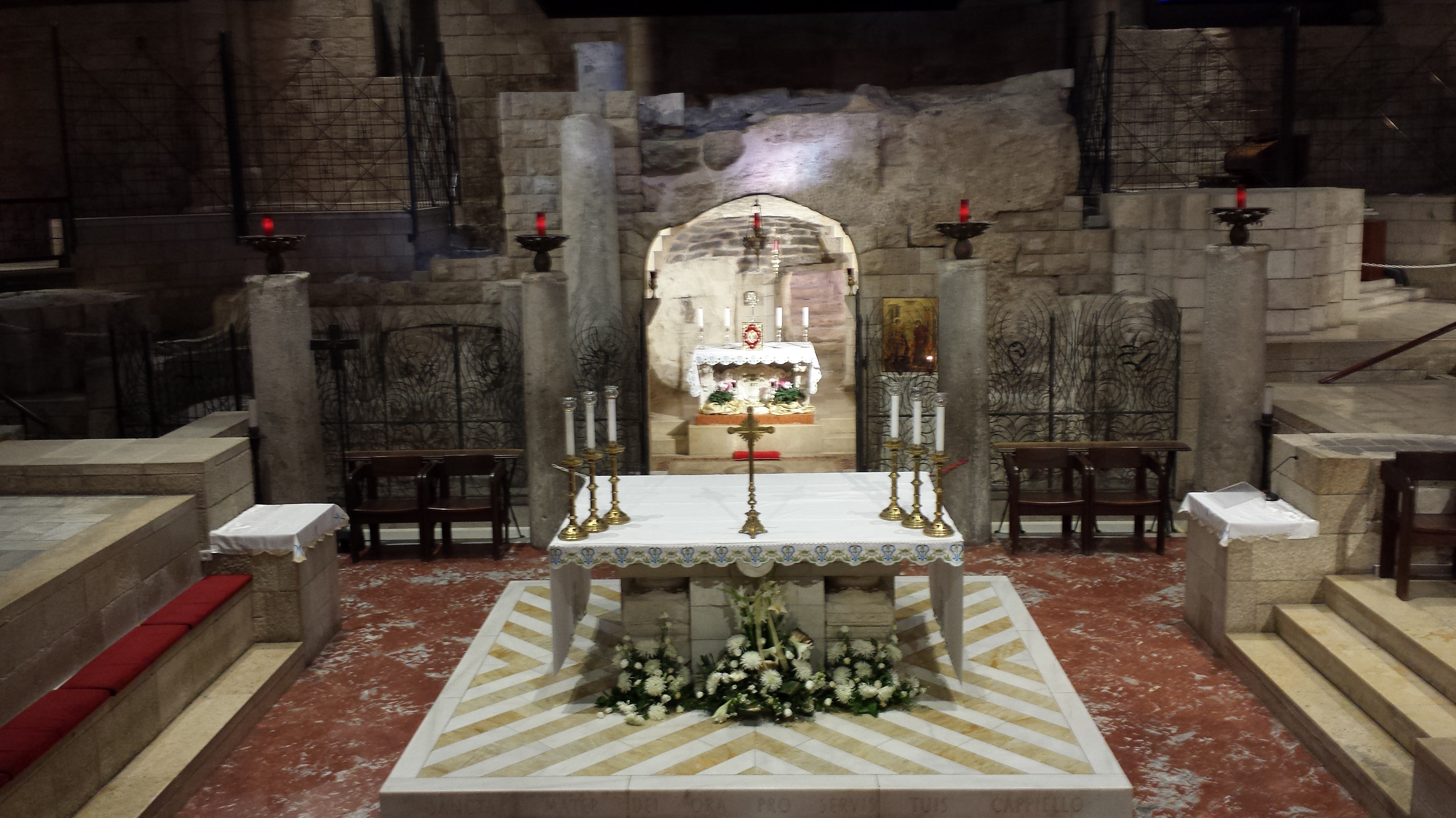
In the Church of the Annunciation, looking into the shrine of the first century home attributed to Mary

In the Church of the Annunciation, looking into the shrine of the first century home attributed to Mary
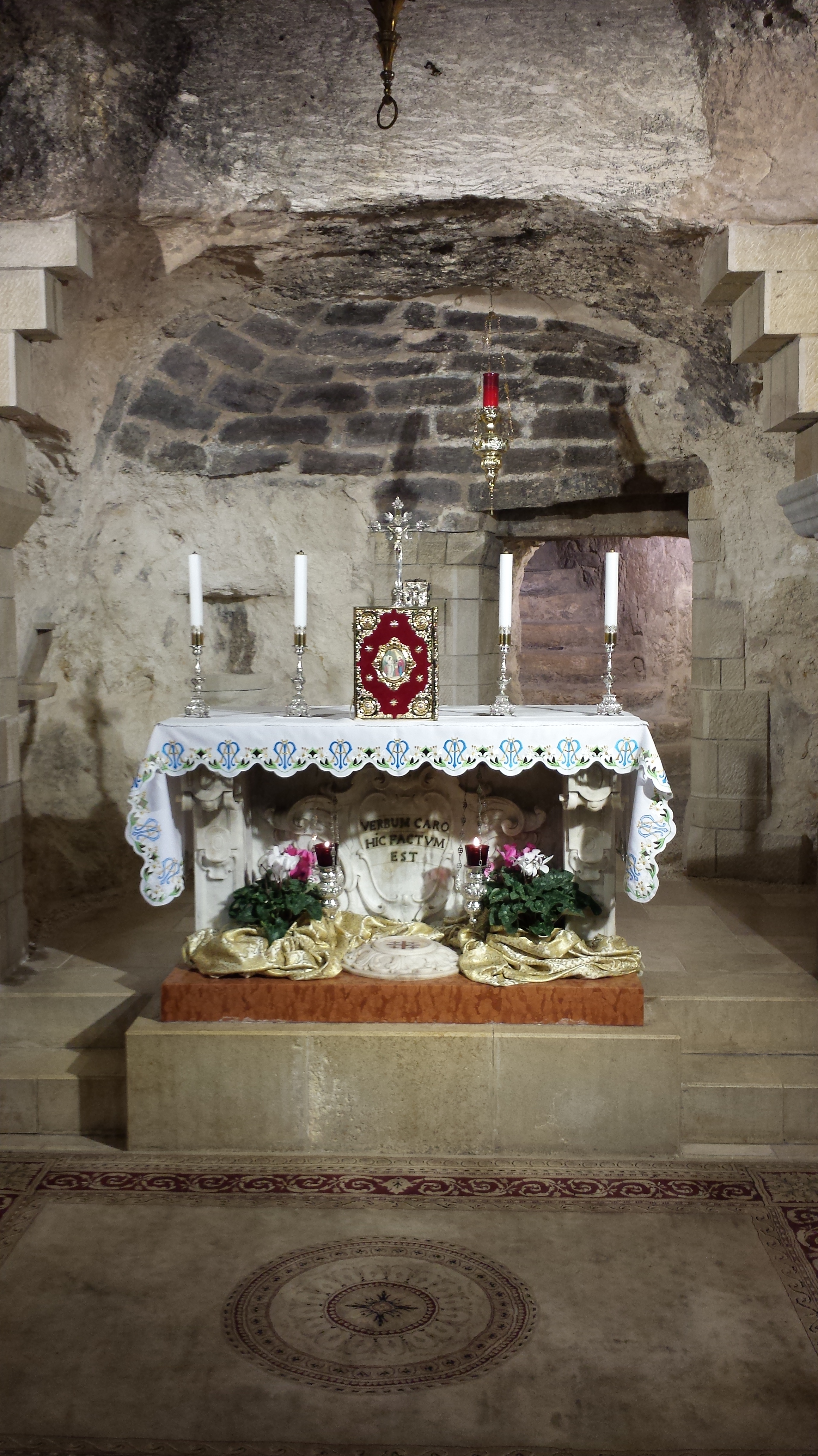
House shrine close up

House shrine close up

Though the Synagogue Church is a Christian domain, it is believed by some that the remains of the first century synagogue in Nazareth is below it. It’s a sweet little church that is still the parish church of some Christians in Nazareth, and we were grateful for the permission to hold a short prayer service there as well.

Altar in the Synagogue Church

Altar in the Synagogue Church

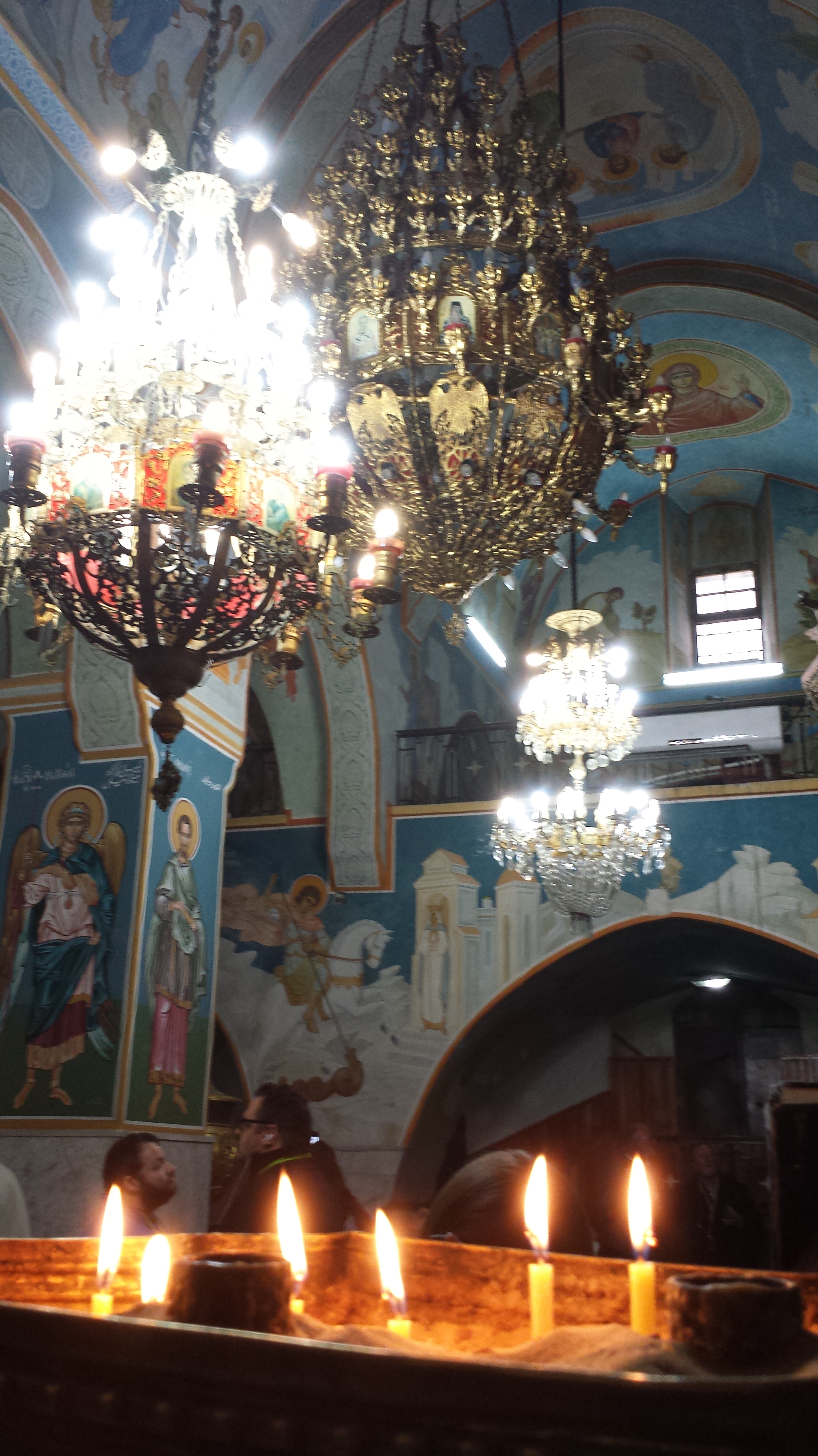
Our final stop before lunch was St. Gabriels Church, which is the Greek Orthodox Church of the Annunciation. In addition to containing many beautiful icons and frescos,  this compact space leads down a dark stone hall to the head of a spring – fed well. To the Eastern rite, this is the location of the well where the Angel Gabriel spoke to Mary.

St. Gabriel's

St. Gabriel’s Iconostasis

Fresco of the Annunciation

Icon of the Annunciation

20150114_142758

We lit prayer candles at St. Gabriel’s

We had a wonderful lunch in Nazareth, where one of our group (Andrea Peabody) was honored with a cake for her birthday). Rachel also had a tall bottle of beer imported from Bosnia, of all places! After lunch, we boarded the bus to head to Cana – the place associated with the wedding feast at which Jesus turns jars of water into jars of wine.

The church at Cana

The church at Cana

At the Greek Orthodox Church of Cana in Galilee, we held another prayer service and also a blessing of those in lifelong relationships, led by Bishop Greg.  I have really appreciated how we have been able to worship – even if briefly – in each of the churches we have visited.  These places are not just tourist sites or educational sites – they are places held as special or sacred for generations of Christian communities. Surely, the dedication, hopes, needs, dreams, and concerns of so many have made these places worthy of regard and respectful interest by people all faiths and philosophies.

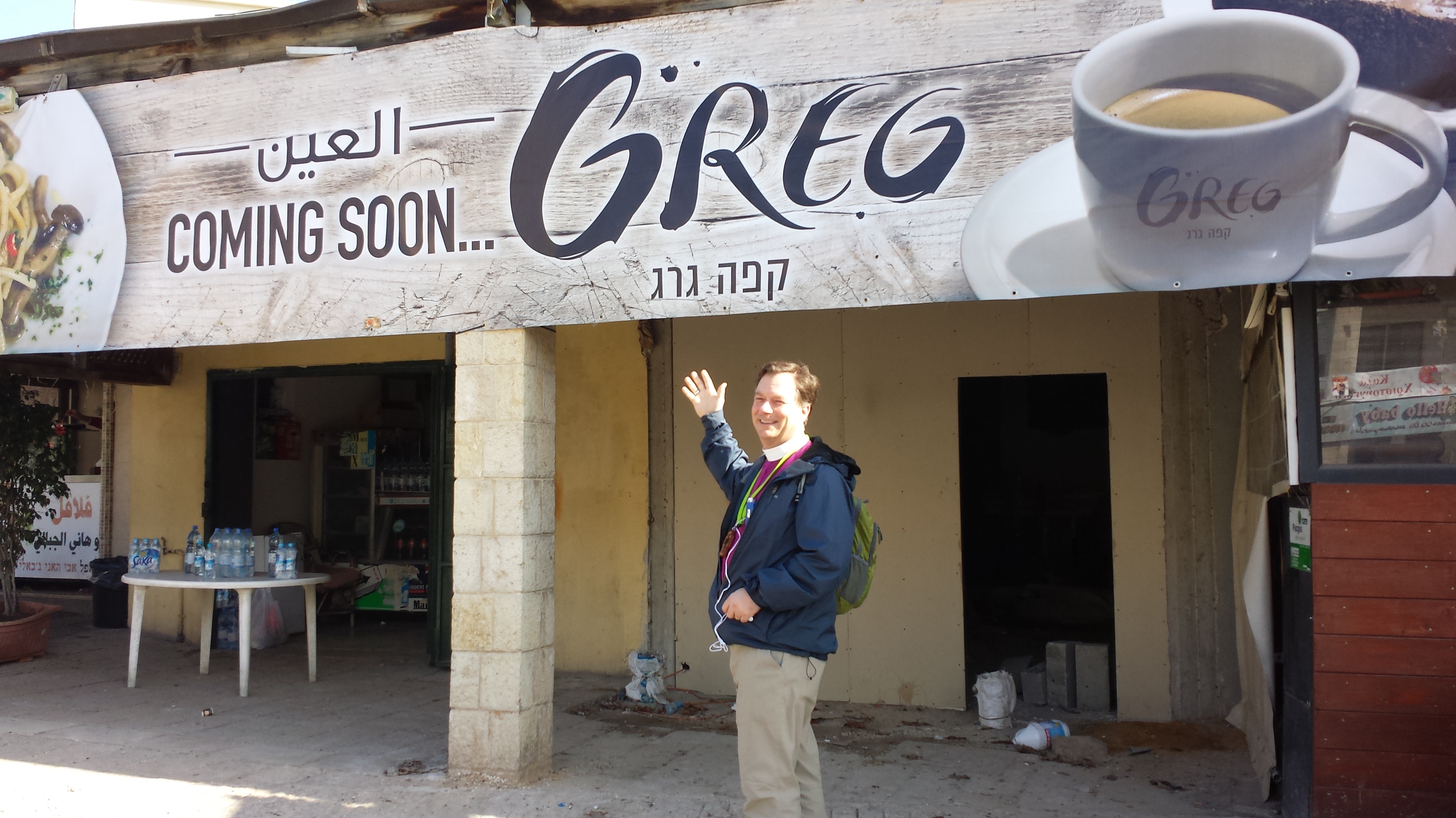
Greg has indeed come to Nazareth

Greg has indeed come to Nazareth

After a wonderful day, we drove back to the Pilgrim House, had another healthy and good dinner, shared highlights from our day, said Compline and then went off to bed.

An icon of the shroud of Turin that hangs in the Pilgerhaus lobby

An icon of the shroud of Turin that hangs in the Pilgerhaus lobby

Here’s to barking at squirrels!

Henry

Henry Goes to Israel – Day One

5 Comments

January 13, 2015

Just in case you wondered, it takes over nine hours to fly from Newark to Tel Aviv. To pass the time, I read, slept, watched a movie and talked with people.  I got fed twice, which was great!  I don’t know what the thing was that they fed me at breakfast, though.  It looked like food, so I ate it, but I truly do NOT know what it was.  I asked the flight attendant for decaf coffee, and she told me that I wouldn’t want it.  She said, “It’s ugly!  No one has ever finished a cup of it.”  So, I stuck with juice and water.

20150112_151409

Reading on the plane to Tel Aviv – a story from home

After we landed, all the Pilgrims in our group collected our bags and gathered together before getting on a private bus going to the area of Galilee.

Gathering in Tel Aviv Airport.

Gathering in Tel Aviv Airport.

First, though, we stopped at a restaurant called “Sahara,” just south of Mt. Tabor, which is also known as the Mount of the Transfiguration.  At the Sahara, we were treated to fresh fruits and vegetables grown in the fertile valleys of the area.  It was wonderful, and the people were very nice. I got the chance to meet some of the people in our group that I didn’t know before.

Lunch with new friend, Beth, from Arizona

Lunch with new friend, Beth, from Arizona

Mt. Tabor Rising from the Plain of Jezreel

Mt. Tabor Rising from the Plain of Jezreel

After lunch, our big bus parked at the foot of Mt. Tabor, and our group got into lots of little vans that took us to the summit.  Only little vans and cars can negotiate the narrow, winding road to the top. Traditionally, Mt. Tabor is the location that the Christian community commemorates the event when the apostles had a vision of Jesus talking with Moses and the prophet Isaiah,  when a bright cloud came over them and a voice out of the cloud said “This is my beloved Son, in whom I am well pleased; listen to him.”

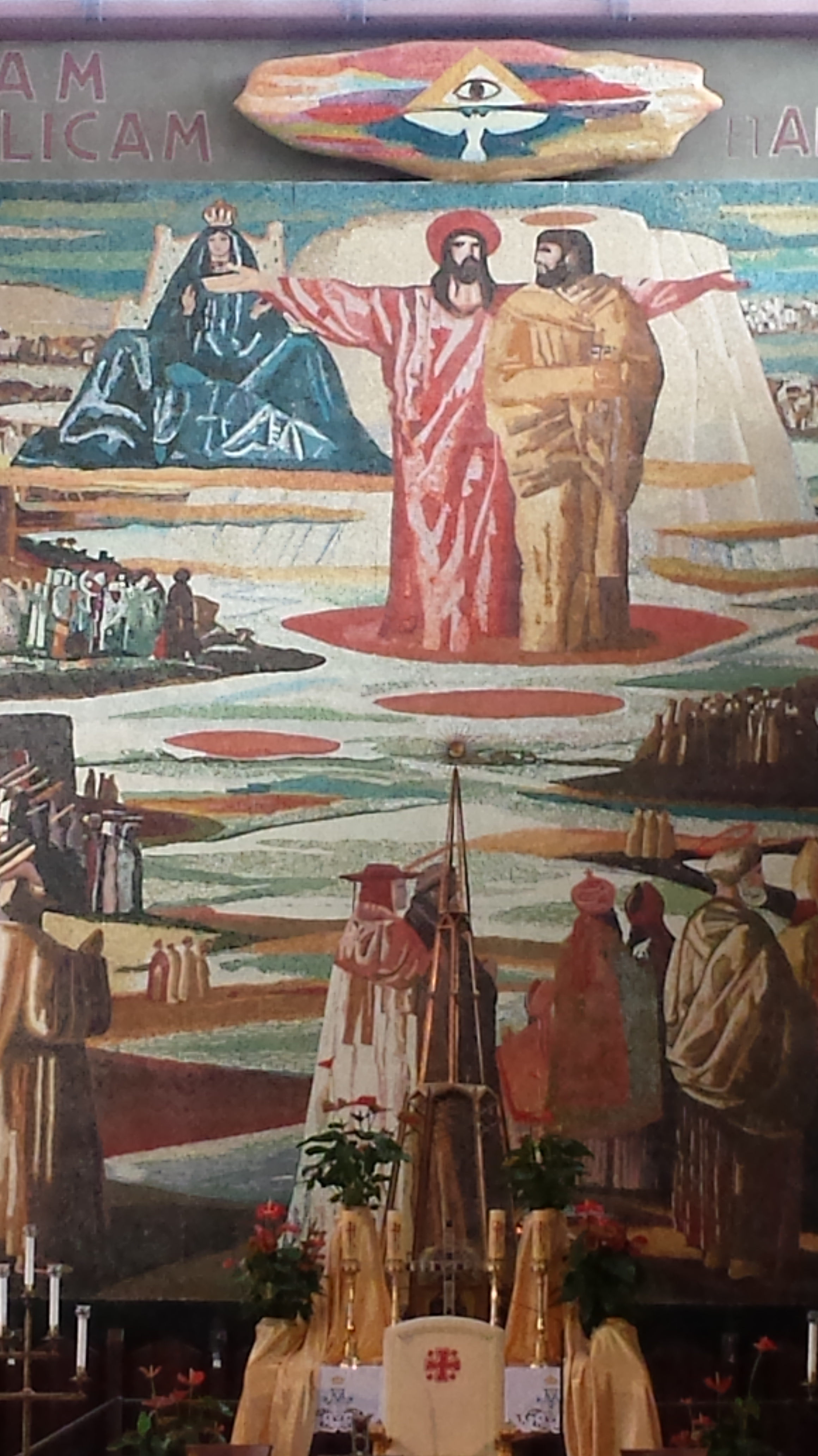
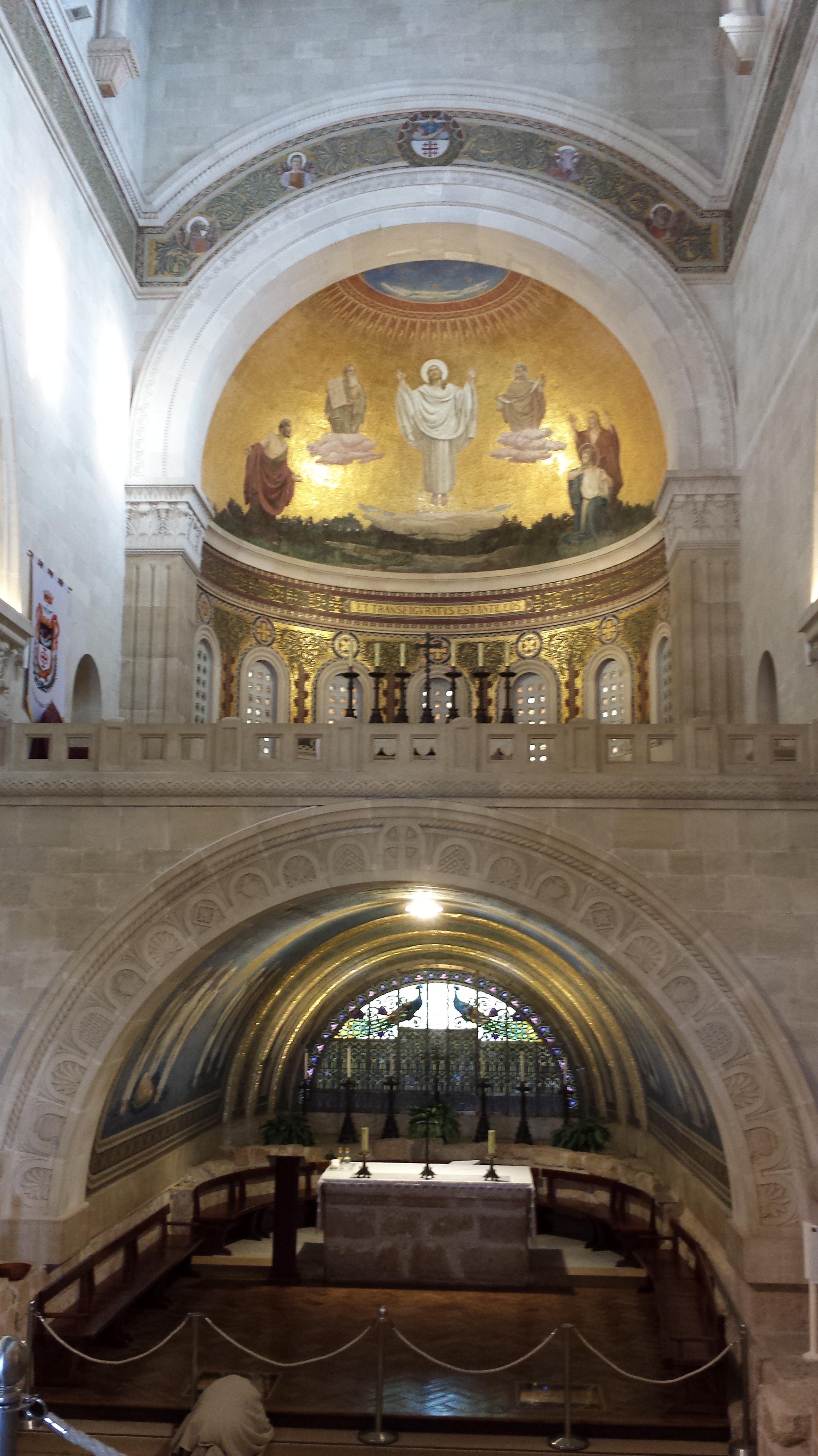
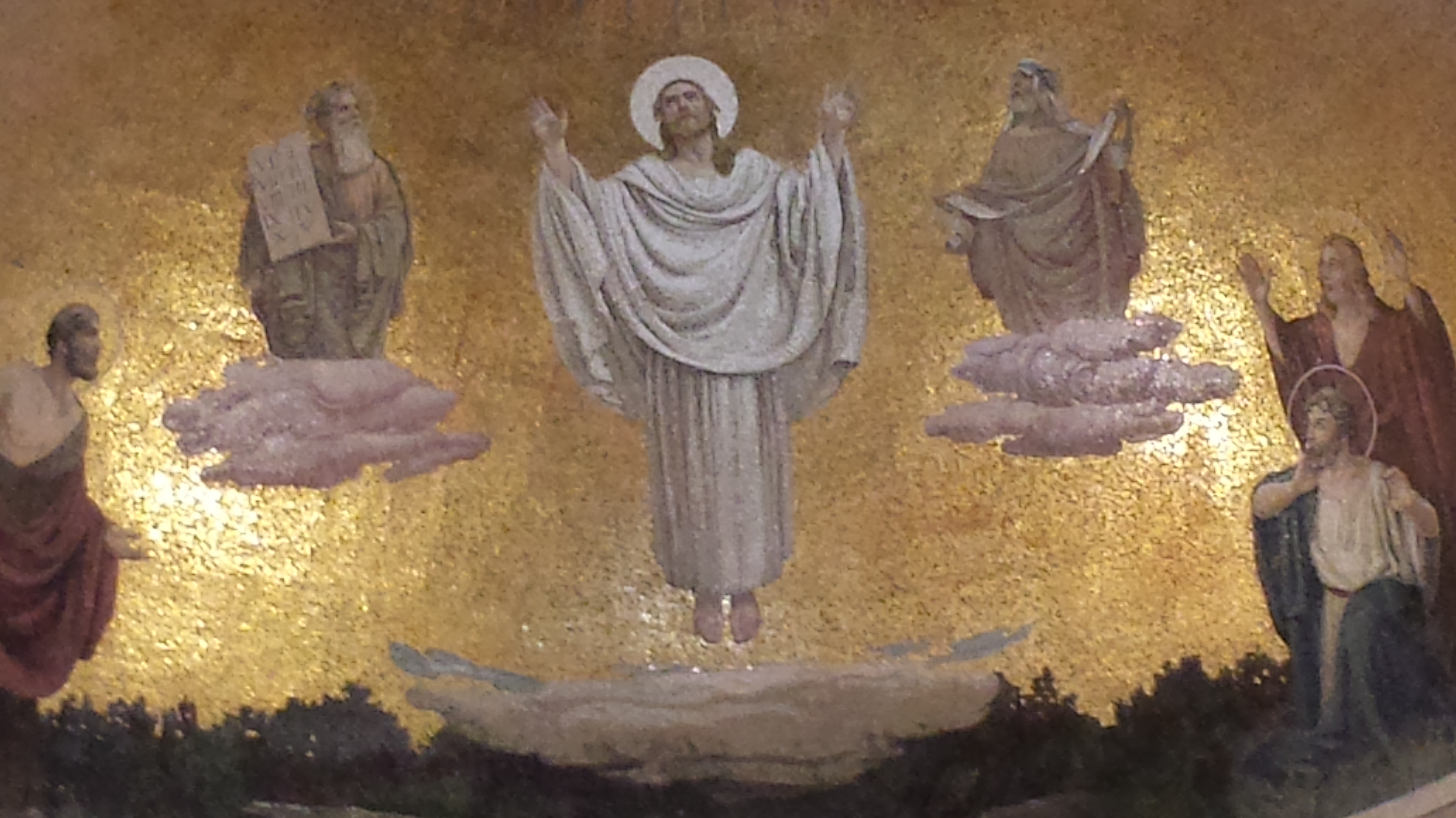
Mosaic of Transfiguration of Jesus above the altar in the Church of the Transfiguration

Mosaic of Transfiguration of Jesus above the altar in the Church of the Transfiguration

Mt. Tabor is located in Lower Gaillee at the eastern end of the Jezreel Valley, 11 miles west of the Sea of Galilee.

Church of the Transfiguration

Church of the Transfiguration

Between 1919 until 1924 an impressive Roman Catholic church of the Franciscan order named “Church of the Transfiguration”  was built on the peak of Mount Tabor. The church was built on the ruins of a Byzantine church from the fifth or sixth century and a Crusader church from the 12th century,

Elijah Chapel

Elijah Chapel

Chapel of Moses

Chapel of Moses

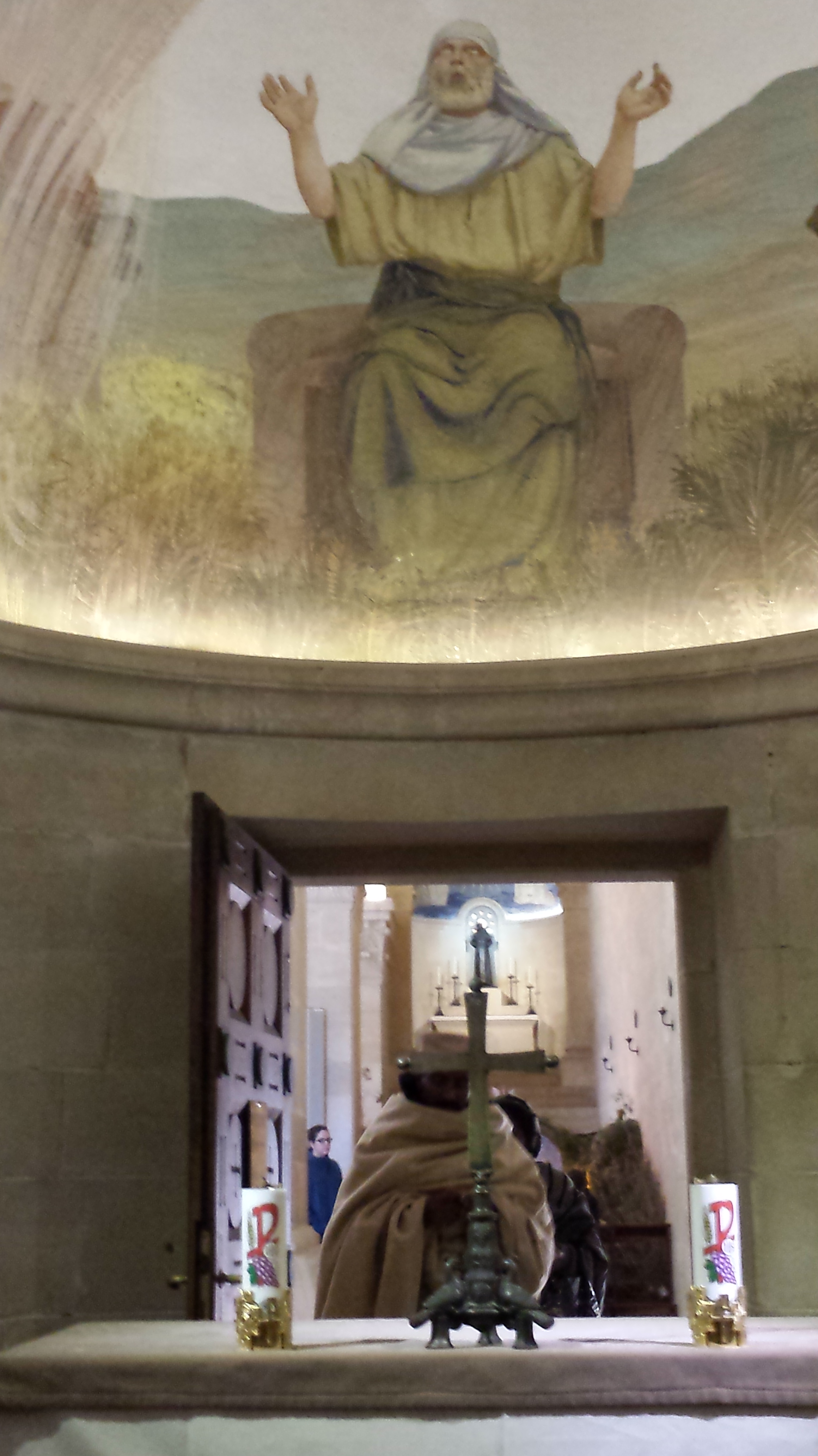
The church was built from three naves (vaults). In the two bell towers on either side of the entrance to the building, there are two chapels.  The northern chapel (on the left) is dedicated to Moses and it contains (above the doorway) a painting of him getting the stone tablets on Mount Sinai, and the southern chapel (on the right) is dedicated to the prophet Elijah and contains (above the doorway) a painting of him in his confrontation with prophets from a competing religion (Ba’all) prophets, which tradition says happened on Mt. Carmel.

On the upper part of the church, above the altar, there is a mosaic of the Transfiguration.

Closer View of Mosaic Above the Altar

Closer View of Mosaic Above the Altar

Our group of pilgrims was very lucky to have the chance to have a communion service in the chapel of Moses.  My new friend, Barry (The Rev. Barry Beisner, bishop of Northern California), presided at the service.

Eucharist in the Moses Chapel, The Rt. Rev. Barry Beisner, presiding

Eucharist in the Moses Chapel, The Rt. Rev. Barry Beisner, presiding

After we all got back down the mountain and back on the bus, we went to a little town called Tabgha, located on the northwest shore of the Sea of Galilee. The name means “seven springs” and is traditionally associated with the Gospel story of the multiplication of loaves and fishes (…you remember, two fish and five loaves were multiplied enough to feed 5000 people…I would have preferred 5000 doggy snacks, myself!).  We will get to see that site in a couple of days, but on this day we arrived there to settle into the guest house where we will be staying for three nights.

Sign of the Pilgrim House Where We Are Staying

Sign of the Pilgrim House Where We Are Staying

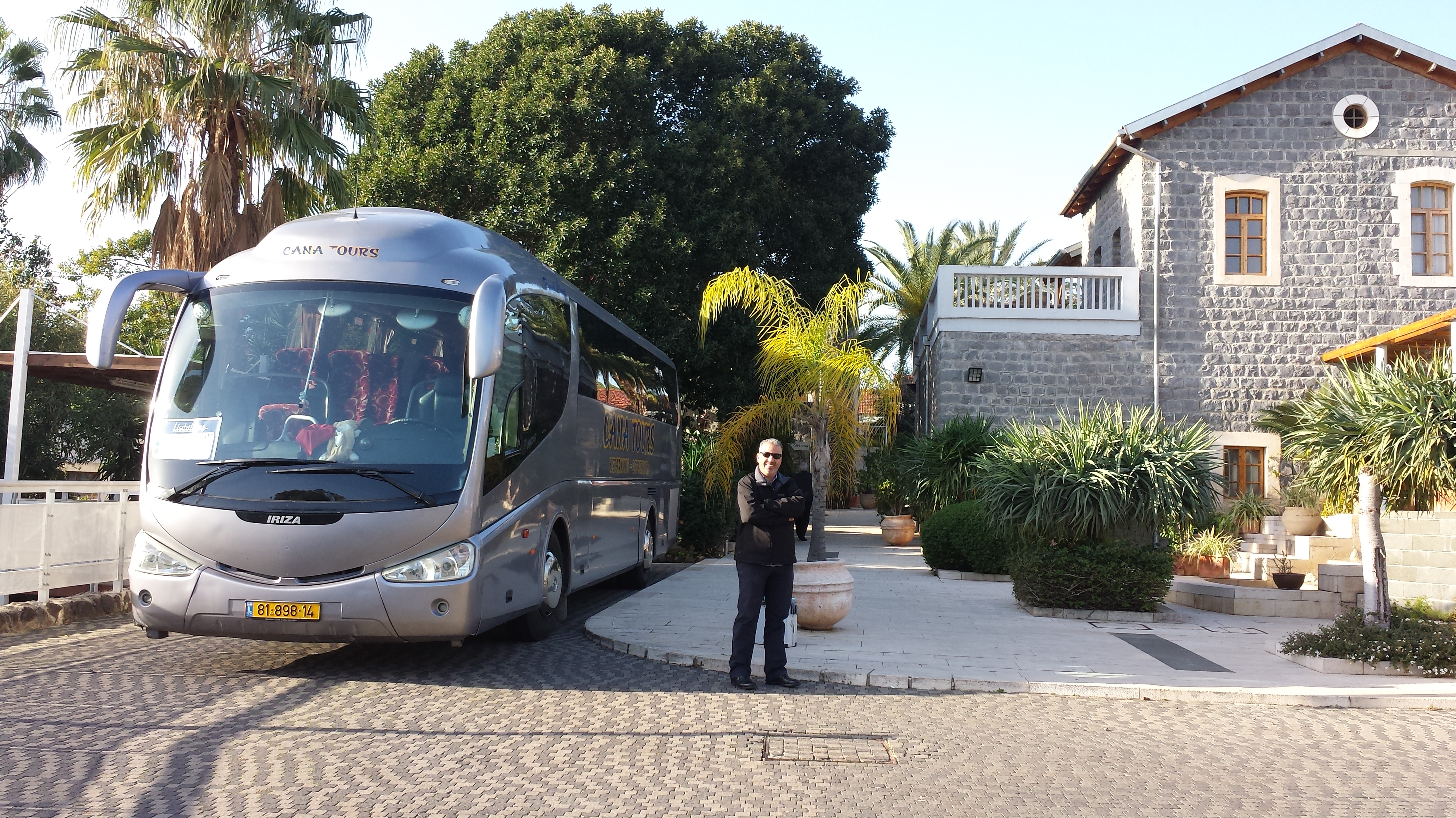
Our Bus, Our Guide (Guston), and the Pilgrim House in Tabgha

Our Bus, Our Guide (Ghassan), and the Pilgrim House in Tabgha

Our Pilgrim group met together to share more about each other before going to dinner at the guest house.  There was yummy eggplant, humus, veggies and potatoes…at least, that’s what Rachel ate. But there was lamb and chicken for us meat eating doggies!

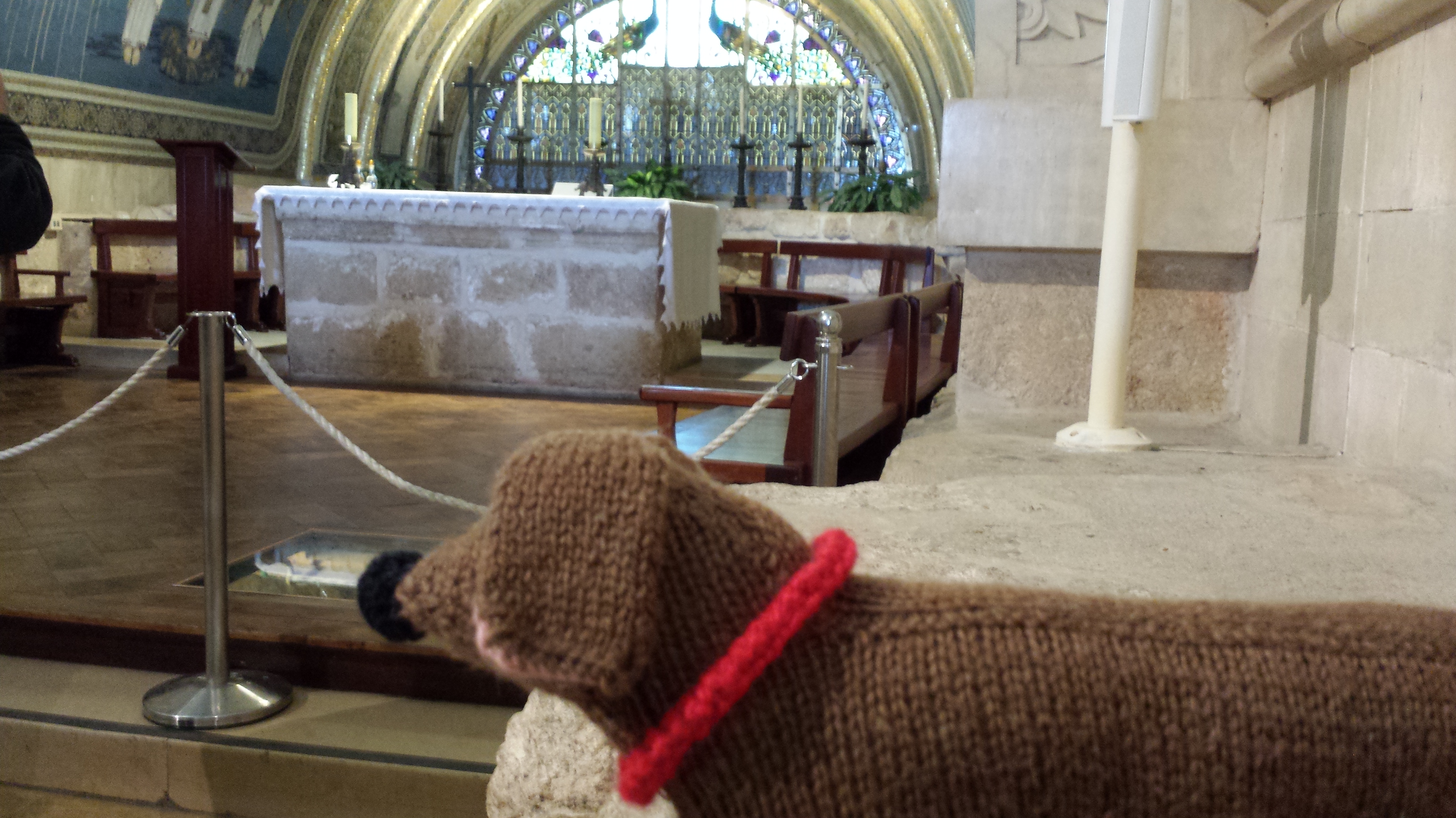
The current church is built over ruins of an earlier church in the same location

The current Church of the Transfiguration is built over ruins of an earlier church in the same location

After dinner, we went into the chapel and said the prayer service of Compline, the last prayer service before bedtime. Before and after our service, our friend from England, Dominic, played recordings of a beautiful monastic choir. We just sat quietly and listened.  It was a wonderful first day, and I was so tired that when I went to bed, I went right to sleep!

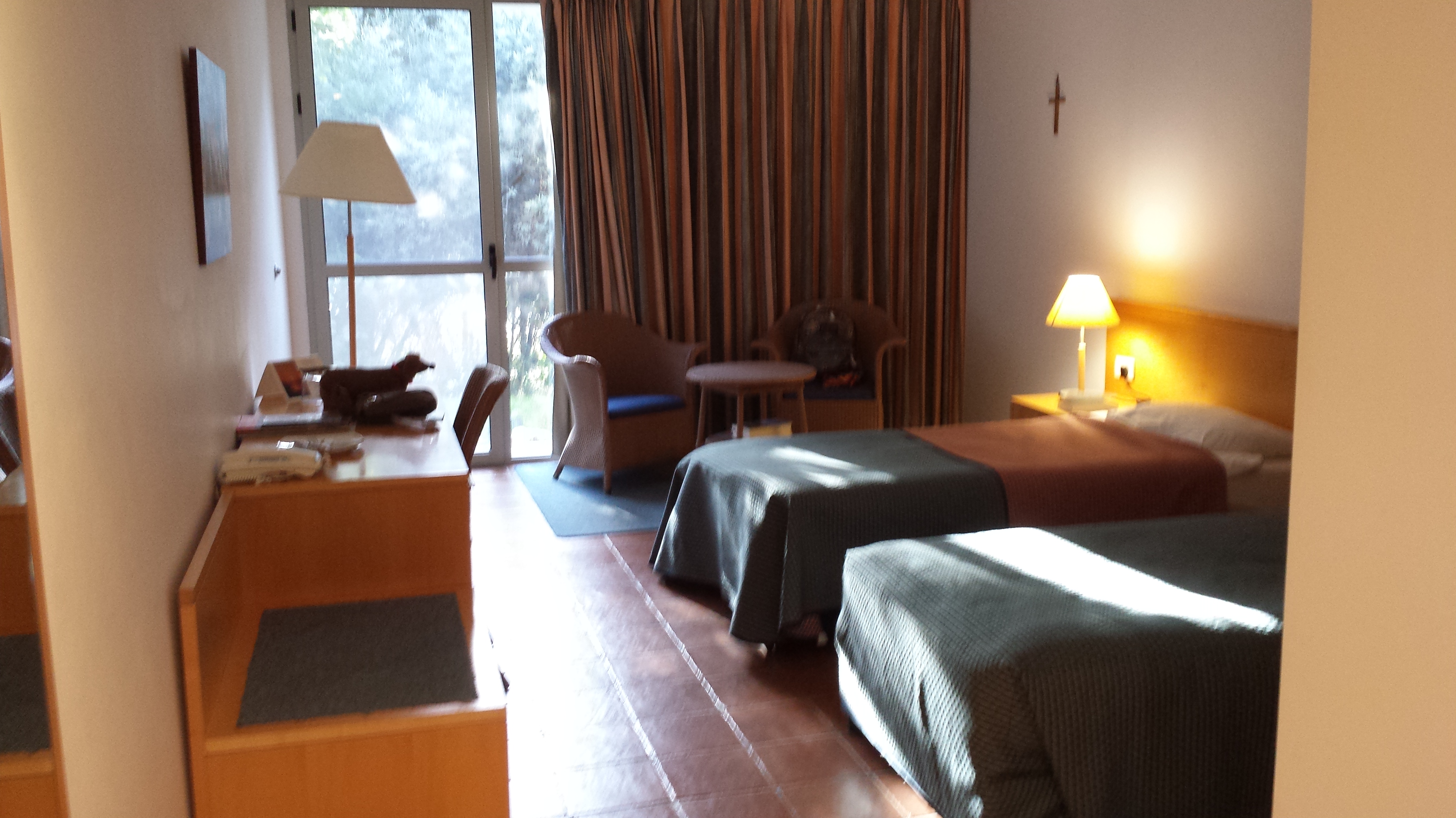
My room at the Pilgrim House

My room at the Pilgrim House

It took a while to load the pictures on the slow internet here. There’s wifi On The bus, though, as well as at The Pilgrim House. I am loading the pictures in moments in between stops and at breaks. I don’t mind – I want you see all the places I am! I just wish I could show you Israel in Smell-a-Vision, the way I’m experiencing it. I smell oranges and lemon trees, spices of cardamon and cinnamon, dry dust in the ruins and fresh water on the breezes blowing across the waters of the Sea of Galilee,  where the Pilgrim House is very near it’s western shore.

I can’t wait to share Nazareth and Cana with you – those are tomorrow!

Here’s to barking at squirrels!

Henry

20150113_070415

Henry Visits the Church of the Transfiguration

Henry Goes to the Holy Land – Travel Day!

4 Comments

January 12, 2015

Hello! My name is Henry, and I’m a small stuffed dog handmade by a nice lady called Marie Bond. Mrs. Bond modeled me after a real dachshund called Henry that owns a woman named Rachel – the same woman who hosts this blog.

As the guest columnist for the next ten days, I suppose you could call me the guest dogger!

20150110_211252

This is Henry, the dog I’m modeled after. Isn’t he handsome? 

And here's me - hanging out with my pack. That's Toby the collie - he's a really nice dog!

And here’s me – hanging out with my pack. That’s Toby the collie – he’s a really nice dog!

I live in the Episcopal Diocese of Olympia (Western Washington), and our bishop, The Rt. Rev. Greg Rickel, is co-leading a pilgrimage to the Holy Land (Israel and Palestine) with the bishop of Northern California, The Rt. Rev. Barry Beisner. We will be joined by more folks coming from Arizona.

Sometimes, the hardest part of traveling is the traveling itself. Late last night, I flew on a plane all the way across the country, from Seattle to Newark – From the west coast to the east coast. It took a little over four hours.

20150111_203726

Here I am in the Seattle airport….

And here I am at the Newark airport!

And here I am at the Newark airport!

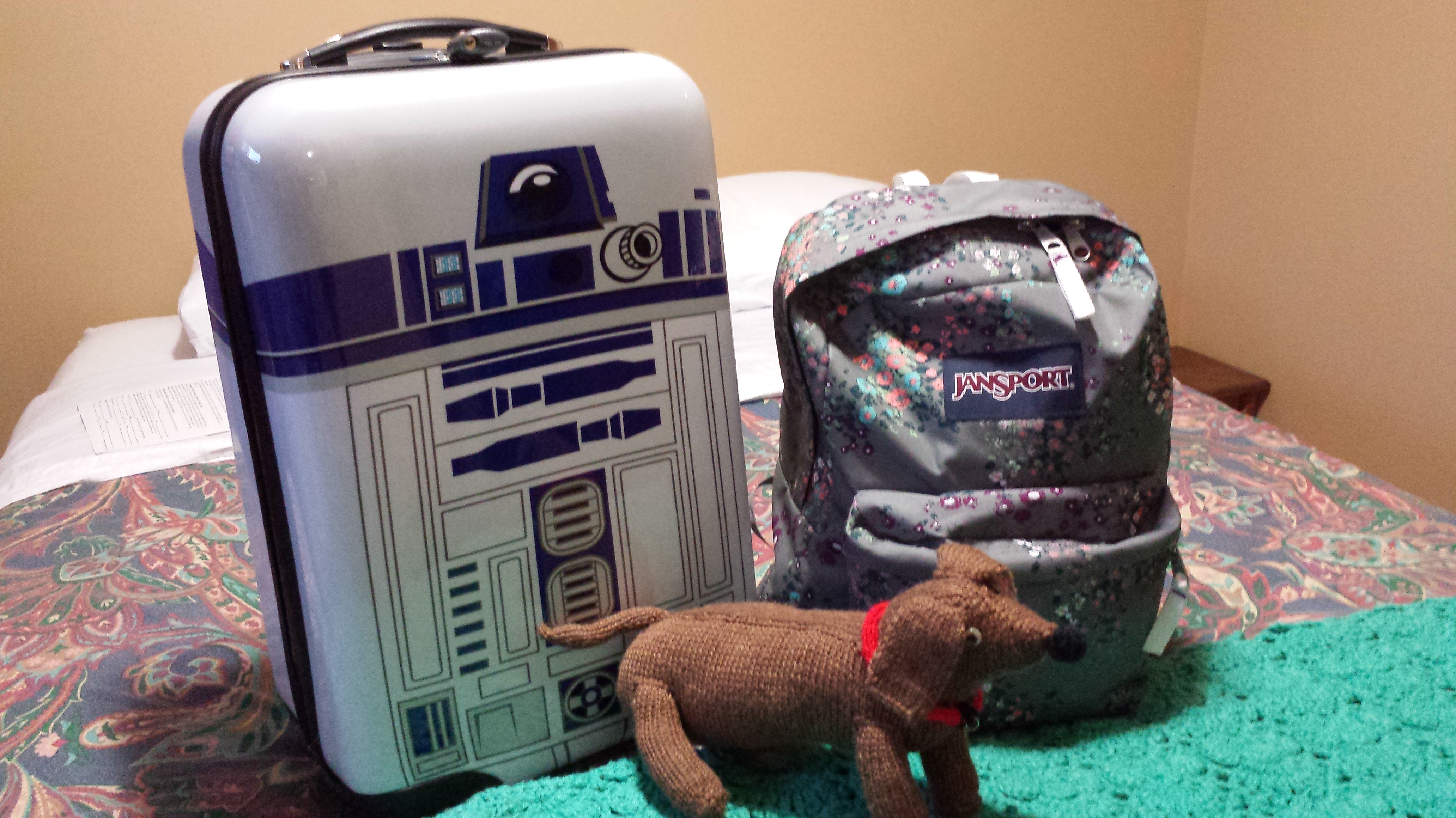
Don't you just love the R2D2 roller bag? I think that all aspects of travel should be fun - even the luggage.

Don’t you just love the R2D2 roller bag? I think that all aspects of travel should be fun – even the luggage.

The most important part of traveling happened before I even got on a plane, and that was the packing! The farther I travel, the less I want to carry. So, I packed only carry on luggage for this trip…including leaving just enough space for me!

Later today I will get on another plane to Tel Aviv, Israel. About an hour before we leave, our group will all gather for the first time at our departure gate. I’m hoping that traveling with bishops will get me special access to squirrels, but – actually- I’m not even sure if there are any squirrels in Israel. I guess I’ll find out when I get there…

I love traveling, meeting new people and having adventures. Mostly, I love learning new things. This trip should be especially interesting, (Wish me luck with the squirrels!)

I will write next when we have arrived at our first stop – The north coast of the sea of Galilee. After we arrive in Tel Aviv, we will take a bus there. Let me know if you have any questions for me during my pilgrimage to the Holy Land through the comment section to each posting.  If I don’t know the answer, I will try to find out for you.

Here’s to barking at squirrels!

Henry

The Advent Wreath: Keeping Sacred Time with Light

Leave a comment

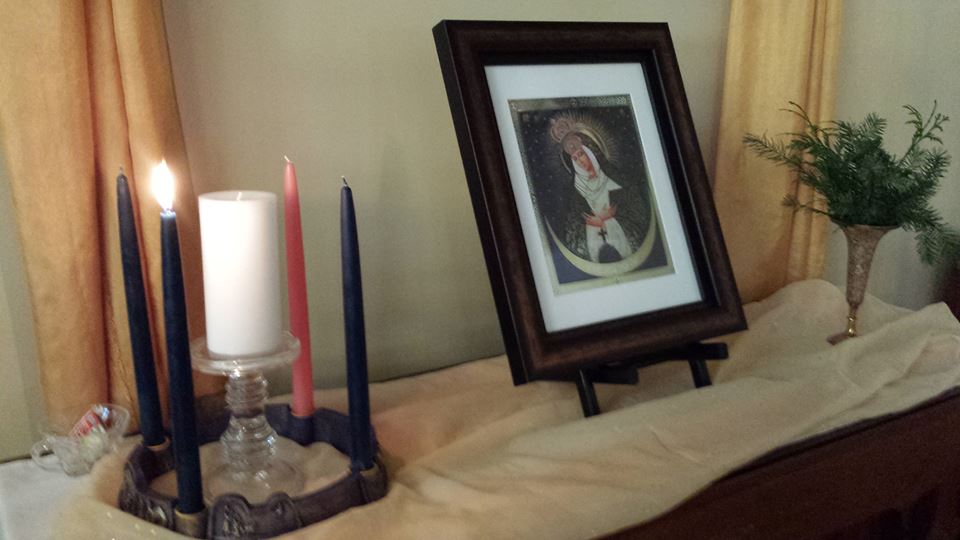
Advent Wreath Rector's Altar

The Church’s liturgical calendar is based in a cycle of sacred stories that actually takes three years to complete, before the three-year cycle begins again.  Each year within a three-year cycle includes regular seasons (such as the seasons of Epiphany, Lent, Easter, Pentecost, etc) and annual feast days. In our annual calendar, every liturgical year ends with the feast day of Christ the King, while the beginning of each yearly cycle begins with the season of Advent. Like the season of Lent, Advent is a time of preparation.  However, while Lent prepares us for the death and resurrection of Christ, Advent prepares us for the birth of Jesus – the first chapter of the Christian expression of human relationship with God, with ancient roots deep within the development of human religious history.

Like other seasons of the church year, Advent is a time informed by the rich traditions of our faith. One of the most beloved traditions of Advent practiced both in the home and in church services is the Advent wreath, also known as the Advent “crown.”  An Advent wreath can either be a horizontal display of four candles, or a circular display of four candles with a fifth candle in the center. By whatever form it takes, an Advent wreath is calendar which (quite literally) highlights the sacred time passing during the four weeks leading up to Christmas.

Beginning with the First Sunday of Advent, the lighting of a candle can be accompanied by Scripture readings and by personal prayers. An additional candle is lit during each subsequent week until, by the last Sunday before Christmas, all four candles are lit. Many Advent wreaths include a fifth and central candle, often referred to as the Christ candle, which is lit at Christmas Eve or on Christmas morning.

As with many traditions, the origin of the Advent wreath is a matter of no small speculation and debate. However, the symbols which compose the Advent wreath are of great antiquity and come together to form an important lexicon of teachings about our faith.

Firstly, the Advent wreath reminds of two types of waiting – waiting for Christ’s return after his ascension and the waiting for the celebration of Jesus’ birth (Christmas). In both types of waiting, the community is waiting for Christ – waiting for the fulfillment of the promises of God, which is the transformation of the world and of hearts so that peace and justice may be known by all peoples.  And yet, the candles remind us that the Light of Christ is already in the world, that we follow the God who is Emmanuel – the “God with us” – and that we are called to be light to the world in the here and now.  The Advent wreath, therefore, is as much about God waiting for us to become that light even as it is about us who yearn for God’s light in times of darkness.  Both the People and God long for the Kingdom of Heaven on Earth.

Secondly, the colors of the candles have meaning and communicate somewhat different ideas, depending on the color of the candles. Most Advent wreath traditions use three purple or blue candles and one pink candle.  If there is a fifth central candle, that candle is usually white.

Purple is the ancient Mediterranean color associated with royalty or nobility (and can be used to recognize Christ’s kingly nature), and purple is also the color in the church associated with penitence (as such, it is the liturgical color for the season of Lent). You may notice, however, that in the Episcopal Church, we have more commonly used blue as the liturgical color for Advent. Therefore, our Advent wreaths can tend to use three blue candles (rather than purple).

For the church, the color blue signifies hope and waiting, and it is the color associated with Mary the Mother of God (who is especially honored during the season of Advent leading up to the birth of her Son). Additionally, the blue color has a particular history in the Anglican church (of which we are a part and which informs our specific identity as a faith tradition).

Namely, the 1979 Book of Common Prayer lifts up the theme of expectation to the season of Advent and brings greater focus to the role of Mary, Mother of Jesus, in the Incarnation event. In keeping with this emphasis, the Sarum Rite (i.e., the traditions associated with Salisbury Cathedral, England) adopted the use of a dusty-blue color for Advent, rather than the violet which is associated with the season’s former penitential nature.

The Sarum Rite, was a variant of the Roman Catholic liturgy practiced in Great Britain from the late 11th Century until the Protestant Reformation.  In 1078, King William the Conqueror, or William I of England, appointed St. Osmund, a Norman nobleman, bishop of Sarum (Salisbury). As bishop, Osmund initiated some revisions to the Roman Rite, drawing on both Norman and Anglo-Saxon traditions, including the development of the Sarum Rite.  Many of the accouterments and  liturgical practices associated with the Sarum Rite were revived in the Anglican Communion in the late 19th and early 20th centuries (as part of the Anglo-Catholic Oxford Movement in the Church of England). Today, however, the Sarum Rite is remembered for its distinctive scheme of liturgical colors, which differs somewhat from that used in the Roman Catholic and most Protestant churches. In the Sarum Rite, blue rather than purple is authorized during Advent. The shade of blue used during Advent resembles royal blue, and is referred to as “Sarum blue.” So, long story short, using three blue candles is an especially Anglican/Episcopalian thing to do.

The pink candle in the set of Advent wreath candles has an entire history of its own. In the earliest years of the church the only church season was Lent, the seven weeks prior to Easter. Lent was a season of fasting and prayer as the church commemorated the crucifixion of Jesus. The traditional color of banners in the church during this time, therefore, was a deep purple. During Lent the church lit seven candles, one for each week of the solemn season. However, though the season is solemn, the story of Lent also has a hint of hope and joy since the death of Christ prefigured the resurrection. The forth Sunday of Lent is called Laetare Sunday, “laetare” meaning “rejoice” in Latin. On Laetare Sunday, the church was encouraged not to fast, but to feast. In ancient times on Laetare Sunday the Pope would honor a citizen with a pink rose, and as time passed the priests wore pink vestments on this day as a reminder of the coming joy.

In current Episcopal practice of the Advent wreath, the pink candle is lit on the third week of Advent.  The third Sunday of Advent is called Gaudete Sunday. “Gaudete” (like “laetare”) means Rejoice” in Latin, and is also known as a Rose Sunday. This custom is not required by the Episcopal Church, but it is observed by some parishes with a traditional Anglo-Catholic piety, such as Trinity is known to practice in our liturgies.  In Therefore, in Anglo-Catholic practice, it is common for clergy to wear pink vestments twice a year – on Laetare Sunday in Lent and on Gaudete Sunday in Advent. Pink is the color associated with anticipatory joy, being somewhere between the dark purple or blue associated with challenging times (associated with Lent and Advent) and the white of festal celebration (used at Easter and Christmas).

Another symbol informing the Advent wreath is the wealth itself. The ring or wheel of the Advent wreath of evergreens symbolizes the love of God which has no beginning and no end (a circle) while the evergreens and lighted candles signify the persistence of greening life and light, even in the midst of winter. The ring of candles also hearkens back to an ancient Celtic use of the solar disc which represents the Divine Light, which is why Celtic Christian crosses include a disc (or circular nimbus) shape.

Finally, there is a meaning ascribed to the four candles which denote cardinal spiritual values particularly honored within the season of Advent and which we are asked to cultivate in ourselves as those Baptized into the Light of Christ, who is represented by the fifth candle:

The first (blue) candle lit is the candle of Hope (and prophesy).  The first candle symbolizes the promises the prophets delivered as messages from God; promises that foretold Christ’s birth. As followers of Christ, we are to engage the practice hope – for our own lives as well as bringing hope to others in times of difficulty, challenge or sorrow. Our ultimate hope is in Christ.

The second (blue) candle to be lit is the candle of Love. The second candle reminds us that God loves the Creation God has made, including the creation he has made that is our unique selves. What we do to the least of our brethren (and we are related to all Creation), we do to Christ.  The greatest commandment is that we love one another as Christ loved us.

The third (pink/rose) candle to be lit is the candle of Joy. The third candle asks us to celebrate life. In the midst of harsh circumstances, Mary was joyful in fulfilling what God asked of her life and in having a child. We are asked to not give into despair but celebrate joy whenever we experience in ourselves or in the world around us.

The forth (blue) candle is the candle of Peace. The fourth candle reminds that Jesus brings a kind of Peace to both the world and to people’s hearts which is not simply the absence of strife but a true and deep acceptance of all difference, such that no difference is a stumbling block to peace between peoples. As followers of Christ, we are to be the experience of peace for one another.

The Central (white) Candle is the Christ Candle or Christmas candle. The fifth candle represents Christ who was born into a human experience so that humans might experience the Divine in this life as well as the next – that we might recognize Emmanuel (the God With Us) who is at once coming and already here, in us and in the world. This candle reminds the Baptized of the candle gifted to them at the time of their Baptism and as an echo of the Pascal candle which enters the church during the service of the Easter Vigil.  We are to be light to the world. The light of God is born to us even as we are born anew by that light.

In the dark of winter nights in the northern hemisphere, the promise of Christmas comes upon us quietly, reverently and certainly. There is no pomp and circumstance.  There is only a family loving one another in the world that God has made. And by the light of Divine love experienced on Earth and through mortal life, the whole world can and will be transformed.  The Kingdom of Heaven is in each heart, yearning to be born as light to the world.

May the Blessings of this Holy Advent enlighten you with the fire and love of God, that you may bear Christ into the world which longs to know God face to face.

CREDO and Renewing My Spirit

2 Comments

The Episcopal Church Pension Fund provides a benefit to clergy known as CREDO.  The website for Episcopal CREDO shares that the Latin word, CREDO, can be translated as “I believe,” but that it also has deeper meaning. Literally translated, CREDO means, “I give my heart.” The eight-day retreat opportunity provided by CREDO encourages participants to rediscover the passionate essence of their life and ministry in the context of their faith, their relationships, and community.

This past May, I attended CREDO #277.  Having gone to various and sundry retreats, training and management offerings in my career, I was actually very relieved by the experience I had at CREDO. Taking the view that vocation is a lifelong process of practice and self transformation, I found the retreat to be a very helpful opportunity to take another deep look at my vocational calling.  I subsequently reconnected with my passion, my first love – Creation and Creator.

An important factor of why I was able to reconnect with Creator has to do with how CREDO is structured.  Namely, CREDO’s strength is its holistic approach to wellness – participants are invited to examine their minds, bodies, spirits, and hearts by examining four significant areas of their lives—spiritual, vocational, health, and financial. The ultimate goal is to tool clergy for continuing and deepening healthy patterns and commitment to lifelong wellness.

An important phrase for me became “sustainable spirit.”  Our spirits are not limitless resources – they can be spent, abused, misused and squandered. The work of heart, body, mind and spirit is all of whole cloth. Pull one thread too hard in any direction, and the tapestry is unwoven.  To live authentically, I believe, requires opportunities like CREDO to renew (in some cases, restore) one’s identity for genuine transformation (of both self and world).

In my discernment at CREDO, I was surprised to discover that I have a “Grand Dream.” My dream is a vision for Christian community living and worshiping in intimate spiritual relationship with God through the nurture of Creation, in deep coherence between what we avow with all that we do .  I will share more about this vision over time, but for now I would share a small baby step towards this dream.

I have changed my primary blog site in name and format to reflect the vision in my heart. The content formerly associated with my “Ordained Diva” blog can still be found here.  However, my new blog site is http://www.greeningspirit.com.  I have also updated my “About” me page in this new launch.

I look forward to sharing the journey with you, my blog follower community, and I am grateful for your friendship and virtual companionship.  You are a community of grace and blessing, and I love you very much. Thank you!

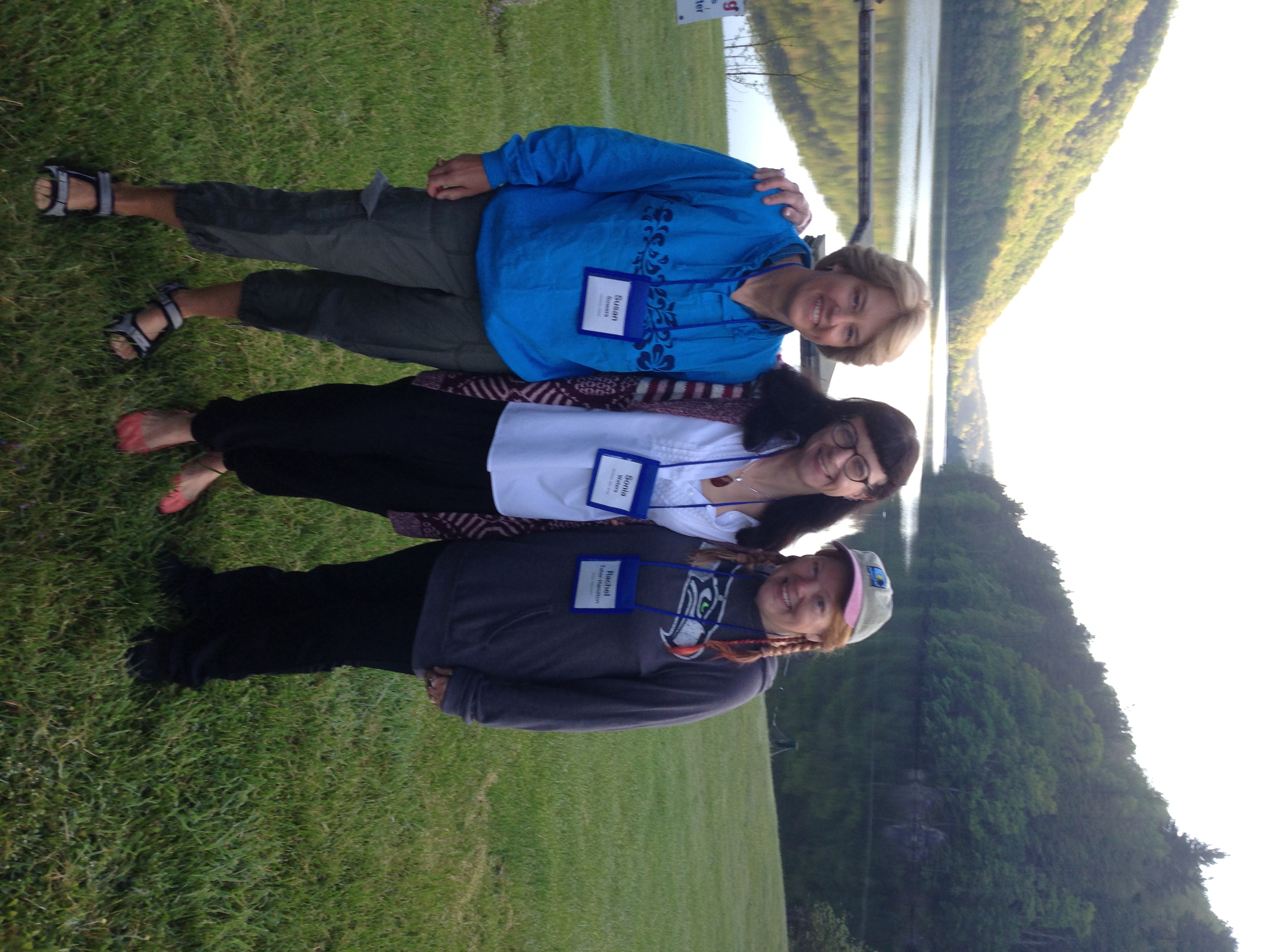
CREDO 277, Lake Logan

CREDO 277 at Lake Logan, NC

On Pilgrimage to Tolkien’s Hobbit Shire – Matamata, New Zealand

5 Comments

John Ronald Reuel Tolkien (3 January 1892 – 2 September 1973), better known as JRR Tolkien,  is commonly described as an English writer, poet, philologist and university professor.

I first came into contact with his writing when I was 10 years old and read some of his works for the first time, The Hobbit and The Lord of the Rings trilogy.  I needed plenty of reading for the long Grey Hound bus trips my mother and I took that summer on visits to family in Pennsylvania, so I had packed Tolkien along with my clothes and toothbrush.

As Tolkien did, I had an early love for the Fairy Books by Andrew Lang. My brother, Geoff, took me to my first public library when I was six years old and helped me get the “golden ticket to knowledge” otherwise known as a library card.  Nested among the towering stacks like a dormouse in an oak grove, I developed a passion for all ancient stories mythological, gathered from a wide spectrum of cultures.

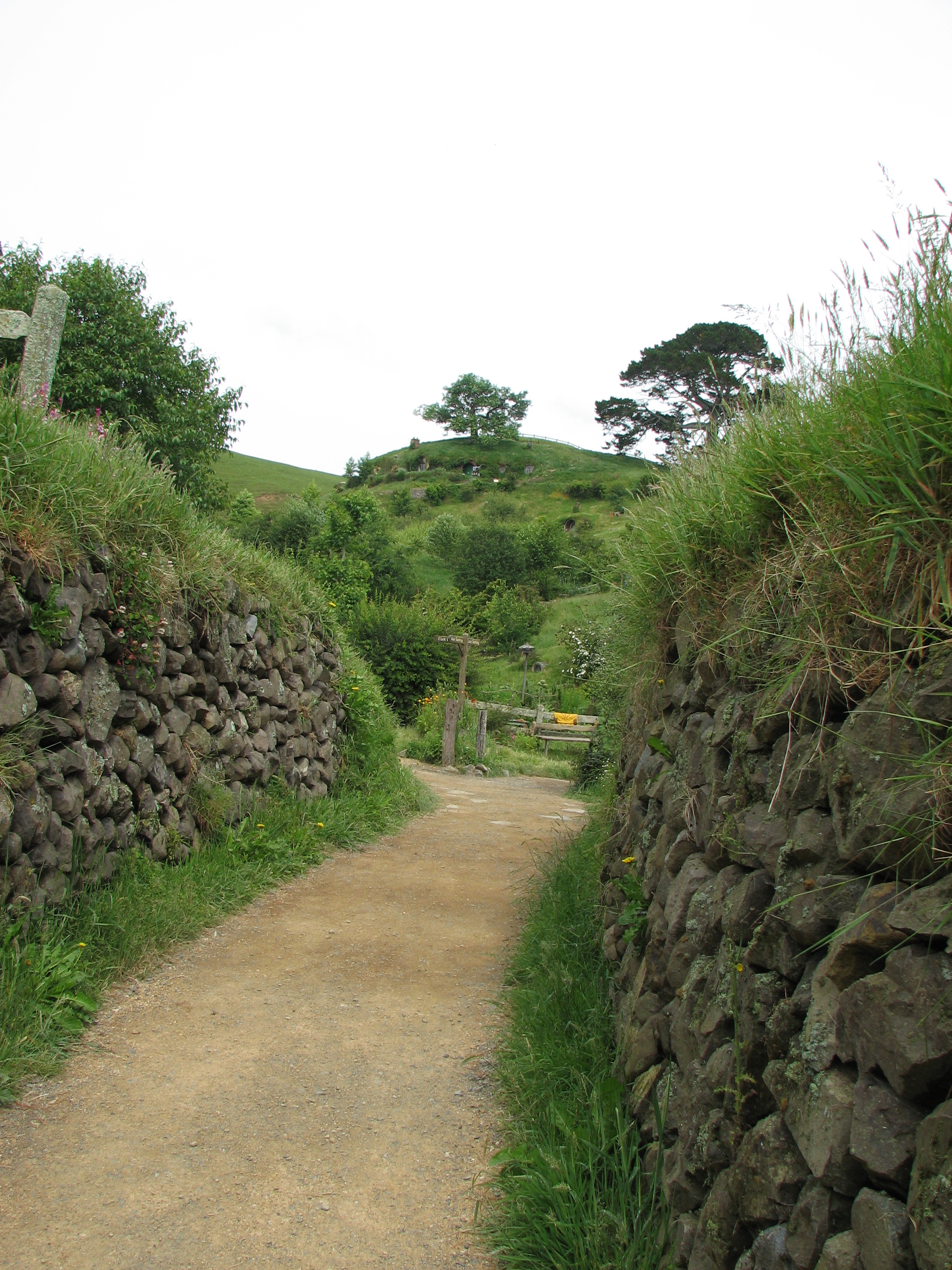
Gandalf's Road into the Shire

Gandalf’s Road into the Shire

Tolkien was at one time a close friend of C. S. Lewis, whose Narnia books I found to be overtly squirt-gun-in-the-face Christian and overly simplistic in their storytelling and characters.  I would later encounter Lewis’s autobiographical books and appreciate his adult works as a Christian apologist. In terms of fictional narrative however, to me as a youth, Tolkien’s knowledge of ancient Icelandic and European myths and cultures conveyed a gritty grappling with issues of good and evil that seemed at once realistic and transcendent to a Western child as myself.

On a warm September night in 1931, Henry Victor Dyson, C.S. Lewis and J.R.R. Tolkien went for an after-dinner walk on the grounds of Magdalen College, part of Oxford University. They took a stroll on Addison’s Walk, a beautiful tree-shaded path along the River Cherwell. They got into an argument that would last through the night.

A View of the Mill

A View of the Mill in Hobbiton

Lewis was in the midst of an anxious struggle with religious faith. Raised as an Irish Protestant, he had become an agnostic as a teenager. Though he came back to accepting the general idea of a divine presence, he was deeply reluctant to accept Christianity as a framework for belief. Dyson, a High Anglican, and Tolkien, a devout Roman Catholic ultimately swayed him by what could be called an evangelism of intellect.   As they marched back and forth along Addison’s Walk, Tolkien apparently argued for the literal and mythological truth of the Resurrection of Christ.

The pivotal moment came when Lewis declared that myths are lies, albeit “lies breathed through silver.” Tolkien replied, “No, they are not,” and demanded to know why Lewis could accept Icelandic sagas as vehicles of truth while demanding that the Gospels meet some higher standard.

Sheep on the Alexander Farm - Site of the Shire Set

Sheep on the Alexander Farm – Site of the Shire Set

Committed to the idea of myth as the only way to express higher truths, Lewis ultimately agreed with Tolkien’s argument for the power of myth to affect condition and change in the world and in people such that, “the Resurrection was the truest of all stories, with God as its poet.” Two weeks later, Lewis told a friend he had once again fully embraced Christianity: “My long night talk with Dyson and Tolkien had a good deal to do with it.” (See Steven Hart’s article in the Salon, December 3, 2003 – http://www.salon.com/2003/12/03/tolkien_lewis/)

In the early 1990”s, during my doctoral program in Folklore Studies at Indiana University, I worked at the Mathers Museum of World Cultures located on the Bloomington campus. While developing a learning module on comparative cosmologies, I created a study guide which circumscribed the basic tenets of Hopi culture and belief with those of the Christians who missionized them.  In the guide, I referred to certain Hopi sacred stories and  Christian sacred stories as myths, stories containing valid and significant transcendent truths – all of which pointed to important lessons and values for life in community.

View from Bag End over the Party Tree and Field

View from Bag End over the Party Tree and Field

On reviewing the study guide for publication, the museum director had a quiet but definitive, proverbial cow.  She subsequently called me into her office.

Having been raised a Baptist herself and drilled every Sunday in Scripture quote competitions from childhood, the museum director was very concerned about my use of the term “myth” to refer to any aspect of the Christian belief system.

“Aren’t you Christian? I thought you attended church services somewhere,” she queried in confusion.

“I do attend church.  However, I am also an academic, a folklorist and a cultural anthropologist,” I replied. “The term ‘myth’ is a category of narrative which recognizes stories containing truths and realities held as irrefutable for that culture – truth as named by that culture, as lived and discovered to be true and encoded in story through symbols and symbolic action. To categorize a story as myth is not to say it doesn’t contain truth, though that is how the term is often used as a way to dismiss stories judged to be unorthodox or outside culturally accepted norms.”

It took some convincing, but to the director’s credit, she allowed the term of myth to stand in reference to the Jesus narrative – as long as I provided a footnote explaining the term as I had described it to her. Myths, after all, point to that which is considered truth, not that what is necessarily considered to be factually accurate.  As a Native Tlingit friend  said before sharing a story with me not long ago, “I don’t know if it happened this way, but I know that it is true.”

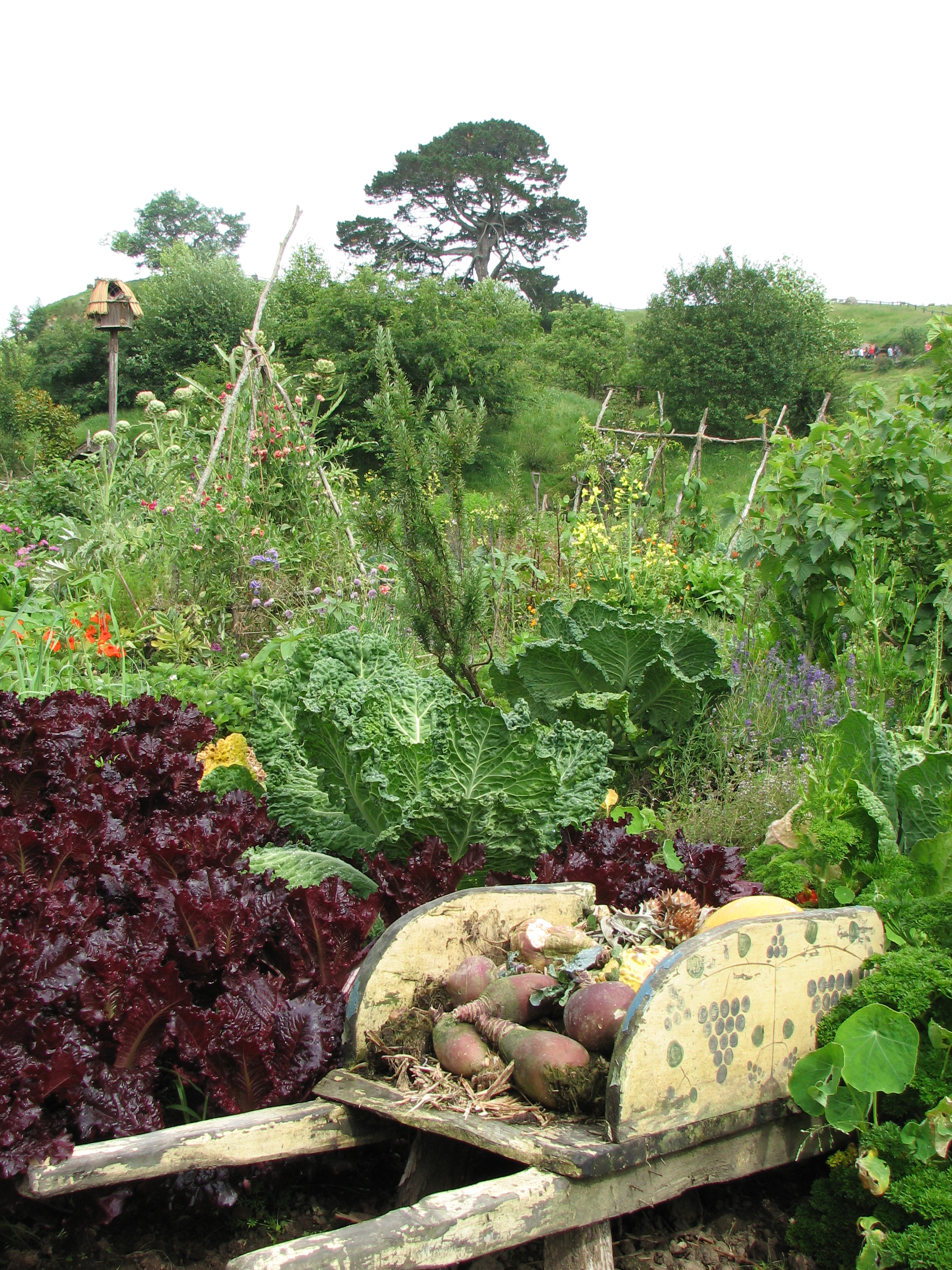
A Shire Garden

A Shire Garden

I believe that one of the great appeals about The Lord of the Rings is that Tolkien successfully employed archetypes and symbols deeply embedded within the development of Western civilization.  Consequently, it is a story into which many who look upon it are symbolically literate in its lexicon.  As a result, they can readily enter in and are validated in the daily small actions of courage, sacrifice, love, loyalty and friendship required to successfully confront and conquer death in the epic journey of life.  In this way, it is a romantic narrative, to be sure. Yet, I would say that romance – living a meaningful life of some consequence – is a universal human value, a longing that transcends across cultures and times.

When Peter Jackson and Fran Walsh brought The Lord of the Rings to film (The Fellowship of the Ring – 2001, The Two Towers – 2002 and The Return of the King -2003), it was considered one of the biggest and most ambitious film projects ever undertaken. The entire project took eight years, with the filming for all three films done simultaneously and entirely in New Zealand, Jackson’s native country.  Though the films follow the book’s general storyline, they do omit some of the novel’s plot elements and include some additions to and deviations from the source material. However, the archetypal elements remain and were even enhanced by the story translation to cinema.

New Zealand 2013 717

Looking up the Shire Hill

Tolkien considered The Lord of the Rings to be primarily a Christian work. However,  its spiritual themes were carefully buried within the story. He understood both the importance of maintaining the accessible nature of key symbols and the craft of good story telling.  In his writing, he was informed by the Christian myths of his faith as well as many “pagan” mythologies with which he was familiar.

In one of his letters, he wrote:

“The Lord of the Rings is of course a fundamentally religious and Catholic work; unconsciously so at first, but consciously in the revision. That is why I have not put in, or have cut out, practically all references to anything like ‘religion’, to cults or practices, in the imaginary world. For the religious element is absorbed into the story and the symbolism.” (Tolkien letters # 142).

The story and the symbolism of Tolkien were dramatically incarnated in the Jackson/Walsh screenplay – from characters to costumes, soundtrack to scenery, and from imagination to illustration – the world of Middle Earth came to life before our eyes, retelling a mythic story to a new generation of life adventurers.  Jackson’s story telling finesse turns the cinema screen into an ancient campfire around which the many gather as a great story is told.  It is a Great Story (a true myth) that speaks to the great themes of destiny, hope, love and identity, and – within all of journey of self – how to approach that time which comes to each of us, in the letting go of self.

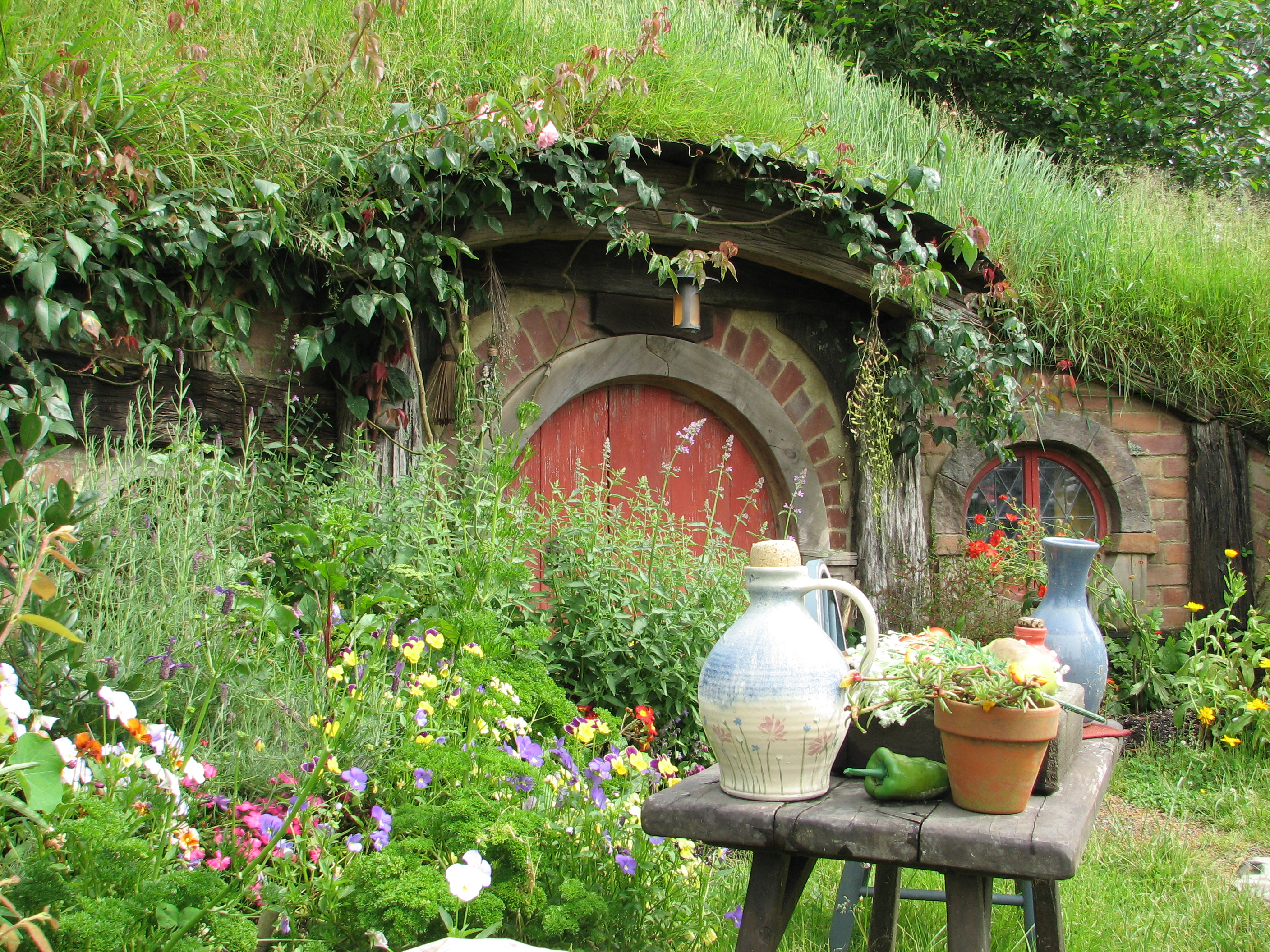
The Potter Hobbit Hole

The Potter’s Hobbit Hole

In late November of last year, I had the opportunity to travel to New Zealand on church business related to indigenous ministries.  Once again, working from the awareness of comparative cosmologies, I found myself listening for the golden moments when indigenous worldviews and Christian worldviews found common intersection in action, form or belief.  Issues of identity are core in Native churching, how to literally and symbolically integrate different worlds of meaning is like watching two universes slowly collide across eons of time – it is sometimes tearfully beautiful, sometimes frighteningly powerful, always risking the integrity of both until a new entity with its own unique integrity is eventually coalesced into an authentic peace.

Indigenous peoples (among others) understand the power, vital necessity and role of myth within our very cultural marrow.  We appreciate how story and symbols, meaning and transformation, the past and the future of peoples and beings are deeply interwoven.  For a long time, the Christian story profoundly spoke and shaped the reality of multiple European cultures and all whom the Western world touched. However, as the Christian story of the West was forged over time (within conflicts of theologies, societies and empires), meanings of symbols and their context known to the early church were forgotten. As Galadriel notes in the opening monologue to Jackson’s Fellowship of the Ring, “Some things that should not have been forgotten were lost. History became legend, legend became myth….”

Additionally, like the Jackson/Walsh script of Lord of the Rings, the development of Christianity – while keeping to an essential oral story line – gradually omitted  some of the original elements and began to include some additions to and deviations from the source material in the canon of our inherited Scripture (quite literally, a book). That said, the key symbols evoked for the first Christian communities remain, and those keys can open many doors.

Marital Home of Samwise Gamgee and Rosie Cotton

Marital Home of Samwise Gamgee and Rosie Cotton

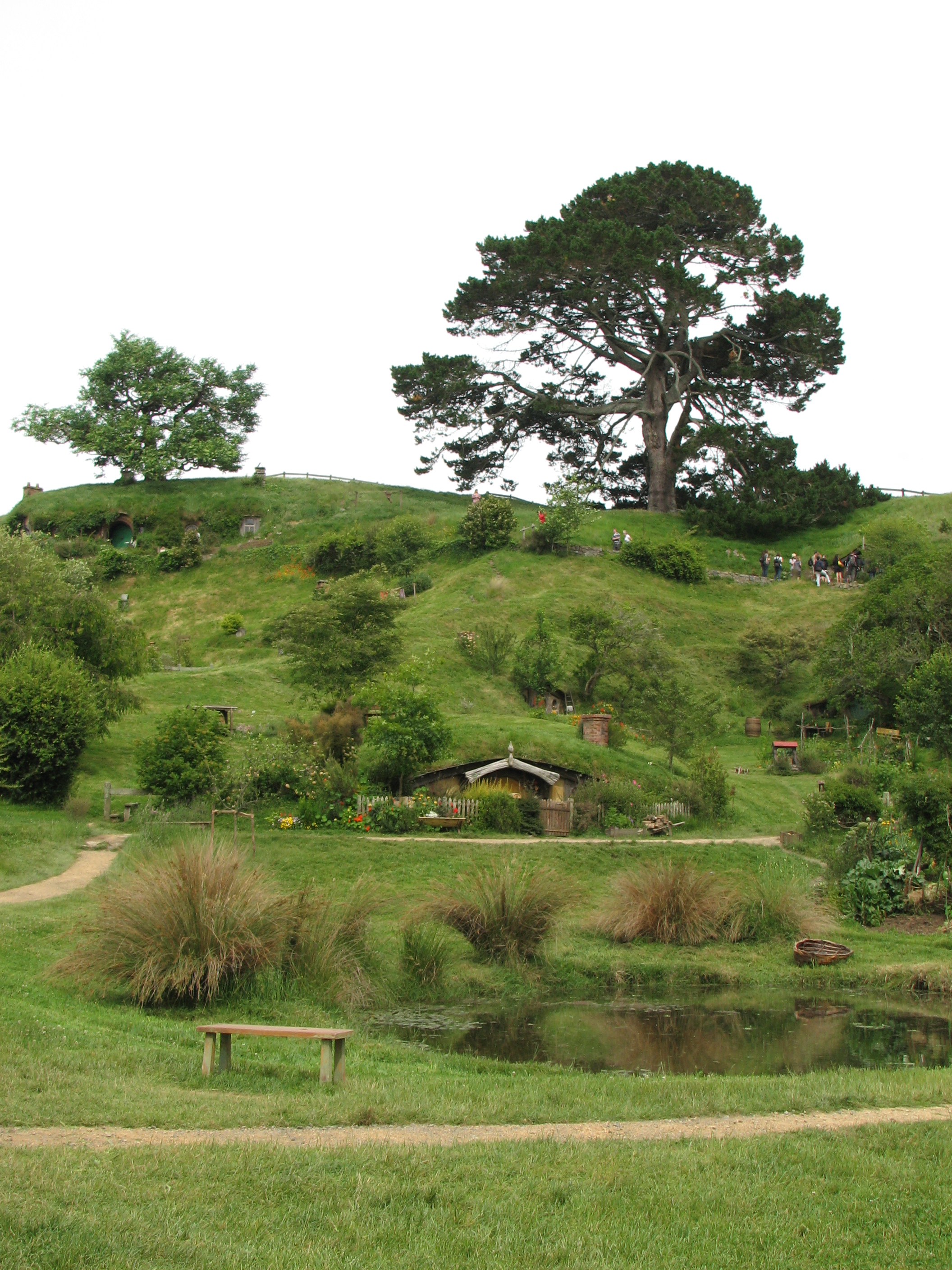
After completing official church business in New Zealand, I spent some time exploring an area on the North Island where Jackson filmed parts of Lord of the Rings and The Hobbit.  Specifically, I traveled to the Alexander Farm just outside the north central town of Matamata that was the film shooting location for the Shire – the mythic land of the Hobbits.

As geeky as my little pilgrimage may seem to some, it was a spiritual pilgrimage, after all.

From the mind of an academic Christian, the archetypal symbols encoded in the Christian story were rendered anew – reincarnated in rings, armies, white towers and dark towers, princes and princesses, love and loyalty, warriors, dead places and living places, hobbits, kings, elves, wizards, a Gollum, uruk-hai, and a lidless eye.  A prominent theme for Tolkien (who served as an officer in the First World War) is that in the struggle against evil, there is no shame in defeat – only in not fighting. Additionally, there were always opportunities for redemption, with the true kingdom of humanity living in peace and prosperity for all. All of these themes are threaded together on an epic hero’s quest, relying most of all on the strength of friendships for its success.

Home of Bilbo and Frodo Baggins

Home of Bilbo and Frodo Baggins

Today, when we speak of the Apostles, martyrs and first century Christian community, I am not sure we remember that they were first and foremost friends. They were friends, who died so that others of their friends might survive. They also loved  the friend they had known who died before them, in a very human effort to confront oppression and bring genuine change. I think one of the most important messages the church needs to hear and rediscover today is that we are asked to be friends –  to recognize how our lives depend on one another, and how the gifts we each bring are essential and necessary for our mutual success in making a better world and a better church.  In these efforts, we can leave no one behind. Those that would leave some behind have failed in the quest before they ever began.

Ultimately, we are reminded that life is an adventure.  There is really not much we can control, and weathering hard times will always hold challenges.  Yet, as Gandalf is given to say by Tolkien, “All we have to decide is what to do with the time that is given to us.”

New Zealand 2013 861

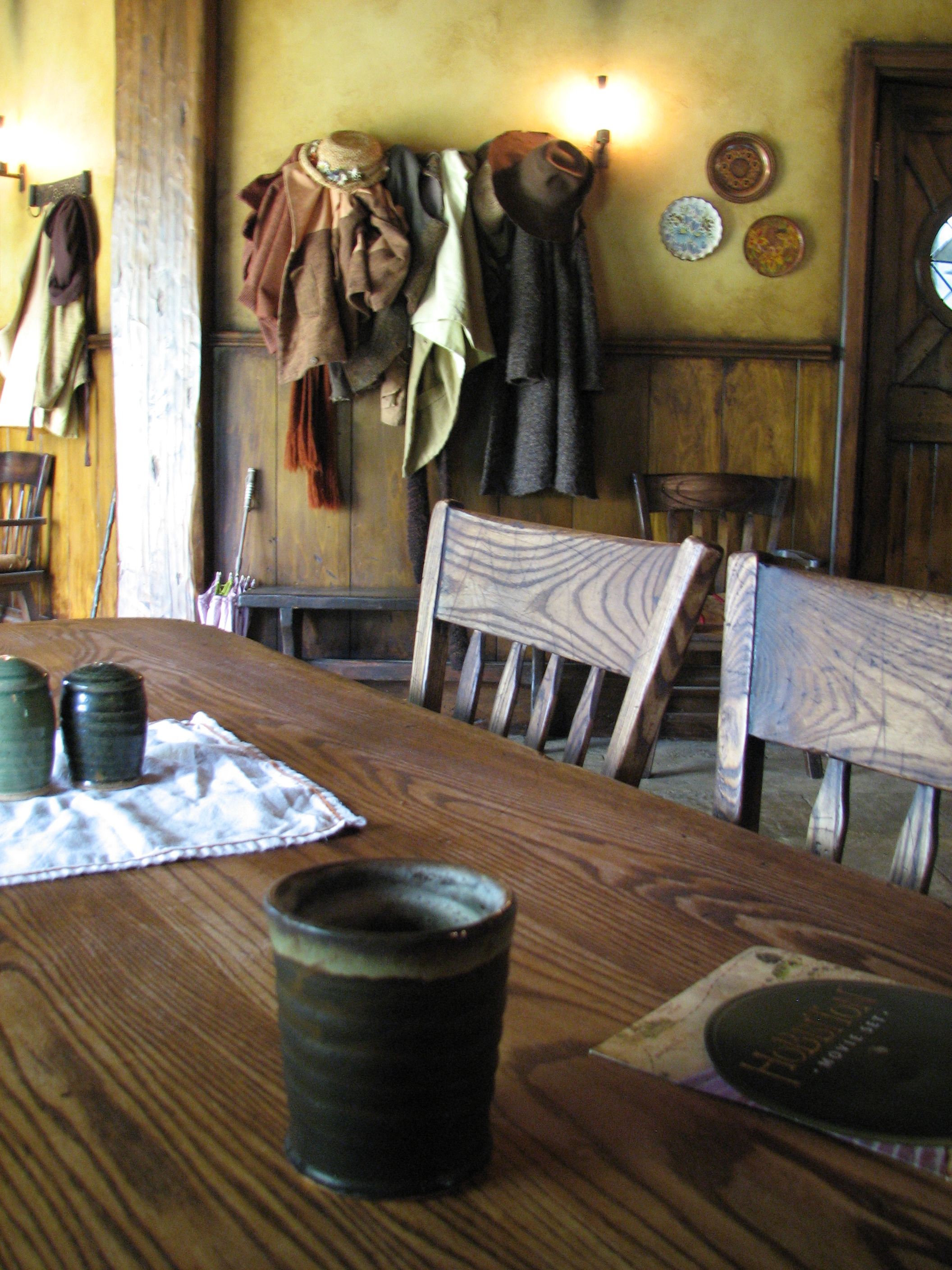
Enjoyed a Beer Inside the Green Dragon Tavern

Eventually, a time will come to each of us when our own part in the journey of life is concluded.  As we contemplate coming to “The End” of our own story, we can be encouraged by having a sense of what may come next – off the page and outside the margins of life:

Pippin:  I didn’t think it would end up this way.

Gandalf:  End? No, the journey doesn’t end here. Death is just another path, one that we all must take. The grey rain-curtain of this world rolls back, and all turns to silver glass, and then you see it.

Pippin: What? Gandalf? See what?

Gandalf:  White shores, and beyond, a far green country under a swift sunrise.

Pippin:  Well, that isn’t so bad.

Gandalf:  No. No, it isn’t.

New Zealand 2013 876

Chair by the Fire in the Green Dragon

I sit beside the fire and think of all that I have seen,
of meadow-flowers and butterflies in summers that have been;
Of yellow leaves and gossamer in autumns that there were,
with morning mist and silver sun and wind upon my hair.
I sit beside the fire and think of how the world will be
when winter comes without a spring that I shall ever see.

For still there are so many things that I have never seen:
in every wood in every spring there is a different green.
I sit beside the fire and think of people long ago,
and people who will see a world that I shall never know.
But all the while I sit and think of times there were before,
I listen for returning feet and voices at the door.

                                                                          JRR Tolkien

Pull Up a Chair...and Join Me!

Pull Up a Chair…and Join Me!

When We Were Young

7 Comments

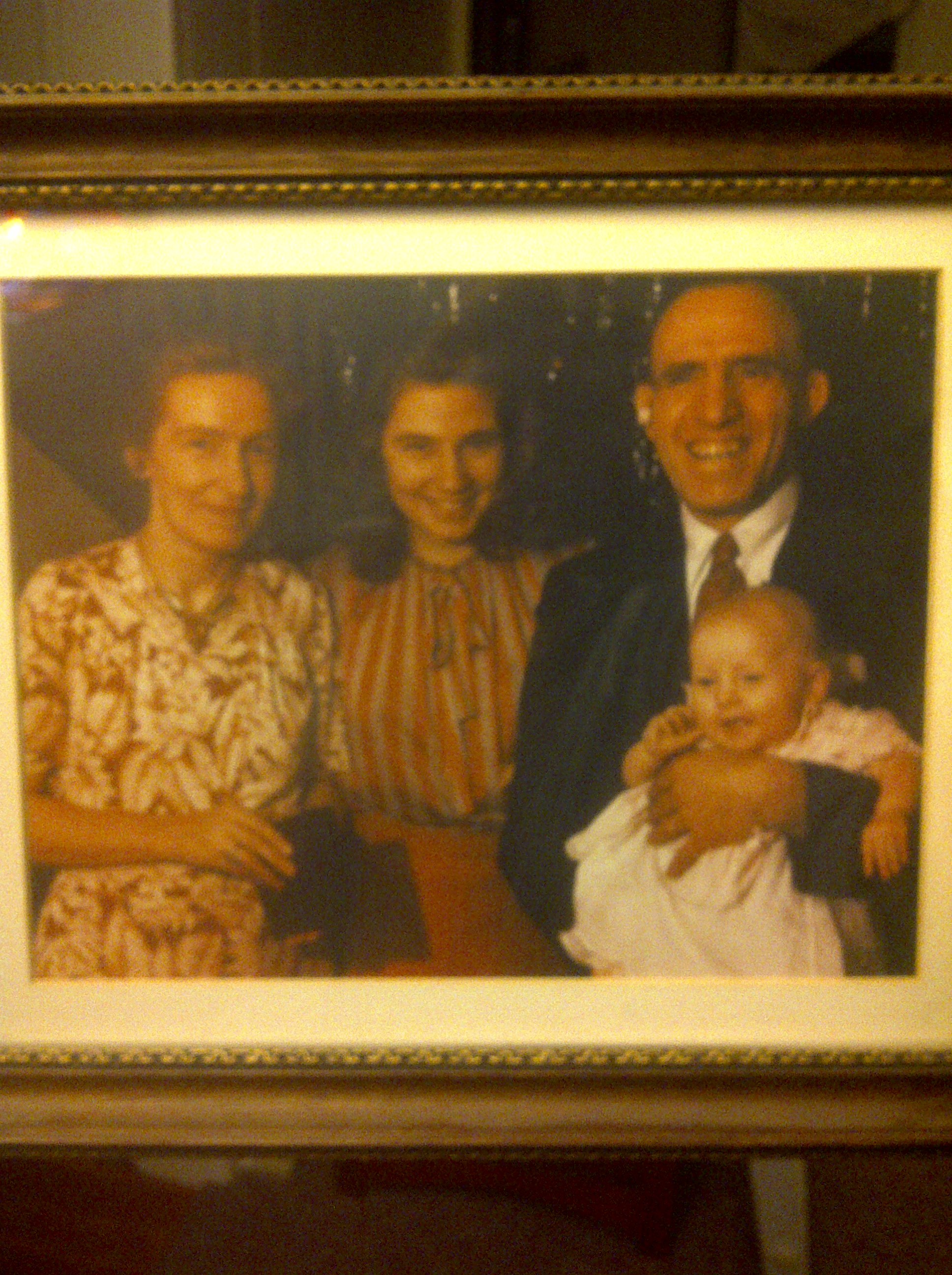
When I look through Victorian era photos of my grandmothers, I am in awe of what deeply joyful girls they were and what strong women they became.  At times, I find myself imagining how they must have been as children or as teenagers.  It’s clear from family stories and old photos that they both enjoyed laughter and were deeply loyal to friends and family.

Both my grandmothers fell in love, knew heartbreak and loss, raised children in times of economic challenge, and all while serving their churches, their parents and their communities.  So many relied upon them, so many friends loved them, so many memories and personal sacrifices were ultimately gifted to their grandchildren.

My father’s mother, Urilda, experienced the meteoric rise to economic prosperity of her father’s business ventures.  Born to a farming family that tinkered away on creating new types of farm equipment, her father (Frederick Ingersoll) was a natural mechanical engineer and designed roller coasters for 19th century amusement parks known as Luna Parks. He ultimately designed and was invested in several of them, and they practically lived at Krug Park, the gem of Frederick’s Luna parks in Omaha.
Urilda Augusta Ingersoll

Urilda as a Young Woman

Sepia photographs of Urilda capture a childhood of visits to the family farm as well as life in a manor house, private girls school and European tour.  She was an amazing pianist and studied in both France and Germany.  Along the way she met and fell in love with an itinerant artist, Clarence Wilbur Taber, Jr., the spoiled son of the creator of the Taber’s Medical encyclopedia.  From the letters I have between Urilda and CW, it was a complicated love affair with a man who seemed utterly unable to commit or be responsible for any of his actions and choices.  Ultimately, he wandered away from two wives (Urilda was the second), each with a set of children. At one point, Urilda mothered both her own two sons by him as well as three stepchildren, supporting Clarence (as absent as ever) through the loss of his young daughter.

Susan, Katie, Fred and Urilda - Krug Park, MI

Susan, Katie, Fred and Urilda – Krug Park, Omaha, NE

With the stock market crash and unexpected death of her father, most of the Luna Parks went bust as investors pulled out or simply went broke.  Two years after Frederick’s death, a horrific roller coaster accident killed several riders at Krug Park.  Any residual income that Urilda had, along with her sister (Susan) and mother (Katie), dried up completely as part of court settlements.  The three women moved to Atlantic City, where Urilda and Susan were employed as factory workers for the Heinz Company (makers of fine ketchup, mustard and pickles).  To tide them over, any remaining family finery of furs, silver and jewelry were gradually sold off to keep the women and Urilda’s two toddler-age sons fed, clothed and housed.
Cousin Emma, Urilda, Susan with James and Julian - Atlantic City

Cousin Emma, Urilda, Susan with James and Julian – Atlantic City

Bob, Hope & Scott Taber

Bob, Hope and Scott Taber

My mother’s mother story was also influenced by both farm life and the rising industrialism and innovation indicative of American life at the turn of the 20th century.  Reba, my grandmother, was the oldest daughter of three girls (along with Bunchie and Margie) born to Effie.  Shortly after her own mother died, Effie herself ran away from home to live with cousins as a child abused by an unhappy stepmother.  Even Effie’s father agreed it was the right move to make on her part.  So, Effie grew up on a farm in rural Pennsylvania and fell in love with one of those cousins, Walter.

By all accounts an intelligent and quiet man who loved to walk for miles at a time, Walter became an engineer with the Pennsylvania Railroad.  Considered a hot ticket similar to being a jet pilot of his day, Walter managed to remain humble and practical.  He often took his young daughter, Reba, with him on certain rail trips.  She recounted to me fondly how she once was with him when they rounded the famous Horseshoe Curve, a maneuver that allowed a view of the whole train at once, with the workers in the caboose waving at her from across the gorge while she sat in her father’s lap in the engine.

Horseshoe Curve

Horseshoe Curve

During a time when women did not have many career options, the three choices for employment outside of the home were to work as a nurse, a teacher or a secretary. As a young woman, Reba felt a strong pull to become a deaconess in her Lutheran tradition.  However, as the oldest daughter, she knew that her parents were depending on her to care for them in their old age.  So, instead of pursuing vocation, Reba became a teacher.

In high school, Reba’s red hair, beauty, smarts and good humor made her very popular, and (her children share with pride) she even dated the captain of the football team.  However, her heart was ultimately won over by a transplanted Canadian who worked as an engineer for Westinghouse.

There were few men that Reba ever really spoke well of. Her father and her beloved Cecil (her husband) were two of them.  As a couple, Reba and Cecil were extremely involved with their church.  They both taught Sunday school, Cecil coached wrestling at the local high school, and Reba wrote 4rth-grade reading level how-to books for unwed mothers on how to care for their babies.

They had two daughters, Patty and Lisa (short for Elizabeth) fifteen years apart.  The long hiatus between children is attributed to the years when Cecil cared for his stepmother.  The family memory is that Cecil felt a deep debt of gratitude towards his step mother for rescuing him, his brother (Howard) and their father from their father’s alcoholism after the death of Cecil’s mother. After his father died, Cecil took it on himself to help support his step mother, who apparently had little regard for Reba.  This would explain why the stepmother wasn’t taken into Reba’s home.  Subsequently, during the intervening fifteen years his stepmother remained alive, Cecil lived during the week with her and spent the weekends at home with Reba.  When his stepmother died, he moved back with his wife permanently, and voilà! A second child came along.

Alexander Family

Reba, Patty, Cecil, Lisa

Sadly, Cecil’s brother – a fireman for the Canadian Railway – died tragically in a head-on collision with another train.  The newspaper article carefully tucked away among treasured family items reports that Howard was pinned for several hours, alive in the wreckage, until a doctor could reach him to perform an amputation of his leg.  The effort was far too late, and Howard died before he could be brought back to town.  I believe that a ring I have of the fraternal order of Canadian Railway firemen belongs to him – the loop of it is dented and the crest shows the tender signs of regular wear.  It must have been returned to the family when Howard’s body came home to Ailsa Craig, Ontario.

After Cecil died suddenly at the age of 56, Reba kept her promise of taking care of her parents and never remarried.

Reba and LaVene

Reba and Patty

Reba’s eldest daughter, Patty (my mother), was raised within the breadth of expectations that a teacher and dedicated Lutheran Christian woman might have for her daughter.  In other words, my mother lived with a certain pressure that could rightly be characterized as simultaneously attempting to achieve perfection in all things while also greatly resenting the pressure to attempt to achieve perfection in all things.

My mother was a straight-A student and mightily excelled in her artistic and musical talents.  She desperately wanted to pursue a career in theater and arts, but (based on what my mother shared with me in later years) Reba felt that education and marriage assured greater security.  I also suspect that Reba’s own sense of familial and Christian responsibility generated a certain fear in my mother of never wanting to be perceived as selfish. As a result, my mother rarely bought anything for herself but enjoyed vicarious joy in being generously gifting towards her family.  Growing up, I was frequently perplexed by my mother’s quiet battle of guilt whenever she felt very attached to something – a car, a coat, a sewing room, a home decoration.  When I once gifted her with a art deco doll that I knew she adored, she was very concerned that my father would be angry since he had criticized her for wanting to spend money on such a frivolous thing.  I’m not sure he realized how acutely skilled he could be in pushing her skillfully hidden childhood buttons.

Don, Julian, Patty, Geoff, Margie & Goldie, Ocean City

Julian, Patty, Aunt Margie & Lisa with Don and Geoff – Ocean City

Like her father, my mother also died suddenly at the age of 56.  My father (Julian), with whom she raised 3 children (Don, Geoff and me), was genuinely and desperately heart broken.  For a man who spent much of his life trying not to rely on others (given the childhood experience of an absent father) and doing everything possible to keep others (even his own children) at a certain emotional distance, the loss of my mother just about broke his spirit.

Between the loss of his wife, one of the few people he ever trusted with his own vulnerabilities, and his open-heart surgery a few years later, my father at last began to mellow under the tenderizing hammer of life as he entered his seventies. Once there, he turned again to his own artistic side – oil painting, writing poetry and short stories, and playing the recorder and the keyboard, things he had done in his early adulthood but had put away during years of career building and child rearing.

Urilda Taber with sons, Julian & James, Atlantic City

Urilda with Julian and James – Atlantic City

My father died a month short of his 80th birthday.  It was a swift death and – I believe – painless.  He was as surprised as I was, which I can say with certainty because I was with him.

He told me that when I was born, the nice Jewish obstetrician brought me to him in the waiting room and handed me into my father’s arms saying, “Mazel tov, Mr. Taber! You have a beautiful baby girl!”

My father took one look at my reddened face still mooshed from childbirth and said, “What is it, and what am I supposed to do with it?”

I think my father spent a lifetime trying to answer that question.  To our mutual credit and wisdom, it was a journey we ultimately took together.

Not long ago, when my husband (Nigel) and I were traveling in Ireland, I heard a song on the radio by the British group, Take That. The song is called, “When We Were Young,” and every time I hear it I see visions of my own youth welling up in my memory like the font of some inner pool of life:

Had the world by the tail,
Good would prevail,
Starships would sail
And none of us would fail in this life
Not when you’re young
We were drawn to whoever
Could keep us together
And bound by the heavens above
And we tried to survive
Traveling at the speed of love

To see the music video of this song, check this out –

These lyrics securely draw together the treasure of my own youth like the pull strings of a cinch purse.  I have loved being alive.  I have not always loved everything that has ever happened to me, but I have ultimately loved being alive.  However, this is only because I have had the experience of loving others and being loved…

Cousins Reunion 2010

Our “Cousins Reunion” of 2010
Me, Walter, Don, Paul and Geoff

Other family members, grandmothers, aunts and uncles, parents, my brothers, high school and college friends, kindred spirits, boy friends that dumped me, boy friends that I dumped, and finally the man who is my husband of twenty years.  I’ve loved sweet spiritual companions who were disguised as cats or dogs, landscapes, starlight and moon rises over water.  I love the ethereal that is God and the mortal human that inspired a love movement who had the courage to name and claim the responsibility of a life fully lived for the purpose of love.

SUNY at Geneseo, 25th College Reunion
Drama/Music/Dance

When I look through Victorian era photos of my grandmothers, I am in awe of what deeply joyful girls they were and what strong women they became.  At times, I find myself imagining how they must have been as children or as teenagers.  It’s clear from family stories and old photos that they both enjoyed laughter and were deeply loyal to friends and family.

When I look through the photos of my own youth, I don’t have to imagine.  I remember.  And I am so grateful for all the love that I have ever known.  It is a blessed heritage of all the ages past, even of all the ages of one’s life.

In Production of “Hold Me” c. 1985

SUNY Geneseo

Loved Always and Forever – Geneseo

Becky Clark
Sister Spirit

Skyping Nigel – Husbunny of 20 Years

New Years Eve

2 Comments

St. Augustine of HippoBuried toward the back of his Confessions (Book XI), St. Augustine of Hippo (AD 354-430) shares his philosophical contemplations about the nature of Time and Eternity.

St Augustine wrote, “What about those two times, past and future: in what sense do they have real being, if the past no longer exists and the future does not exist yet? As for the present time, if that were always present and never slipped away into the past, it would not be time at all; it will be eternity.”

He ultimately concludes that time (as past, present and future) is a reality of the mind: the present is a fleeting awareness; our familiarity with the past is through a present remembrance of it; and our pondering of the future is through a current sense of expectation. He wrote: “It is inaccurate to say, “there are three tenses of time: past, present and future,” rather, “there are three tenses or times: the present of past things, the present of present things, the present of future things.”

Another way to think about this is to understand that the only time we live within and can be said to meaningfully possess is – now.

Hands Holding a Seedling and SoilI am keeping this in mind on this New Year’s Eve day, as I reflect on the past and ponder the future.  It’s easy to become lost or made fearful by either (or both) realms.  Then I remember St. Augustine’s observation, and I realize that that there is no realm of loss or anxiety but the emotional landscape created within my own mind.  And so, perhaps this is a good “time” and a good day to take a tour of that landscape and consider what terrain I want to cultivate therein – like a good mental gardener.

GraveyardThe first place I need to visit is the cemetery of my inward land.  I am aware that some shadow of me stands loyally and most especially beside the grave of my father.  Somehow, I can’t believe he’s in there, and I wish very deeply that he wasn’t.  I have lots of existential belief and faith as well that the eternal aspect of him has gone on, but I have not. I am haunting him, I think.  And I would like not to be a ghost in my own life.

Roman Amphitheatre, SiracusaThe next stop on the tour is Roman amphitheater wherein I seem to spend much time as some kind of spiritual and intellectual gladiator.  The truth is, I enjoy combat. There is something very satisfying about eviscerating bigots, misogynists, racists and harmful people.  Yet, the quandary is always the same – if the spiritual “peaceful warrior” is to be anything more than an oxymoron and I am to be more than enslaved, I need to know less war and more peace – mentally stepping out the arena of conflict to choose freedom from it.

Ireland & UK 3 240This next stop isn’t really a place, and yet I inhabit it – my body.  St. Francis of Assisi used to refer to his body (with all it’s illnesses, frailties and needs) as his “ass” as in the relative of a donkey.  My body is more like a Tazzy (Australian for Tasmanian Devil, and there’s me holding one at the Australia Zoo in 2010). Like a Tazzy, if I’m not zooming around like a crazy thing, I’m completely soporific. I do find body minding to be something of a nuisance, and so I suppose my attitude needs adjusting to re-appreciate the body as an aspect of God’s creation that requires good stewardship as a spiritual discipline.  Eating well, staying fit, getting outside – all of it is part of the balance of the now, and I would like to regain that balance.

Bird BranchThen there is my home.  It’s something of a rubbish heap and is not really at all conducive to fostering the peace I need.  The word of the day there is “simplify,” which includes living where I don’t spend 3 – 4 hours in a car everyday getting to and from work. There is much stuff to sort through and an environment to create which will itself foster creativity.  A creative spirit like mine loves wings, space to fly and a little branch to rest on at the end of the day.

FirefliesFinally, the last stop I would share with you is a quiet, gentle place at the edge of a lake just as twilight settles and the moon rises, where stars reveal in darkness overhead and fireflies do love dances in the moving ether of soft mist. This is where I really live in the now and yet it is not a “here” at all.  It is my best me, and it is where I promise myself to live within and from in every now I am.

Happy New Year, indeed!

In fact, I wish you bliss in your eternal now.