The Revolutionary Cry of Our Times

1 Comment
Trinity Episcopal Church, Everett, WA – Sermon given on January 26, 2025

Episcopal Diocese of Washington DC, Bishop Mariann Budde, in her sermon at Washington National Cathedral’s Service of Prayer for the Nation on January 21st, called on all Americans to strive for a renewed unity based in honesty, humility and respect for human dignity – and she directed her final words to the newly inaugurated President, who was seated in the front row.

A segment of Bishop Budde’s sermon included this message:

Millions have put their trust in you. And as you told the nation yesterday, you have felt the providential hand of a loving God. In the name of our God, I ask you to have mercy upon the people in our country who are scared now. There are gay, lesbian and transgender children in Democratic, Republican, and independent families, some who fear for their lives. And the people who pick our crops, and clean our office buildings; who labor in poultry farms and meat packing plants; who wash the dishes after we eat in restaurants and work the night shifts in hospitals. They…may not be citizens or have the proper documentation. But the vast majority of immigrants are not criminals. They pay taxes and are good neighbors. They are faithful members of our churches and mosques, synagogues, gurudwaras and temples. I ask you to have mercy, Mr. President, on those in our communities whose children fear that their parents will be taken away. And that you help those who are fleeing war zones and persecution in their own lands to find compassion and welcome here. Our God teaches us that we are to be merciful to the stranger, for we were all once strangers in this land. May God grant us the strength and courage to honor the dignity of every human being, to speak the truth to one another in love and walk humbly with each other and our God for the good of all people of all people in this nation and the world.

As Tom Pepinsky noted in his reflection, “We Kneel to No Pope, We Kneel to No King,” Bishop Budde was quickly disparaged by the President and his followers, with Senator Josh Brecheen of Oklahoma even filing a House resolution (H. Res. 59) condemning Bishop Budde’s sermon at the National Cathedral as “a display of political activis and condemning its distorted message.”  Yet, my friends, as Pepinsky observes, “Bishop Budde was acting from her solemn responsibility as the embodiment of America’s political and religious establishment, reminding the new administration of the values upon which the United States was founded and its responsibility to uphold them. This was not an act of resistance. It was an act of leadership on behalf of the closest thing that the United States has to a national church”.

Pepinsky’s essay reminds us that the separation of church and state is a foundational principle of our nation as articulated by our nation’s founders and embodied in our national history. Many Christian nationalists today find the separation of church and state to be an obstacle and appeal instead to a version of Christianity very much associated with the principles of empire, the same Christian empires that came to these shores from the Roman Catholic principalities of Portugal, Spain and Protestant England, legitimating slavery, genocide, and commercial destruction of vast natural resources as God’s will for providing for God’s chosen people.

The Constitution of the United States was drafted by wealthy, landowning white men, many of whom were slave owners. However, their faith was not Christian nationalism. Their aspirations reflected the conditions of the founding of this nation. Namely, they kneeled to no pope, and they kneeled to no king. That is because they were mostly Episcopalians. The Episcopal Church of the United States of America is, as Pepinsky notes, is the closest thing that the United States has to a national church, “This is a historical fact, and a living contemporary practice.”

There is an institution in Washington, DC called the National Cathedral. It is truly a national cathedral, established by an Act of Congress, aligned with the vision of the Founders for our national capital. The denomination of the National Cathedral is Episcopalian. Bishop Budde is the bishop of the Episcopal Diocese of Washington and as such, the National Cathedral is her seat as bishop of that diocese. The establishment of the United States of America coincides with the establishment of the Episcopal Church, because the Episcopal Church is the Church of England in the United States.

Pepinsky’s essay additionally reminds us of our church’s unique history. Anglicanism is the belief system and liturgical practices based on the Church of England. As everyone who has learned European history knows, the modern Church of England emerged through a schism between King Henry VIII of England and the Pope Clement VII, which produced the English Reformation. Driven by various spiritual and worldly matters, Henry refused to recognize papal authority over religious affairs in England. Anglicanism recognizes apostolic succession, but it does not recognize papal supremacy. The King of England is the supreme governor of the Church of England. As head of the church, though, and bishop of the See of Canterbury, the Archbishop of Canterbury kneels to no pope, and we in the Episcopal Church – reminding you again – kneels neither to the King of England nor to the Archbishop of Canterbury.

At the conclusion of the Revolutionary War, a newly independent United States of America had rejected the King’s authority over the thirteen colonies and subsequently separated from the Church of England, which required an oath of Supremacy to the King by all clergy. An early American Anglican clergyman could not take the Oath of Supremacy, because it was essentially an oath to the monarchy. The Church of England was disestablished in the United States, and the Episcopal Church was founded through a series of events that preserved apostolic succession and conceived a system of governance very similar the newly established nation. From that time forward, the Episcopal Church in the United States operated independently of the Church of England. In later generations, it joined with the Anglican Communion – a relationship of international expressions of the Anglican/Episcopal provinces around the world, the remnant leftover of past Christian Empires come and gone.

Finally, as Pepinsky underscores, in Bishop Budde’s sermon, she “articulated a national understanding of the responsibility of faithful leadership towards the American people – the faith tradition of a republic that welcomes all those seeking new opportunity and the chance of a new life for themselves and their children.”

Bishop Budde’s sermon additionally echoed the concerns of the Executive Officers of The Episcopal Church in a letter they issued on January 21st letter to the church, issued in response to the President issuing a barrage of executive orders within the first hours of having taken office, many orders targeting migrants, refugees and other peoples.

The letter released by the Executive Officers of The Episcopal Church urges “Our new president and congressional leaders to exercise mercy and compassion, especially toward law-abiding, long-term members of our congregations and communities; parents and children who are under threat of separation in the name of immigration enforcement; and women and children who are vulnerable to abuse in detention and who fear reporting abuse to law enforcement.”

The letter concludes by encouraging congregations to use the resources of the Office of Government Relations and the Episcopal Public Policy Network and to embody the Gospel through direct witness on behalf of immigrants in our communities. This letter was written in response to the executive orders, The order included measures seeking to suspend the federal refugee resettlement program, declare a national emergency at the U.S-Mexico border, block an “invasion” of migrants into the United States, end the right to birthright citizenship that is guaranteed by the Constitution and resume a policy of making asylum-seekers wait in Mexico for their cases to be heard. Other executive orders were related to the federal work force, the economy, energy policy and the environment and they included some measures targeting transgender people. The government, intends to recognize only two sexes, male and female, and seeks to end protections for transgender inmates in federal prisons.

A growing number of Episcopal bishops are speaking out in response to the new administration’s threat to fulfill a campaign promise of mass deportations of undocumented immigrants, possibly including raids in churches and other places that previous presidents had deemed off-limits for such enforcement. These bishops speaking out include the bishops of Arizona, New York, Massachusetts, Western Massachusetts, and Southern California. Now, the President of the United States has suspended the country’s 45-year-old program of refugee resettlement, which has long enjoyed bipartisan support. In addition, the Department of Homeland Security issued directives reversing the Biden administration policies that avoided immigration enforcement  in “sensitive” or “protected” areas, including schools, hospitals and houses of worship.

I want to say to you that Trinity Everett will remain a spoke in the wheel of our diocesan commitment out of the hub of St. Mark’s Cathedral in Seattle to provide sanctuary, protection, and advocacy to immigrants and refugees. Without a warrant signed by a judge, we will not permit entry of federal ICE agents into our buildings. Bishop Budde is correct when she says that people are afraid now. This is not in the abstract. These orders directly affect people seated in this sanctuary today, maybe even the person sitting next to you. For example, initiatives approved by the new Presidential administration includes a directive that unless both sets of grandparents were born in this country, you are at risk for deportation. Refugees from war that this church sponsors – right here – and that we support are at risk for deportation. Trans people known and beloved by members here and now are and will be subjected to having trans identities revoked. Same gender couples married before God at this altar are at risk of having their marriages invalidated. Even Indigenous Americans are being threatened with loss of US citizenship our their lands are even now being reclassified, opening them for mineral and resource extraction. Removing the cap on the cost of insulin and other medications and life prolonging procedures threatens the health of elders right now sitting in this space and in our community.

It is hard enough for women and LGBTQ persons and people of color in this country to endure the daily onslaughts of racial and gender discrimination, much less experiencing the additional burden of a racist, sexist national leaders informed by an imperial version of Christianity. After my personal experience of the bishop search process in the Diocese of Rochester last year, I posted this message on social media:

Resume, experience, expertise, competency, integrity, values and commitment seem less relevant than the state of my hair in the bishop search processes in which I’ve participated. In one instance, I was wearing four braid loops pinned up (a style of my traditional Indigenous tradition) when a young male search committee member remarked while laughing, “What’s going on there? That’s wild! Ha! Ha! Ha!” In a different interview process, I was wearing two braids with a small feather ornamenting one. An older white woman on the search committee who contacted my references then asked each of them, “Does she always dress like that with her hair?” In the most recent discernment process, I decided to wear just one plain braid over my shoulder (as in my profile picture). One clergy person queried of another, “Why does she wear her braid like that?” They were quite troubled by it. My friends,  cultural competency  means understanding and respecting other cultural values and ascetics while not expecting others to conform to dominant culture assimilation (racial biases often referred to as “professional” and is essentially racist). In my culture, long hair and braids are a hallmark of cultural pride and connection to ancestors, community, identity, spiritual values and honor.  If being a leader in dominant culture church means cutting my hair or making my hair less “wild”, then it’s not a church I want to lead.

With their permission, I would like to share an email that I received from parishioner Linda Gabourel and her husband Po that emailed privately to me in response to my post:

Dear Rachel:

Having heard about your recent Facebook post regarding the comments about your hair style during the Rochester discernment I believe voices need to be raised.  I don’t have Facebook, but Kate copy-pasted your comments and sent them to me.  (Thank you, Kate).

My initial response was to be angry on your behalf and yes I am angry and dismayed that comments like that would come from people who should know better and do better.   There was nothing subtle or veiled about the insult to your indigenous heritage from those few petty individuals. I am so sorry for the pain and discouragement it is causing you.  I have some thoughts to share for whatever they are worth. First and foremost, don’t ever let them win! This is where the strong stand up, continue to speak out, lead the way and continue to educate those who need their eyes opened. [Ironically, I say] You are one of the strongest women I have known in my lifetime.  If leaders like you give up our church will suffer.  Never forget that you are extraordinary, strong, and your voice and example are indispensable to the Episcopal Church moving forward. 

When I was in medical school and in training, women like myself, put up with a lot of sexist comments and harassment and we never felt we had the power to change that. It was work hard and keep your head down. What we did do was to stay, keep coming and fight for our place.  My husband had a patient during his residency at the Seattle VA hospital, that refused care from him as he, quote, didn’t want a “gook” touching him. He assumed Po was Vietnamese.  Po wrote basic admission orders and a note including “patient refused care from a gook”. It hurt. He kept moving forward and physicians of color kept coming.  I have great faith in people and believe that they can learn and they can change. With leadership like yours and people like those at Trinity, we will keep coming and swarm the church with love, inclusion and tolerance. To do that they need to hear from people like you. You can change people one at a time.  You have a voice. You be who you are. No conformity required!!! Loud and proud right? The fight is a hard one so what can I do to help and support you?

My friends, I do not get emails like this.

Last weekend, I wasn’t here. Father Allen presided and preached in my place, because I was away attending an annual gathering of Indigenous Episcopalians called Wintertalk, which has traditionally been held on the weekend of the Martin Luther King Jr. holiday. We experienced the presidential inauguration on MLK Monday and the release of the executive orders that followed, including an order opening up long-protected Indigenous lands for mineral and fossil fuel extraction and the removal of any mention of climate change science from the White House webpages. The events and conversations of this past Wintertalk caused me to face a terrible reality – I have not ever in my professional life felt safe enough to share my full self within the predominantly white spaces in which I have worked and which characterize The Episcopal Church, including here at Trinity Episcopal Everett. There is much for us to explore about that which we might chose to do as we go forward together. For now, I would simply remind you that the Episcopal church’s statement that “All are welcome” needs to apply to clergy in our diocese, as much as anyone else. Allen Hicks who is Citizens Potawatomi and me – a Shackan First Nation woman – are granted the authority and responsibility by the canons of this church to lead this congregation in the teachings, values, and practice of our faith.  Yet, I am challenged; I am not seen as an Indigenous woman. I disappear in the words of people who continually say that they do not see color. You must see color. I guarantee you that we see your whiteness.

The actions of the new national leadership are disheartening, and the actions of our government will likely continue to brutalize the vulnerable and further privilege those who are already abundantly privileged within a racist and sexist society. However, Bishop Steven Charleston (Choctaw elder and retired bishop of Alaska) reminds us of the ultimate mission of our church in the following reflection that he posted this past week:

“Shock and awe is a military tactic. Comfort and awe is a spiritual alternative. The military option supports the will to dominate. The spiritual option supports the commitment to liberate.  We share with all people an awesome grace: the path to peace, on the walk of truth and reconciliation, with justice lived for the sake of all creation. We do not seek control, but something much more transformational and enduring. We seek kinship.”

My friends – my kin – the Episcopal Church is a faith tradition formed by and for revolution, rooted in the teachings of a brown-skinned socialist Jew living in the Middle East under occupation of Empire. This is our Messiah. His message of love of one’s neighbor and faithfulness to teachings of mercy, compassion, and peace were so threatening to those in power in his day that he was executed by the Roman government for sedition. St. Paul and eleven of the apostles followed in his steps through their own journeys of resistance, service, and hope until they, too, were martyred and their faith was ultimately retooled to fit the purposes of empire under Constantine I. 

Resurrection, like revolution, is threatening to those who would rule by force and reject the spiritual and divine quality of mercy. Violence and death have never had the last world, not in our wisdom traditions and not in world history. The Episcopal Church – in case you are Episcopo-curious or you have friends who are Episcopo-curious – the Episcopal Church takes seriously, what it means to be the Body of Christ; we hold dear the responsibility of our Baptismal Covenant to strive for justice and peace among all people and to respect the dignity of every human being. We are dedicated to the commandments of the Savior we follow – to love God with all our heart and mind and being, and to love our neighbors as ourselves; and finally, in fidelity to the core principles of the Episcopal founders of the United States of America, we kneel to no ruler but Jesus Christ alone.

We follow the liberating strength of God’s love and come together every week to celebrate the true freedom that is to found in unconditional acceptance and mutual support as a spiritual community equal before the eyes of God. We are a people born of both spiritual and social revolution. We are the Episcopal Church, and in the face of all those who would exclude and deride, harm, who would endanger emigrants, LGBTQ persons, women and children, the elderly, the ill, the hungry, the homeless, the jobless, the poor, the addicted, the imprisoned, the Indigenous, the foreigner, the vulnerable. More than a logo, more than a slogan, more than a glib bumper sticker – we say on behalf this nation and of our church, “All are welcome!”

We say, “All are welcome!” 

We say, “All are welcome!”

Let this be the revolutionary cry of our times!

*******************************************************************************

To view the YouTube livestream version of this sermon, go to: https://www.youtube.com/watch?v=W5T6lC-RWdc

To view the sermon given by Bishop Marianne Edgar Budde at the National Cathedral, go to: https://www.youtube.com/watch?v=xwwaEuDeqM8

To read the letter released by the Executive Officers of The Episcopal Church, click on this link: https://www.youtube.com/watch?v=xwwaEuDeqM8

To read the essay, “We Kneel to no Pope, We Kneel to no King” by Tom Pepinsky, click on this link: https://tompepinsky.com/2025/01/22/we-kneel-to-no-pope-and-we-kneel-to-no-king/

COP28: The Role of Faith in Climate Change Activism

Leave a comment

For the first time in its history, the meeting of the Conference of Parities hosted a Faith Pavilion – a dedicated space for interfaith dialogue, prayer, and faithful action on climate change. For me, the Faith Pavilion was a powerful experience in collaboration, theological discourse, and emergence of significant global relationships among diverse faith leaders sharing a mutual commitment to faithfully intercede in meaningful ways on behalf of the world’s suffering in light of climate change.

A Brief Background on COP

The UNFCCC secretariat is the United Nations entity tasked with supporting the global response to the threat of climate change. UNFCCC stands for United Nations Framework Convention on Climate Change. The Convention has near universal membership (198 Parties/Nation States) and is the parent treaty of the 2015 Paris Agreement. The main aim of the Paris Agreement is to keep the global average temperature rise this century as close as possible to 1.5 degrees Celsius above pre-industrial levels. The UNFCCC is also the parent treaty of the 1997 Kyoto Protocol. The ultimate objective of all three agreements under the UNFCCC is to stabilize greenhouse gas concentrations in the atmosphere at a level that will prevent dangerous human interference with the climate system, in a time frame which theoretically is intended to allow ecosystems to adapt naturally while enabling sustainable economic development in human societies.

The annual COP meeting is the supreme decision-making body of the Convention. All States that are Parties to the Convention are represented at the COP, at which they review the implementation of the Convention and any other legal instruments that the COP adopts and take decisions necessary to promote the effective implementation of the Convention. At the United Nations climate change conference in Paris, COP 21, governments agreed that mobilizing stronger and more ambitious climate action is urgently required to achieve the goals of the Paris Agreement.

Further, industrialized nations agree under the Convention to support climate change activities in developing countries by providing financial support for action on climate change beyond any financial assistance already provided to these countries. A system of grants and loans has been set up through the Convention and is managed by the Global Environment Facility. Industrialized countries also agree to share technology with less-advanced nations. Reports submitted by all Parties for 2023 (COP28) are available here: https://unfccc.int/reports

The Faith Pavilion at COP28

Faith-based organizations (FBOs) and religious leaders are an important presence at the UN Framework Convention on Climate Change (UNFCCC) Conference of Parties demonstrating that religious and spiritual communities are essential to the fight against climate change and to achieving the Sustainable Development Goals (SDGs) and the goals of the Paris Agreement. 

The United Nations Environment Program (UNEP), through the Faith for Earth Coalition, the Interfaith Coordination Group on Climate Change served as a coordination hub for collaborative Interfaith engagement towards COP 28. The Group is a global effort made up of approximately 60 actors from 35 different FBOs and civil society NGOs (Non-Governmental Organizations, usually non-profits). The Core Team served a smaller action group that met weekly to provide key strategic direction to the Coordination Group. The Episcopal Diocese of California was one of the six institutions represented on the Core Team by Bishop Marc Andrus, who additionally served as the chair of the Episcopal delegation that participated in COP28.

This year’s COP was the first time for the Faith Pavilion, which in the case of Dubai was facilitated by the local host Muslim Council of Elders. The Pavilion had three strategic objectives:  1) Encourage faith-based organizations (FBOs) to engage with country delegates and increase their capacity to advocate for specific negotiation outcomes at COP28 and beyond, 2) Increase visibility for environmental advocacy work by FBOs and other spiritual and religious actors, particularly those on the frontlines of the climate crisis and how this work contributes to the goals of the Paris Agreement. Promote multi, and 3) highlight faith understanding by creating a space for spiritual reflection, artistic expression and prayer.

Over the course of the two weeks of COP28, the Faith Pavilion hosted 70 events that incorporated more than 350 speakers through a variety of topical panels. In a spontaneous and generous gesture of inclusivity, Rabbi Yonatan Neril invited me to participate on two panels that he facilitated. Rabbi Neril is the founder and current director of the Interfaith Center for Sustainable Development (ICSD), a non-profit organization based in Jerusalem.

Cultivating the Human Heart

Throughout my time participating in the second week of COP28, I heard a common message from leaders of faith, leaders of NGO’s, and governmental representatives about the importance of including the wisdom and perspectives of Indigenous people on issues of both climate change impacts and adaptations. During my daily check ins at the Indigenous Pavilion, I heard the overall Indigenous message to the world as one of returning to traditional Indigenous lifeways that are in harmony/balance with nature and that are inherently more sustainable ways of living that promote environmental wellness for the benefit of all life.

For me, the overarching difficulty about the COP framework is its primary focus on economic development as the foundational principle of human development and development of human societies. This narrow view makes it understandable about why a Faith Pavilion has never been a part of COP previously. Faithful living in every religious tradition is a practice of simplicity, humble service to others, and sharing what gifts we have with one another. In contrast, dominant economic culture worldwide tends to value competition for resources, operate out of self-interest, and practice resource hoarding which in turn relies on the subjugation of an inexpensive work force by the economic elite. Therefore, climate justice is closely tied to human rights advocacy.

Faith activism is attuned to the sacred nature of Creation as a foundational belief across religious traditions. Collectively, people of faith believe that we have a responsibility to not only preserve Creation, but to actively participate in its ongoing cultivation as collaborators/co-conspirers with the Sacred in order to enhance the wellbeing of all life. This is not an easy spiritual discipline. We are called to simplicity in living (living simply so that others may simply live), and cultivating a broad and deep understanding of the interconnected nature of life on earth that requires our proactive advocacy at every level of society and within our faith communities.

I have long believed that the Episcopal Church would benefit from some amount of “Indigenization” in its worldview, polity, and practice. For me, Indigenization includes the goal of turning people’s hearts towards the illuminating sunlight of God’s love that is in keeping with Christ’s teaching of simplicity of life, acceptance of diversity, our spiritual connection to all beings, and the sacred trust given to us to be stewards of Creation as a primary spiritual practice. I fear that like nation states, our institutional life undervalues the perspectives of our marginalized global members, subjugates the voices of protest that seek institutional reform and genuine transformation, and continues to prioritize monetary concerns above the spiritual needs of our communities. There is more than one model of economy from which to choose – the dominant model of capitalism is not sustainable either as a society or as a church. The model of reciprocity not only has Indigenous teaching behind it but also is more in keeping with Christ’s teaching of sharing always from what we have in a continual cycle of blessing that recognizes and values our interdependency and relationship with and within Creation.

As many speakers in the Faith Pavilion shared, the current Climate Crisis is also a spiritual crisis. People around the world, in every culture, are seeking meaningful connection with one another for needful systemic change. However, our understanding of the vital nature of our mutual interdependence on one another and the natural world requires the deeper appreciation of connection that goes far beyond one of commerce. People of faith have the opportunity and imperative of acting both locally and globally in ways that make the power of love real in our world. We do this through inclusion for those who have been marginalized, by making atonement real for those in power who are not serving the people and who denigrate the environment, by making reconciliation real between humanity and the environments in which we live, and by developing mutually supportive relationships between faith communities.

The witness of Christ’s ministry teaches us that the gifts of the earth are not resources for the privileged few to exploit. Rather, the Good Gardiner teaches us that the gifts of the earth are ours to cherish and to cultivate for their own sake. We are to love God and our neighbor, but there is no closer divine neighbor to each of us than the sacred earth beneath our feet that grounds us in sacred places, the sacred water that flows through our veins, and the sacred air that gives us breath.

For God’s sake, let us love our neighbors well.

Episcopal Leadership

Leave a comment
Trinity Episcopal Church, Everett, WA

The Catechism or Outline of Faith of the Episcopal Church includes the question, “Who are the ministers of the Church?” The answer responds,” The ministers of the Church are lay persons, bishops, priests, and deacons.”  I believe that leadership formation is a vital and ongoing component of each of the four orders of ministry – the life and mission of the Church relies upon the leadership skills of members within each order for the sustainability of the purpose-driven service of the Church.

Leaders are formed and called within each of the four orders of ministry. However, not all those who are elected/selected/self-injected into leadership roles possess the traits and skills necessary for the required relational and organizational work. Part of the difficulty of addressing leadership issues related to ministerial calling has to do with the (usually) unarticulated assumptions of what constitutes a desirable leader within the dominant culture system of the Church. For example, self-promotional arrogance is often mistaken for competence while humility and vulnerability are frequently deemed to be weaknesses. It’s an old story and a reoccurring theme that I have seen repeated in clergy/bishop search processes as well as in parochial ministries and academic settings. For people of color who are informed by alternative cultural values, navigating the dominant culture assumptions around leadership can be especially frustrating within a vocational discernment or call process.

My understanding and aspirations of leadership are informed by both my Indigenous cultural values and more than thirty years of organizational assessment and development. I find that leadership has an ephemeral quality to it when done well. A leader in harmony with community has a feather-light touch that communicates trust and uplifts others with confidence in their abilities, a quality of love for who others are as people, a commitment to their lifelong development and realization of potential.  Leadership invites diverse people of genuine talent whose joy and imagination is unthreatening to a leader who is secure in who they are. Leaders do not need to manipulate those around them or expect others to protect the leader’s deficiencies or cater to the leader’s ego needs. Leaders do not marginalize dissenting voices but do insist on mutual respect. Leader’s create safe space for all voices, invite the humble, and moderate the entitled. Leaders model vulnerability while standing in great strength. Leaders challenge injustice and never ever fail to speak up for fear of retaliation or cost. Leaders lead for the sake of the lives of others, for the well being and health of the community.  This is the leadership formation I learned in my Indigenous matriarchal culture. I have a preference for these values to what I experience in much of the dominant culture church.

That said, even within dominant culture, there is a common understanding that baptism, ordination, consecration, certifications or academic degrees do not make people leaders; neither do such things assure leadership competencies. Leadership in every sphere of the Church requires a high level of self-awareness, a mature emotional intelligence, a collaborative management approach, and a genuine passion for service that prioritizes the needs of the community over the needs of one’s own ego.

Too often, I have experienced leaders in every order of ministry more focused on establishing their own authority and fiefdoms within the Church than they are actually interested in serving and cultivating others. Once established within the institutional order of things, egocentric leaders can spend the rest of their tenure controlling assets and access to power, assisting only those people willing to facilitate the established rewards system while alienating those unwilling to be codependent to a false loyalty program. It doesn’t take an expert in organizational development to identify leadership dysfunction – usually those most affected are well aware of the issues at hand and only require the supported opportunity to verbalize the emotional exhaustion and pain commonly associated with leadership voids and systems failure.

As one of the best-known and most influential chefs in the world, Gordon Ramsay has developed an intuitive (even if fiery) ability to assess for leadership and organizational dysfunction in every failing hotel or restaurant that he is invited to help turn around. In many instances, Chef Ramsay’s assessment includes the recognition of the loss of passion and vision that originally inspired the operating chef. The capability of leadership and organizational possibilities usually exist, but the instinctive creativity of the chef has become suppressed (even depressed) within systemic/relational dysfunctions. The amazing art of cultivating human encounter through cuisine that shares from the resplendent diversity of human identity to feed the world shares much in common with the mission and challenges of the Church today.

Many of our leaders in each order of ministry are struggling to regather a sense of meaning and creative vision amid the pressures of antiquated (even damaging) ways of being Church. Financial concerns, changes in attendance patterns, unrealistic expectations within limited resources, and aging infrastructure may all be very real issues. However, I believe that the power of adaptive change requires reconnecting with our passion – the original inspiration of our calling as sources of God’s creative and joyful presence in the world.

Leadership at every level and in every order of the Church in every setting needs to stop making excuses for why things aren’t working, take responsibility for our respective ministries, and make the personal and organizational changes necessary to un-hobble God’s next creative endeavor through us. Egocentric leaders need to be challenged or moved out, dysfunctional systems need to be named and changed, and cultural values that do not serve the community need to be replaced by values that do.  The alternative is to admit to ourselves that our passion just isn’t there anymore, we don’t have the necessary skills, and it’s time to close up shop.

There are ways in which I identify with Chef Ramsay’s lack of tolerance and bluntness in the face of poor leadership and systems that fail both employees and those being served. I have had my Ramsay moments in the Church and then worked hard to initiate and lead meaningful change. When working for change within the system hasn’t been effective, I have been willing to name issues publicly. While some may say that’s not a prudent choice to make, I feel sure that our Church is on course to die a prudent death in the absence of truth telling regarding leadership and/or organizational dysfunction. Only with courage can we find the way forward together and discover anew the delight of creating the Church we envision, by realizing the amazing art of cultivating human encounter through Christ that shares from the resplendent diversity of human identity to feed the world.

Trinity Episcopal Church in Everett, WA Mission Statement:

Forming leaders and building community by seeking and serving Christ in all God’s creation.

A Wilderness People Seek Holy Ground

1 Comment
Photo by Don Wayne – Mt. Rainier National Park

Results of Our Six Diocesan Resolutions

Circles of Color sponsored six resolutions to Diocesan Convention. We led a preconvention workshop on the Thursday evening before the Friday/Saturday convention schedule. During Convention, we provided a Friday morning introductory workshop to the Circles of Color and a panel discussion on Saturday. The sum of work was intensive, but the rewards were exponential.

The overarching intention of the six resolutions was to draw collective attention to the needs for diocesan institutional reform to support the work, leadership formation, and ministries essential to the communities and people of color in our diocese. Before 2007, this work had been facilitated by the supervision of a fulltime ethnic missioner, a fulltime suffragan bishop, a full-time assistant, and a part-time dedicated communications assistant. From 2007 onward, staff cuts and budget cuts served to deconstruct the centralized programing and support that had previously existed for our Episcopalians of color. In the absence of a proactive staff presence for providing advocacy, support and connection, the recruitment and leadership formation BIPOC people suffered as did several of our faith communities of color. In short, an administrative goal to cut costs had the impact of deconstructing ethnic ministries, which had been a vital community for BIPOC people in the diocese that provided significant partnerships, education, and consultation resources throughout the diocese.

The Circles of Color resolutions addressed the importance and need to keep BIPOC concerns and needs in the forefront of diocesan mission and commitment. During our panel discussion on Saturday, we heard from a member of the Diocesan Budget and Finance Committee that a diocesan survey some years ago indicated that ethnic ministries was a low priority for our diocese. However, based on the outstanding support of members of Convention this year, I believe the sense of diocesan priorities may have changed somewhat in response to the current issues of our time – most especially the influence of the Black Lives Matter movement and revitalized interest in the intersectionality of indigenous peoples concerns and environmental justice issues.

Convention passed all six resolutions sponsored on behalf of Circles of Color. The resolutions themselves provided an important opportunity for reflection and education. They served as a lens through which to view and understand the needs of BIPOC Episcopalians. The majority of the diocese was likely unaware of the disenfranchisement experienced by our BIPOC church members and communities. I believe that I speak for all members of Circles of Color that we felt deeply grateful and were very emotionally and spiritually moved by the Convention’s support of the resolutions and by the witness and testimony provided by white allies who spoke in support of the resolutions. Many tears of gratitude were shed, and by the end of Convention we felt that we had been seen, heard, and valued. We hope that the community gift of being seen, heard, and valued will continue as we all grow in the depth of our relationships with one another in the Diocese of Olympia.

Whoever’s in Charge is Who’s Responsible

The greatest organizational challenges for needed changes are in areas of governance and leadership, getting to the heart of addressing issues of systemic racism in the church. Bishop Rickel has noted that now that the resolutions have been passed, the real work begins. From a values and community perspective, the work of addressing systemic racism is all of ours to do and rests with no single individual but with every individual, wherever we are on the organizational flow chart, however much social power we have, and whatever color we are. In our Baptismal Covenant, each of us has made the promise to strive for justice and peace among all people, and respect the dignity of every human being. Fulfilling our Baptismal promises constitutes the work of a lifetime.

However, from a leadership and organizational perspective in which the reality of church hierarchy determines institutional and budgetary priorities, the bishop and his office as well as the dean and the diocesan cathedral need to do some soul searching. People of color in the Diocese of Olympia are asking for mutuality in our relationships with church leaders, input into institutional operations that directly affect us, and pastoral responses from diocesan and cathedral leadership. Asking for mutuality and decision-making that cares for the needs of the marginalized – which are community value of our faith – is at odds with the hegemonic nature of a hierarchical institution that equates leadership with higher authority possessing greater power and control.

In terms of systems theory, it is not possible to reconcile issues of inequality within a hierarchal structure that by its nature derives authority from the unequal social strata over which it has power. The democratic principles that seemingly empower the bicameral decision making of diocesan conventions and the General Convention of the Episcopal Church may be legislative bodies that attempt to balance the hierarchical influence of bishops and other leaders. Yet, the canon law that undergirds the Church polity and empowerment of hierarchal decision making is cumbersome and time consuming to change in response to the facile and rapidly changing needs of our time – including adapting to real-time needs of our growing communities of color.  Therefore, organizational adaptation is highly localized and is utterly dependent on how a given diocesan bishop or leadership system is willing to flex in the way in which authority operates on a continuum of unilateral hierarchical decision making to allowing for corporate influence in decision-making and collaborative organizational management.

Hierarchical decision-making says, “I have decided this is how it will be – you figure out how to execute my expectation and thereby you are ‘empowered’ to do things my way, and I will hold you accountable.” Whereas, corporate input into decision making that leads to genuine collective responsibility says, “We need to hear from one another regularly and intentionally so that we keep learning what we each need from a shared commitment to creating what we envision together; in this way we empower one another to assume the responsibilities we each have toward one another through our shared leadership, holding ourselves accountable.”

When hierarchical systems are incapable or unwilling to listen to the needs of the marginalized, the people will insist on transformative change, frequently perceived as a hostile corporate takeover by those whom the system genuinely empowers. Corporate challenge is the first indicator to those in charge within a system from which only the few derive authority that the system is not serving the people. Hierarchical systems rely on a system of rewards and punishments, usually generating a cosmology that promotes fear of retribution and extends relationship only to the compliant.  Within a hierarchal church system, forgiveness is about successfully placating angry gods.

Fortunately, in the face of the hierarchical machinations of empire and religious institution, Jesus offers a compelling alternative.

New Testament Leadership is Corporate and so is God

Jesus and early church leadership introduced significant social and theological innovations to the  hierarchical values and cultural beliefs enforced during their lifetime. Their perceived attempt at corporate takeover was considered threatening enough by those in hierarchical power to get nearly all of them killed. Yet, history shows us that good ideas are hard to entomb or coopt and have a tendency to be resurrected and liberated in successive generations. Just as creation is an ongoing phenomenon not limited to the allegory of seven days, Christ’s resurrection was never limited to just three days but continues unabated in our time.

The reality that the savior of dominant culture is an articulate, educated, brown-skinned, socially progressive young adult we know as Jesus is entirely relevant to the call confronting the Church today. Having lived his entire human life as an indigenous man living under Roman occupation and frustrated by the failure of his religious leaders to take a stand on behalf of the people in order to help mitigate their suffering, Jesus empowered others through his leadership. He leveraged whatever social privilege he held to cultivate relationships with the whole spectrum of his society, subverting multitudinous dominant paradigms with the certitude of the core principles of his faith. He elevated the law to love one another into a rallying cry for social, personal, and spiritual transformation. He seemingly challenged everyone he met to garner the fortitude to grow beyond the social limitations/expectations placed upon them like manacles, while chastising those who had created those bonds.

Jesus did not seek to overthrow but to create level ground for all. For those dwelling in high places of power, level ground was an anathema. Yet, early church writers picked up the theme of human value within corporate ways of being, and a triune God in collaboration with itself became the new model for leadership and community. In a challenge to ascribed social and religious privilege, Paul deconstructed social strata in human society and in religious institution, reframing the new community as the Body of Christ:

For in the one Spirit we were all baptized into one body—Jews or Greeks, slaves or free—and we were all made to drink of one Spirit. Indeed, the body does not consist of one member but of many. The eye cannot say to the hand, ‘I have no need of you’, nor again the head to the feet, ‘I have no need of you.’ On the contrary, the members of the body that seem to be weaker are indispensable.  But God has so arranged the body, giving the greater honor to the inferior member, that there may be no dissension within the body, but the members may have the same care for one another. (1 Cor 13-14, 22, 24b-25).

Identifying a basis for common ground amidst social and cultural diversity, Paul also provides a basis for unity and social leveling in the idea that all social assignments that ascribe our identity – including ethnicity and gender – are subsumed into the singular identity of Christ, whose own identity in/as God transcends all:

Therefore the law was our disciplinarian until Christ came, so that we might be justified by faith. But now that faith has come, we are no longer subject to a disciplinarian, for in Christ Jesus you are all children of God through faith. As many of you as were baptized into Christ have clothed yourselves with Christ. There is no longer Jew or Greek, there is no longer slave or free, there is no longer male and female; for all of you are one in Christ Jesus. (Gal 3:24-28)

Surely, when members of Christ’s body are hurting, we need to tend to those wounds collectively. People of color in the diocese of Olympia are hurting. Passing the six resolutions at our convention was an important beginning. Hearing Bishop Rickel state at convention that he is aware that he is responsible for causing much of the pain that was shared during the listening session panel was incredibly important. The next step is in developing mutual relationships in which people value one another through deepening trust and understanding. However, there is no program, training module, or personal inventory in existence that can substitute for doing the actual work of relationship building. One phone call at a time. One email at a time. One Zoom at a time. One meal at a time. One conversation at a time. Jesus never said the love we should have for one another would be easy, but he did say that it’s the most important work we can ever do for God.

It is laudable and appreciated that our bishop and cathedral are developing partnerships with diverse churches and ethnic communities outside of The Episcopal Church and with Episcopal leaders of color outside of our diocese. Yet, in doing so, leadership has overlooked our own people of color in the Diocese of Olympia and neglected the need we have for being in transformative and liberative relationship with our bishop and our cathedral. I hear that some hierarchical leaders feel at risk and are afraid; I hear that some of our people of color feel at risk and are afraid. Yet, I believe that all of us long for a relationship rooted on the level social landscape as Christ’s body that is Holy Ground, where “We will not all die, but we will all be changed.” 1 Cor 15:51

The Measure of a Priest: Racial Bias and White Privilege in The Episcopal Church

19 Comments

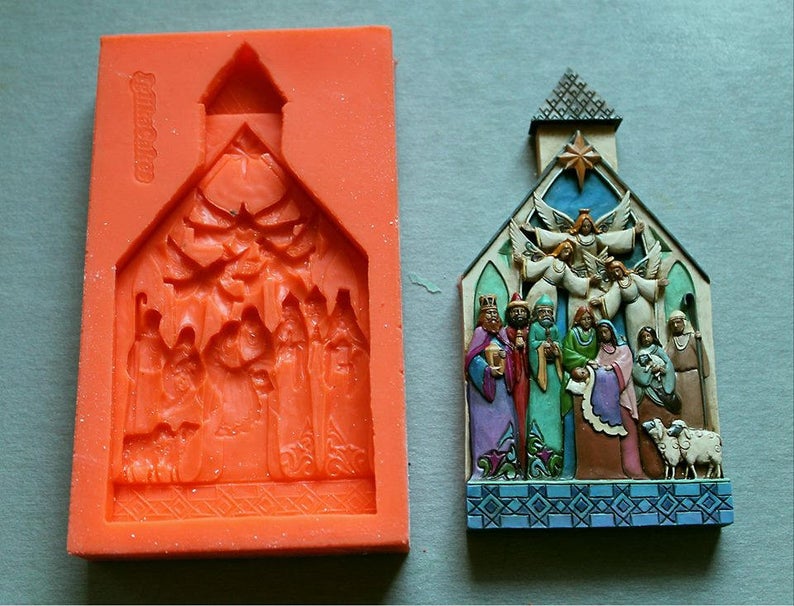
Church Mould

The yard was the original standard adopted by the early English sovereigns as a basis of calculation. Under the historical influence of the British Empire, the term “yardstick” became associated as the ideal standard for making critical judgments about a person. Consequently, “taking the measure of a man” gained more meaning than simply assessing the amount of cloth required for making him a suit.

In many ways, the yardstick by which The Episcopal Church evaluates the suitability of would-be clergy is inextricably linked to the ideology of British colonialism. The standard for measuring candidates for ordination is subsequently biased towards Euro-centric models of education, formation, and proficiency/fluency in navigating dominant culture. As a product of colonialism and dominant culture, The Episcopal Church in the United States evaluates for whiteness in its people of color.

Several years ago, when I took the General Ordination Exams, the test writers included a question that asked for candidates to reflect on how The Episcopal Church was doing with regard to racism within the Church. I heard later from a member of the examining board how surprised they were by the scathing critiques that answered that question. Nothing has changed since then, because the way the Church prepares and evaluates for pastoral competencies is gravely culturally biased. It has been my personal experience that every single person of color and white ally intending to work in ministry with communities of color is at some point asked by evaluators if they believe they are “sufficiently Anglican.”

For example, anything other than a prayer life centralizing the Book of Common Prayer is suspect.  In my case, all it took for a Commission on Ministry to be concerned was when I shared that I incorporate my indigenous practices of burning sacred herbs and indigenous traditions of interacting with nature as important aspects of my spiritual practice and formation.  Within a diocese with a history of Native missions, this may not have been such a concern since such a context is generally more cross cultural, with education and information flowing in both directions. However, I am an “urban Native,” and my Commission on Ministry was primarily driven by white liberalism rather than by any real knowledge of or interest in my Native culture.  I was well aware that it was my burden to measure up and not their burden to alter their standard of measure.

Most recently, there has been a growing trend in The Episcopal Church in the United States to use the curriculum of the Iona Center as a standard of education as an option for local training for postulants seeking ordination. The local adaptation of the Iona material used in the Diocese of Olympia has taken the form of  “The Iona Olympia School” which is self-described as “a three-year program with a rigorous, curriculum (comprised of textbooks, videos, discussion and activities, and field study) provided by the Iona Institute of the Seminary of the Southwest.” It follows “a traditional school calendar year, beginning in September” and expects paid tuition as well as participation in large blocks of time away from home, work, and family.

None of these expectations is realistic for the majority of people of color, particularly Native people. Course content is not adapted for the indigenous context or context of the communities of color with regard to types of learning and the application of experience. Ultimately, those who undertake local option training are not expected to be paid much if at all once they are ordained – being mostly either deacons or people of color who may become priests.

The argument may be that (by setting “rigorous curriculum” that includes the Euro-centric history of the Church and its subsequent traditions of worship and governance) those who graduate from local training will not be considered second-class clergy. What standard has established that concern in the first place and who yet holds that standard of expectation? White people? Western academics? Bishops? General Convention? People in the pews? All of the above?

The General Board of Examining Chaplains in The Episcopal Church is charged with creating ordination exams that test for the seven canonical areas of study as ascribed by Canons of the Church. These areas of desired proficiency include: 1) The Holy Scriptures, 2) Church History, 3) Christian Theology, 4) Christian Ethics and Moral Theology, 5) Studies in contemporary society (i.e. familiarity with minority groups), 6) Liturgics and Church Music, and 7) the Theory and Practice of Ministry.

Informing each of these canonical areas of study is a massive amount of dominant culture history, perspective, and assumption that yardstick people into seemingly “standard” units of measure. The current ordination process is not benign, and its colonial nature is nowhere more apparent than in how it forms its people of color as leaders for the church. Any training program that does not address the academic areas from a dominant culture perspective towards overlaying a dominant culture identity is deemed little more than finger painting. The “Anglican” in Anglican identity is at its core white history and white identity.

The pedagogy of the dominant culture Church seems to need to shape the foreign into the friendly and familiar, rather than taking the risk of losing a Euro-centric identity. A genuine adult learner approach to leadership formation assumes diversity in experience, perspective, and practice. Therefore, evaluators must be tasked with their own formation before becoming evaluators – they must care about postulants and candidates as people and not as potential interchangeable widgets within the machinations of the institution. Candidates should not be in the position of trying to fulfill the evaluator’s own unexamined cultural biases and assumptions.

How the Church delivers spiritual care and organizational development will depend on genuinely collaborative efforts, not just patronizing gestures of tolerance. Barriers between levels of the diocesan structure need to be replaced with semi-permeable organizational membranes through which education, formation, and cultural influence can flow in both directions. Our candidates for ordination are not empty vessels to be filled with colonized history and identity; they are unique peers, partners, colleagues, and friends who should be joining a community already committed to learning new perspectives and willing to adapt structures and expectations to reflect new and emerging truths. Traditions are not immutable and timeless or universal things – rather, tradition is best understood as the adaptive mechanism within culture that provides the basis for creative change.

There is more than one way to form a leader, just as there is more than one way to be a church within the Church. Our Church faces many challenges, and I believe that our people of color hold adaptive strategies worthy of our collective attention – they are, after all, experts in having to adapt to ways and methods not their own. It is beyond time for the dominant culture Church to learn to do the same.